The talk show is a truly unique medium—a television format that is equal parts entertainment, journalism, and therapy session, often reflecting the deepest cultural currents of its time. From intimate celebrity interviews to groundbreaking discussions on social taboos, these programs have done more than just entertain; they have actively shifted public opinion, launched global careers, and even influenced political outcomes.
At Top 10 Most, we explore the programs that transcended mere broadcast to become cultural institutions. The shows on this list are ranked based on their lasting influence on the TV landscape, their impact on public discourse, and the measurable “effect” their hosts had on consumer habits and social change. Longevity, pioneering format elements, and the ability to define a specific era of television are all factored into this highly subjective, yet analytically reasoned, ranking.
The data in this article is compiled and analyzed based on a historical perspective and current context as of December 2025, acknowledging that the influence of these classic shows continues to be felt in today’s fragmented media environment, defining the standards for all current hosts.
Table of the Top 10 Most Influential Talk Shows in History
| Rank | Talk Show | Host(s) | Key Years / Tenure | Influence Rating (1-10) |
|---|---|---|---|---|
| 1 | The Oprah Winfrey Show | Oprah Winfrey | 1986–2011 | 10.0 |
| 2 | The Tonight Show (Johnny Carson) | Johnny Carson | 1962–1992 | 9.8 |
| 3 | Donahue (The Phil Donahue Show) | Phil Donahue | 1967–1996 | 9.5 |
| 4 | The Daily Show (Jon Stewart) | Jon Stewart | 1999–2015 | 9.2 |
| 5 | Late Night with David Letterman / Late Show | David Letterman | 1982–2015 | 8.9 |
| 6 | The Dick Cavett Show | Dick Cavett | 1968–1975 (Original Run) | 8.5 |
| 7 | The Arsenio Hall Show | Arsenio Hall | 1989–1994 | 8.1 |
| 8 | The Jerry Springer Show | Jerry Springer | 1991–2018 | 7.8 |
| 9 | The Tonight Show (Steve Allen/Jack Paar) | Steve Allen, Jack Paar | 1954–1962 | 7.5 |
| 10 | The View | Barbara Walters, Joy Behar, et al. | 1997–Present | 7.2 |
#10. The View
The View, which debuted in 1997, earned its place by pioneering the multi-host, all-female panel discussion format for daytime television, immediately distinguishing itself from the one-on-one interview shows that dominated the landscape. Co-created by the legendary Barbara Walters, the show’s structure offered a daily “Hot Topics” segment that fused light pop-culture chat with serious political and social debate, setting a template that has since been replicated globally. By presenting a rotating ensemble of co-hosts representing diverse ages, backgrounds, and political views, the show captured the chaotic, multi-faceted nature of real-life conversations among women.
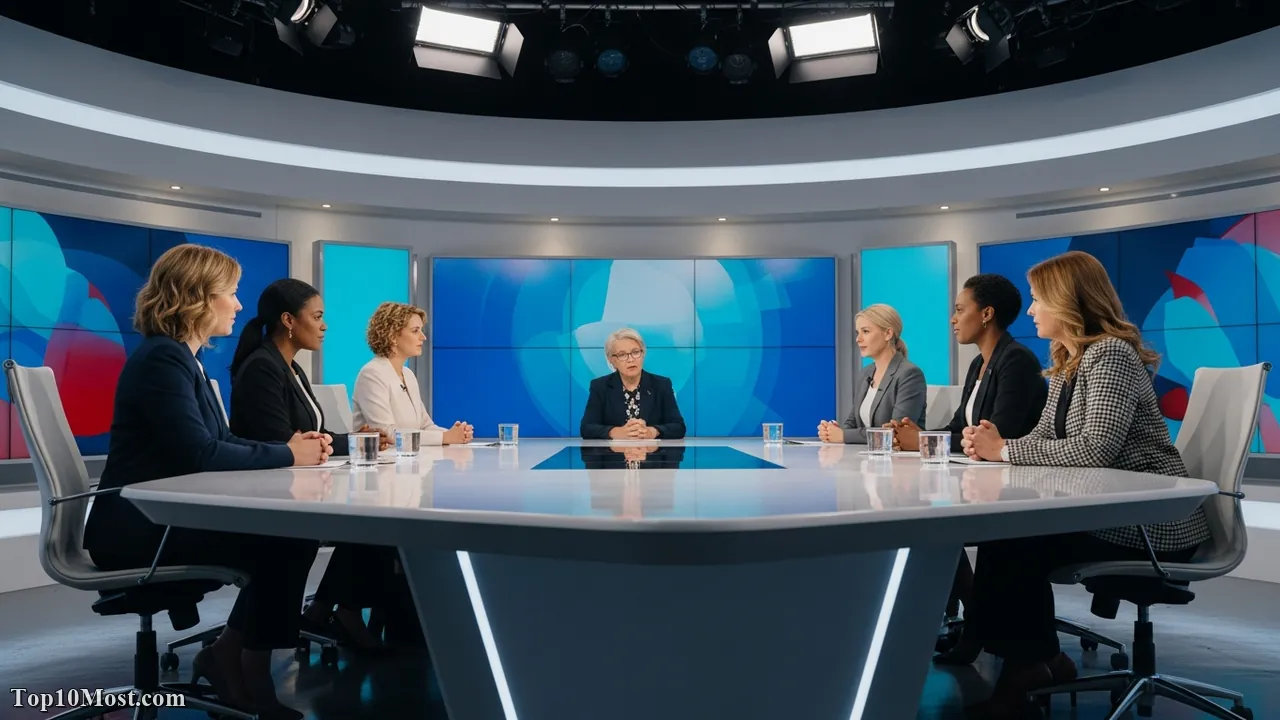
Its influence lies in its ability to normalize intense, sometimes abrasive, political sparring in a traditionally soft daytime slot, making current events unavoidable for its large, often underserved female demographic. The panelists, including foundational voices like Joy Behar, became media fixtures whose opinions themselves often generated news cycles, proving that a show focused on opinion could be as influential as one focused on interviews. It carved out a unique hybrid space—part talk show, part punditry—that showed the commercial viability of direct political confrontation.
What remains compelling about The View is how it operates as a daily microcosm of the national conversation, often reflecting or even predicting the divides in American society, albeit in a highly produced studio setting. While it may not have the singular cultural authority of an Oprah or a Carson, its longevity and format innovation have fundamentally altered the morning news and opinion programming landscape. It reminds us that sometimes, the most influential conversations are the ones that take place among a passionate, well-informed collective rather than a single host.
-
Key Highlights:
- First successful multi-host, all-female political panel discussion show.
- Created by the legendary broadcast journalist Barbara Walters.
- Defined the “Hot Topics” segment, making co-hosts’ opinions newsworthy.
- Sustained for over 25 years, proving the format’s durability.
#9. The Tonight Show (Steve Allen/Jack Paar)
The earliest incarnations of The Tonight Show, hosted first by Steve Allen and then by Jack Paar in the 1950s and early 60s, are foundational to the talk show genre, establishing the fundamental DNA of what late-night television would become. Steve Allen created the basic structure we recognize today, introducing the opening monologue, desk interviews with celebrity guests, and spontaneous audience interaction, effectively inventing the modern late-night talk show. When Jack Paar took over, he shifted the tone, injecting a more emotional, personality-driven style that often led to real-life drama—he famously walked off the show in 1960 after NBC censored one of his jokes, making him a central figure in early television controversy.
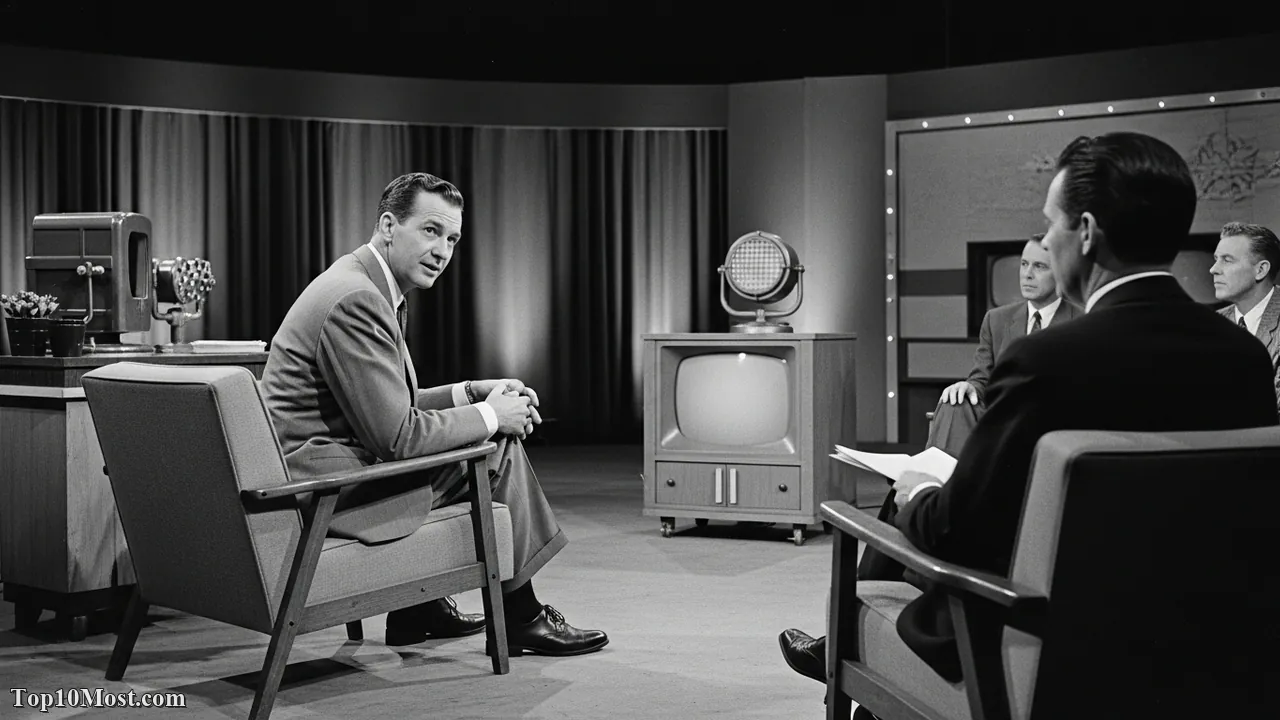
This pioneering phase of The Tonight Show is influential because it provided the first successful bridge between news programming and entertainment, transforming the post-local-news slot into a must-watch cultural moment. Allen gave the format its bones, but Paar gave it its soul, demonstrating that the host’s vulnerability and genuine, emotional connection with the audience could drive huge ratings. They laid the groundwork for the show to become a cultural Kingmaker—a position that would later be cemented by their successor.
Looking back, the Allen and Paar eras feel like the exciting, slightly chaotic wild-west days of late-night, where the rules were still being written in real-time. Paar, especially, proved that the host didn’t just have to be a polished comedian; he could be a neurotic, thoughtful, and sometimes temperamental figure whose on-air behavior became part of the public narrative. Their work established the high-stakes, personality-driven template that has fueled every subsequent late-night succession battle and format evolution.
-
Key Highlights:
- Steve Allen originated the opening monologue and desk interview format (1954).
- Jack Paar introduced personality-driven, emotional, and controversial hosting.
- Established the late-night slot as a major national cultural event.
- World’s longest-running talk show, starting its historic run in 1954.
#8. The Jerry Springer Show
The influence of The Jerry Springer Show (1991-2018) is often cited as a cautionary tale, but its impact on the television landscape is undeniable. Debuting in the early 90s, the show quickly devolved from discussions of political and social issues to highly sensationalized confrontations between guests, becoming the definitive example of the “tabloid talk show” subgenre. Its ratings success, driven by shocking reveals, on-stage brawls, and the host’s famous final thought monologues, proved there was a massive audience for unscripted, highly emotional, and often exploitative drama, primarily drawing from lower-income and marginalized communities.
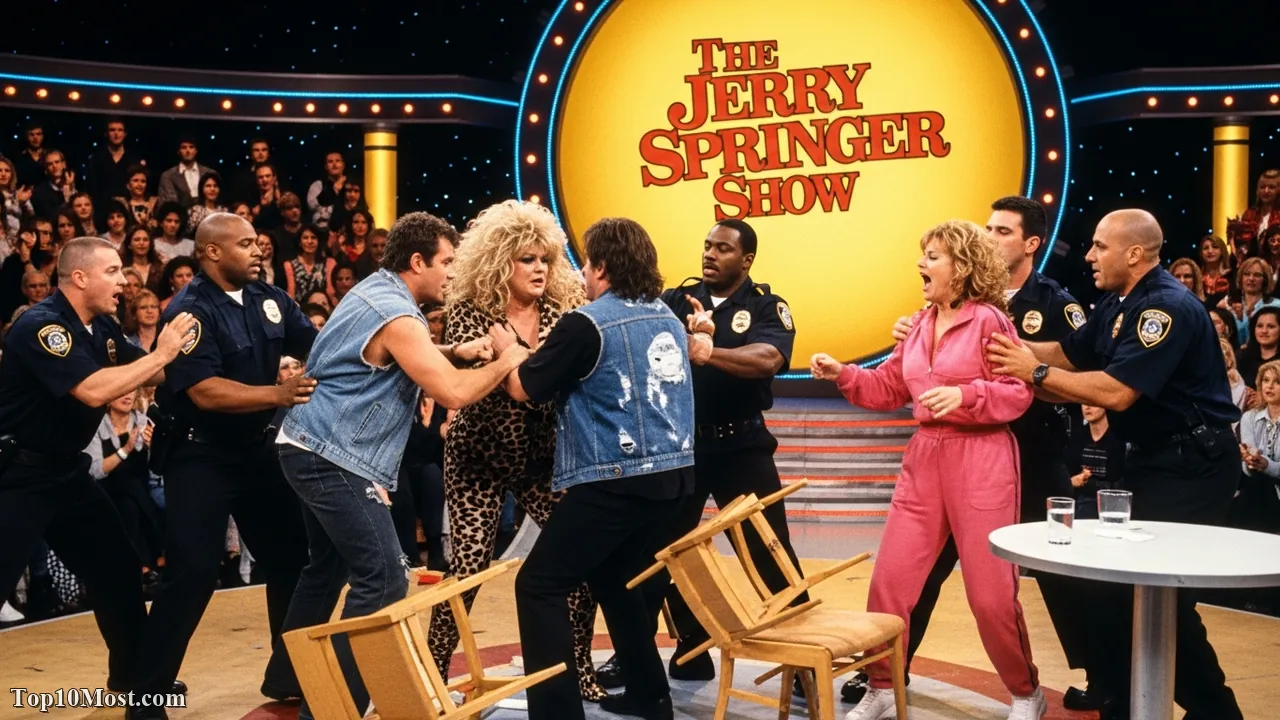
Its primary influence was not in elevating discourse but in changing the standard for acceptable content and spectacle in daytime television. It pushed the boundaries of what networks considered “entertaining,” leading to a race-to-the-bottom among competitors who sought to emulate its outrageous success. Furthermore, its influence extends directly into the creation and success of the entire modern reality TV genre, which capitalized on the same appetite for non-celebrity drama and chaotic human conflict that Springer first monetized on a massive scale. The famous chant, “Jerry! Jerry!” became a cultural touchstone representing television excess.
While The Jerry Springer Show is often critically panned, its significance cannot be dismissed; it was a cultural mirror, reflecting, amplifying, and exploiting the social anxieties and class divides of its time. It forced a conversation about television ethics and exploitation, all while remaining a huge, profitable success for nearly three decades. It is a powerful reminder that influence in media is not always positive, but the show certainly created a permanent shift in what viewers expected and what networks were willing to show.
-
Key Highlights:
- Defined and popularized the highly sensationalized “tabloid talk show” genre.
- Known for its dramatic confrontations and the audience’s iconic “Jerry! Jerry!” chant.
- Directly influenced the rise and format of modern reality television.
- Ran for 27 seasons, demonstrating the powerful demand for the format.
#7. The Arsenio Hall Show
The Arsenio Hall Show (1989-1994) was a powerful, albeit short-lived, cultural phenomenon that profoundly impacted late-night television by injecting an unprecedented dose of youth, urbanity, and African-American culture into the overwhelmingly white, male-dominated late-night landscape. Arsenio Hall’s innovative use of a live band, his trademark “Woof woof woof!” fist pump, and the famous “Dog Pound” audience section created a party atmosphere that attracted a younger, more diverse demographic that the genre had previously ignored. His interviews felt more like hangouts, giving guests like Prince and Bill Clinton (who famously played saxophone on the show) a platform to connect with a different kind of mainstream America.
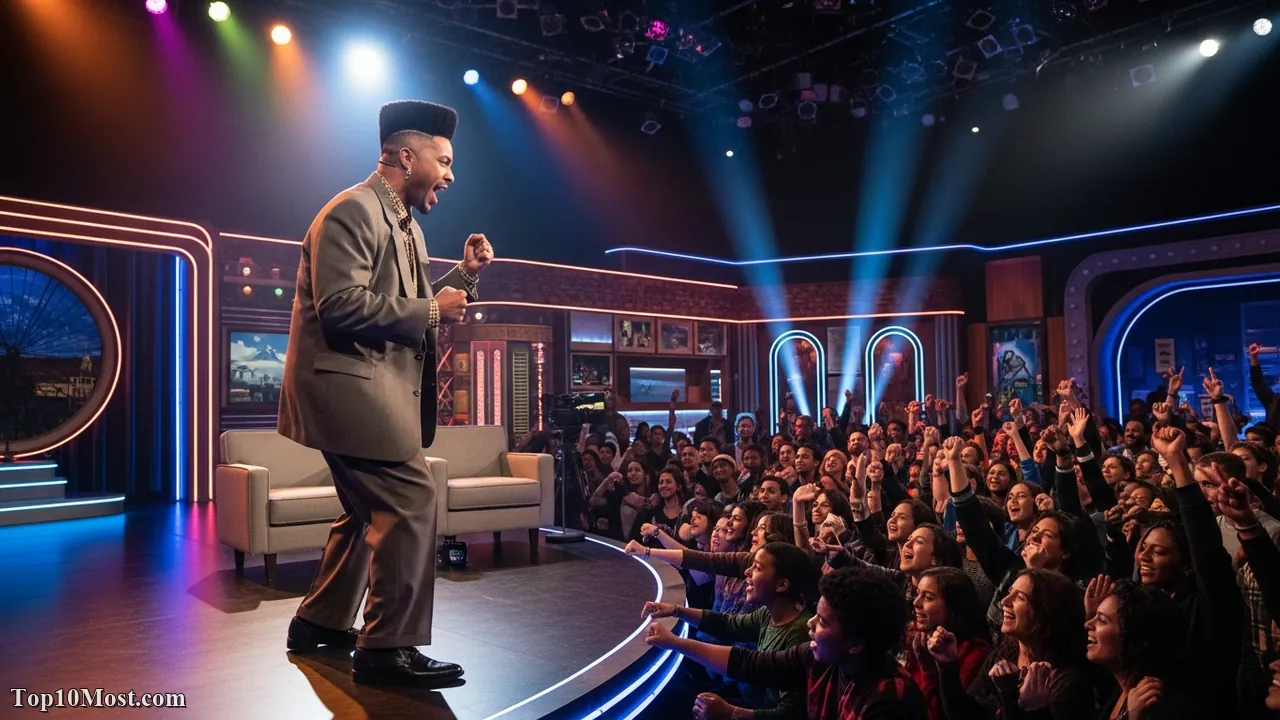
The show’s lasting influence rests on its ability to successfully disrupt the monolithic structure of late-night dominated by NBC and CBS, demonstrating that an alternative, syndicated show could thrive by speaking directly to a neglected audience. Hall successfully integrated hip-hop, fashion, and non-traditional celebrity guests, serving as a critical cultural bridge that mainstreamed various counter-cultures. He proved that late-night could be cool, energetic, and culturally relevant to a new generation, essentially giving birth to the modern music-centric, high-energy late-night format seen today.
The energy that radiated from The Arsenio Hall Show was infectious; it felt genuinely of the moment in a way that its competitors did not. While its run was brief, its impact on the cultural conversation was immense, proving that diversity in hosting was not just a matter of representation, but a successful formula for tapping into a new market. It paved the way, both literally and figuratively, for every non-traditional late-night host that followed, cementing his place as a necessary historical disruption.
-
Key Highlights:
- Revolutionized late-night by targeting a younger, more diverse, urban audience.
- Introduced the “Dog Pound” audience and energetic, party-like atmosphere.
- Hosted then-presidential candidate Bill Clinton, symbolizing cultural relevance.
- Proved syndicated, alternative late-night could successfully compete with network giants.
#6. The Dick Cavett Show
The Dick Cavett Show (1968-1975 in its original ABC run) stands apart on this list because its influence was rooted not in ratings spectacle or mass appeal, but in intellectual depth and serious conversation. Cavett, with his Yale-educated wit and genuine curiosity, attracted a stunning array of A-list guests, including cultural icons like John Lennon and Yoko Ono, Salvador Dalí, and Muhammad Ali. The format privileged long-form, thoughtful, and often intense dialogue, sometimes dedicating an entire 90-minute episode to a single guest or topic, allowing for a level of nuance completely absent from its competitors.
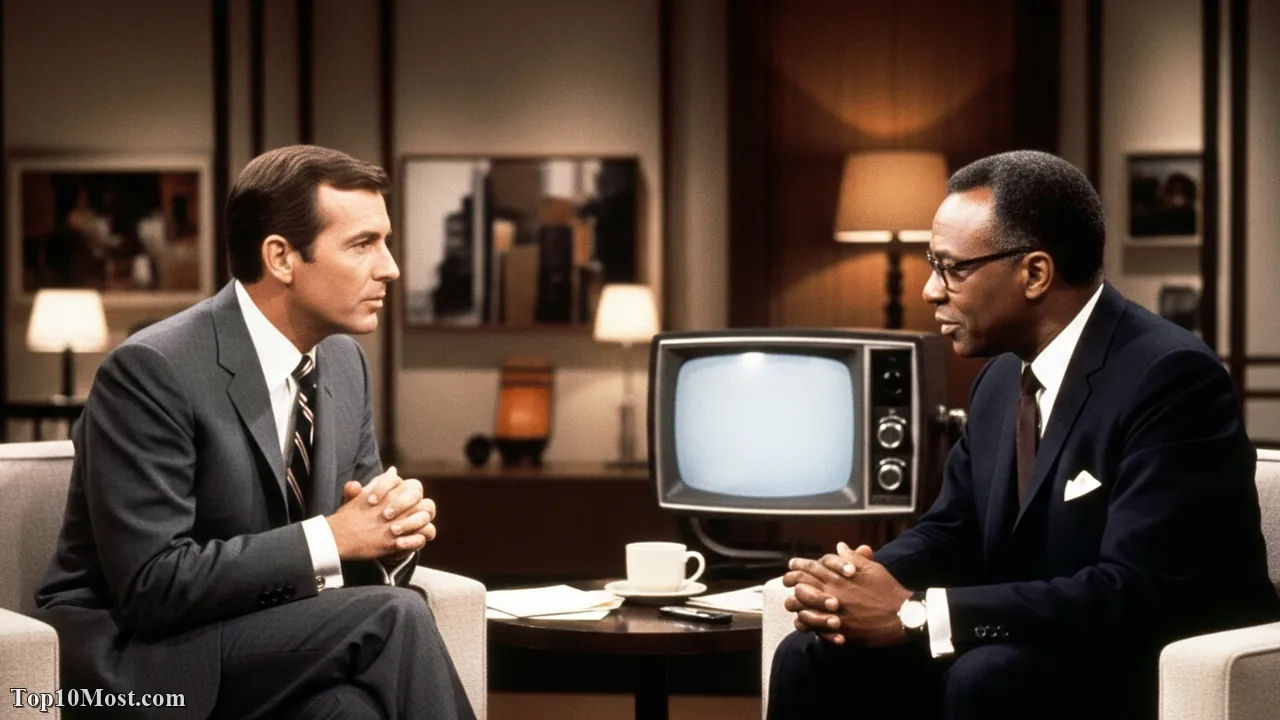
The show’s profound influence was in raising the intellectual bar for what television could achieve, proving that profound conversations about politics, war, and civil rights could hold a late-night audience. Cavett often hosted figures who openly debated the Vietnam War, racial tensions, and societal norms, positioning his show as a necessary town hall for the counter-culture and the establishment alike. It was a space where figures were forced to confront their ideas and, in some cases, each other, leading to genuinely raw and historical moments that continue to be studied by media critics today.
The elegant, conversational intelligence of Cavett’s program created an indelible legacy, serving as a powerful counterpoint to the growing fluff and celebrity parade of other shows. It remains the gold standard for substantive, long-form television interviews, demonstrating the power of a host who prioritizes listening and genuine inquiry over performance. Even decades later, it serves as a powerful reminder of television’s capacity to be a platform for profound intellectual and political engagement.
-
Key Highlights:
- Pioneered the long-form, intellectually serious talk show format.
- Known for hosting candid, in-depth interviews with cultural and political giants.
- Served as a vital platform for counter-culture debate during the Vietnam era.
- Its influence is central to the format of modern prestige interviews and podcasts.
#5. Late Night with David Letterman / Late Show
David Letterman’s two-part late-night reign (Late Night on NBC, 1982-1993, and Late Show on CBS, 1993-2015) revolutionized the talk show by introducing a meta, self-referential, and deeply ironic sensibility that became the template for contemporary comedy. Breaking away from the polite polish of Carson, Letterman infused his show with absurdist comedy, unconventional segments like “Stupid Pet Tricks,” and a deliberate deconstruction of the talk show format itself. He often treated the show like a failing science experiment, finding humor in the awkwardness, the medium’s artificiality, and his own curmudgeonly persona.
Letterman’s influence is arguably the most significant for comedy writers and performers, as he ushered in a post-modern era of television humor. He proved that late-night could be niche, irreverent, and deliberately weird, appealing to a younger, more cynical audience that appreciated the wink-and-a-nod to the absurdity of celebrity and television. By pushing the boundaries of what was considered appropriate and by making fun of the very sponsors and executives who paid for his show, Letterman established a new kind of creative freedom for all subsequent late-night hosts, fundamentally redefining what a talk show was allowed to be.
To watch Letterman was to appreciate the brilliance of controlled chaos and the comedy inherent in deconstruction. He was the intellectual bridge from the mainstream charm of Carson to the hyper-awareness of the digital age. Even now, the DNA of his original Late Night show on NBC—with its unpredictable energy and oddball humor—can be found in the best and most innovative comedy programs that dare to challenge the status quo.
-
Key Highlights:
- Pioneered ironic, meta, and absurdist humor in late-night television.
- Introduced iconic segments like the Top 10 List and Stupid Pet Tricks.
- Mentored and influenced a generation of comedians (Conan O’Brien, Jon Stewart).
- Established the talk show as a vehicle for experimental, anti-establishment comedy.
#4. The Daily Show (Jon Stewart)
The Daily Show, particularly during the 1999-2015 tenure of Jon Stewart, holds a singular place in the history of influential talk shows because it fundamentally blurred the lines between comedy, journalism, and political punditry. Masquerading as a fake news program, the show used sharp satirical analysis and meticulously edited clips to expose hypocrisy and absurdity in both the media and political establishments. It became an essential news source for an entire generation, often holding power to account more effectively and engagingly than traditional news outlets.
The immense influence of Stewart’s era is quantifiable: it redefined political satire for the 21st century and served as a talent incubator that launched the careers of major media figures, including Stephen Colbert, John Oliver, and Samantha Bee, who went on to launch their own highly influential programs. Moreover, the show’s success demonstrated the critical market need for a media critique of the media itself, forcing traditional news programs to acknowledge and respond to its segments. By providing an outlet for intelligent outrage, it fostered a deep, shared cultural language around contemporary political failure.
What resonated most was Stewart’s unique ability to shift instantly from pure comedic outrage to profound, emotional sincerity—especially during national crises—providing a cathartic, communal viewing experience. The show became the place where a generation went to process their political environment, proving that comedy could possess the cultural authority of a serious news broadcast. Its legacy is the complete and permanent merging of politics and entertainment, establishing satire as a legitimate form of journalistic critique.
-
Key Highlights:
- Redefined political satire as a legitimate, highly influential form of media critique.
- Served as a primary news source for the 18-35 demographic for over a decade.
- Launched the careers of multiple influential hosts (Colbert, Oliver, Bee, Noah).
- Showed that comedy could hold politicians and traditional media to account.
#3. Donahue (The Phil Donahue Show)
Phil Donahue is the undisputed pioneer of the modern audience-participation, issue-driven talk show, making The Phil Donahue Show (later simply Donahue, 1967-1996) the true revolutionary in the daytime format. Before Donahue, television interviews were largely formal and celebrity-driven; Donahue changed everything by focusing on contemporary social issues like abortion, civil rights, and feminism, and, critically, by putting a microphone directly into the hands of the studio audience. He broke the fourth wall, bringing the conversation directly to the viewers and creating a genuine-feeling dialogue between guests and the public.
His influence is absolute, as he literally created the mold for every syndicated daytime talk show that followed, from the earnest issue-based shows to the sensationalized tabloid dramas. Donahue legitimized the exploration of personal and difficult social topics on daytime television, proving that a massive audience was hungry for conversation about real-life problems. His willingness to physically move into the audience, adopting a conversational style rather than a fixed, journalistic one, was a groundbreaking visual and philosophical shift that humanized the host and democratized the debate.
Donahue’s legacy is the establishment of the talk show as a potent social and political platform, one that could elevate the voices of ordinary Americans and confront controversial subjects head-on. The sense of immediacy and participatory democracy he cultivated remains a crucial part of the genre’s appeal. He proved that talking about what matters—no matter how messy—is a powerful and necessary function of broadcast media.
-
Key Highlights:
- Pioneered the audience-participation, issue-driven daytime talk show format.
- Known for tackling controversial topics like civil rights, abortion, and feminism.
- His mobile, non-desk hosting style broke the fourth wall, democratizing conversation.
- The foundational show that led directly to the creation of the daytime genre.
#2. The Tonight Show Starring Johnny Carson
From 1962 to 1992, Johnny Carson’s The Tonight Show was, for all intents and purposes, the center of American pop culture, making him the undisputed “King of Late Night.” For three decades, what happened on Carson’s stage—from a stand-up comedian’s breakout moment to a celebrity’s scandalous confession—was the definitive cultural event of the day. Carson solidified and perfected the format pioneered by Allen and Paar, turning the monologue into a barometer for the national mood and the guest couch into the final stop for any celebrity seeking cultural legitimacy. His authority was so complete that his mere endorsement (or silent dismissal) could make or break a career.
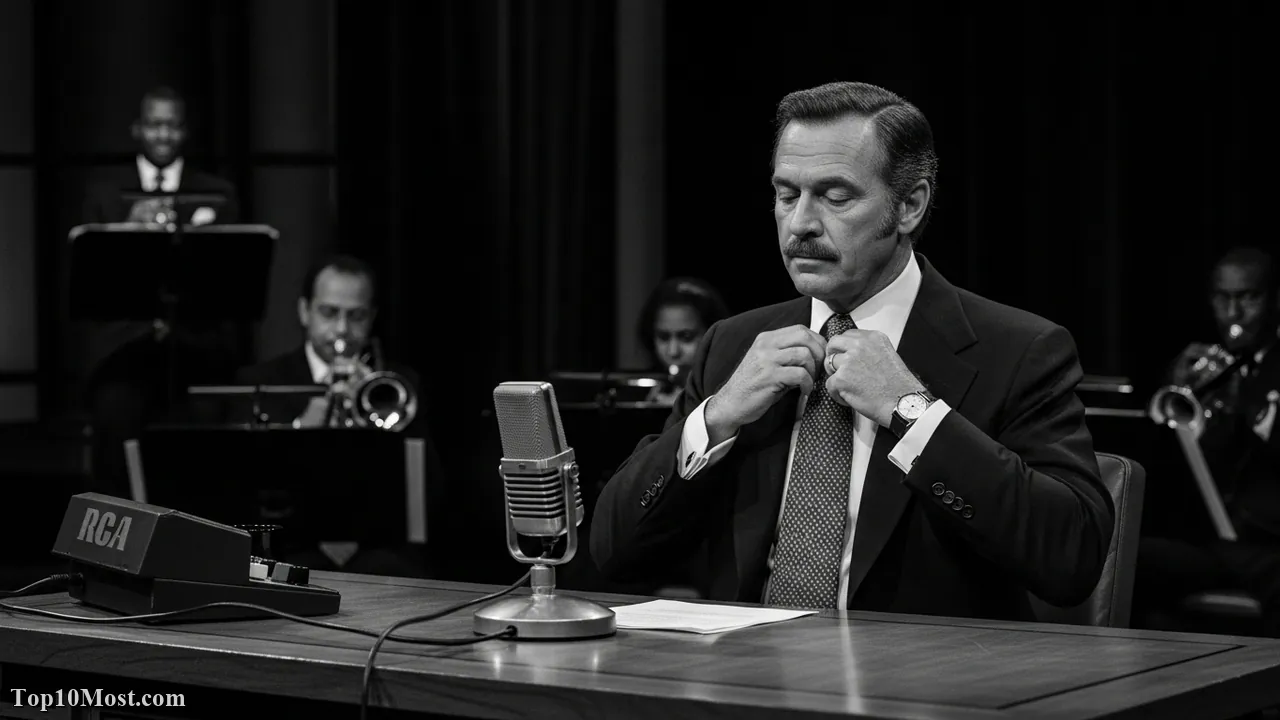
Carson’s influence is not merely historical; it is structural. He made the late-night talk show into a massive profit center for NBC and established the 11:30 PM slot as the most coveted real estate in television. He provided a nightly, shared cultural experience for a fragmented nation, offering a calm, witty, and consistent presence that served as a communal decompression after the evening news. Furthermore, his platform was the single most important launching pad for stand-up comedians and actors for an entire generation, including Jerry Seinfeld, David Letterman, Drew Carey, and many others.
The genius of Carson was his quiet control—a master of timing, he allowed the comedy to breathe and his guests to shine, yet he was always the undeniable anchor. His retirement in 1992 was a national event, marking the end of the last truly communal viewing experience in America before the rise of cable and digital media. He remains the gold standard, the host all others are measured against, simply because for thirty years, if you watched TV, you watched Johnny Carson.
-
Key Highlights:
- Dominated and defined late-night television for three full decades (1962–1992).
- Served as the single most important launchpad for generations of comedians.
- Perfected the opening monologue as a national cultural and political benchmark.
- His show was the last great communal viewing experience in pre-digital America.
#1. The Oprah Winfrey Show
The Oprah Winfrey Show (1986-2011) stands as the most influential talk show in television history because it fundamentally transcended the medium, making its host, Oprah Winfrey, a global figure of unparalleled economic and social power. Beginning as a sensational talk show in Chicago, Oprah quickly shifted the program’s focus from tabloid drama to self-improvement, spirituality, personal transformation, and literary culture. She turned her platform into a vehicle for genuine empathy, becoming a cultural guru whose advice, endorsements, and interviews carried immense, measurable weight.
The “Oprah Effect” is the core of its influence: her endorsement of a book instantly created a bestseller (The Oprah’s Book Club), her promotion of a product made it a must-have (Favorite Things), and her support of a politician (most notably Barack Obama) was credited with securing millions of votes. This level of commercial and political authority from a single TV personality—a Black woman who built her empire from the ground up—is simply unprecedented. She legitimized the expression of deep emotion and trauma on television, normalizing conversations around mental health and self-help in a way that shaped the wellness industry as we know it today.
Oprah’s legacy is the powerful validation that a talk show can be a force for social and personal change. She created a dedicated community of millions who felt seen, heard, and empowered, building a global brand rooted in authenticity and relatability. More than just an interview, watching The Oprah Winfrey Show was a cultural appointment, making it the most significant, transformative, and influential talk show ever broadcast.
-
Key Highlights:
- Generated the “Oprah Effect,” a globally measurable impact on sales and politics.
- The highest-rated daytime talk show in U.S. history, running for 25 years.
- Pioneered the shift from sensationalism to self-help, wellness, and literary culture.
- Transformed its host into a media mogul and the most culturally influential TV personality.
Conclusion
The history of the talk show is the history of America learning to talk about itself. What this ranking confirms is that true influence doesn’t just come from high ratings; it comes from defining a moment, breaking a taboo, or changing a format so completely that television can never go back to the way it was before. From Steve Allen inventing the desk, to Phil Donahue giving the audience a voice, to Johnny Carson maintaining a nightly ritual, and finally to Oprah Winfrey transforming a TV show into a cultural and spiritual movement, each host on this list acted as an essential cultural gatekeeper and mirror.
The greatest talk shows have always understood that the secret to a great interview lies in the host’s ability to genuinely listen and connect—a deeply human act in an inherently commercial medium. As media continues to fragment across podcasts, streaming, and social video, these ten programs provide the authoritative blueprint for how a simple conversation, broadcast on a screen, can move markets, change minds, and shape history. At Top 10 Most, we appreciate that the real greatness of these shows was their power to build a fleeting, but deeply felt, sense of national community, one conversation at a time.