The landscape of television has shifted dramatically, moving from a niche medium to the dominant form of narrative storytelling. Throughout this evolution, certain characters have transcended the screen to become true cultural archetypes, shaping fashion, language, and the very concept of the antihero. These figures are not just well-written; they are seismic forces that influenced entire genres and generations. This definitive ranking by Top 10 Most explores the characters who have left the most indelible mark on global pop culture and the craft of television writing. The data in this article is compiled and analyzed based on comprehensive critical consensus and cultural impact metrics updated as of late 2025, providing a reasoned analytical perspective on enduring greatness.
The true iconic character is one who remains recognizable and relevant decades after their final episode, standing as a reference point for an entire era of television. From the foundational sitcom lead to the modern antihero, this list celebrates the diverse range of personalities who defined the medium and continue to inspire conversation, criticism, and devotion.
Table of the Top 10 Most Iconic TV Characters of All Time
The following characters are ranked based on their verifiable cultural impact, longevity, and critical influence on subsequent television storytelling and character development.
| Rank | Character | Show (Years Aired) | Archetype/Significance |
|---|---|---|---|
| 10 | Don Draper | Mad Men (2007–2015) | The Charismatic, Troubled Anti-Hero of Modernity |
| 9 | Mary Richards | The Mary Tyler Moore Show (1970–1977) | The Independent Working Woman |
| 8 | Spock | Star Trek: The Original Series (1966–1969) | The Logical, Alien Outsider |
| 7 | Daenerys Targaryen | Game of Thrones (2011–2019) | The Ascendant, Complex Fantasy Heroine |
| 6 | Archie Bunker | All in the Family (1971–1979) | The Bigoted but Endearing Everyman |
| 5 | Walter White | Breaking Bad (2008–2013) | The Tragic Fall from Grace (Prestige TV Anti-Hero) |
| 4 | Lucy Ricardo | I Love Lucy (1951–1957) | The Physical Comedian & Sitcom Blueprint |
| 3 | Tony Soprano | The Sopranos (1999–2007) | The Founding Anti-Hero of Prestige TV |
| 2 | Homer Simpson | The Simpsons (1989–Present) | The Animated Cultural Everyman |
| 1 | The Doctor | Doctor Who (1963–Present) | The Regenerating Sci-Fi Icon |
#10. Don Draper
The magnetic, emotionally closed-off advertising executive from Madison Avenue defined the style and psychological depth of a new era of period dramas. Don Draper, whose true identity was Dick Whitman, was the perfect symbol for the post-war American dream built on artifice, selling happiness while internally battling a deep, existential void. His measured dialogue, tailored suits, and self-destructive tendencies made him the quintessential 21st-century tragic hero—a masterful creation that leveraged Jon Hamm’s brooding charisma to carry the intricate narrative of Mad Men.

The reason for his enduring ranking lies in his role as an archetype for the modern, troubled male protagonist—charismatic, successful, and morally compromised. Draper became shorthand for a certain kind of stylish, mid-century angst, influencing countless characters that followed in prestige TV, all while offering a sharp critique of American capitalism and gender roles in the 1960s. He is the ghost in the machine of the American myth.
What remains compelling about Don is the perpetual gap between his polished exterior and his inner turmoil. Watching him seek fleeting moments of genuine human connection through the veneer of his professional life provides a profound, almost melancholic commentary on identity. Every time he delivers a pitch that perfectly encapsulates the human condition, you see the painful irony of a man who can sell authenticity but cannot find it for himself. His final, transcendent moment on the California hillside remains one of TV’s most debated closures.
Key Highlights
- The character’s arc is a defining example of the modern TV anti-hero narrative.
- Played by Jon Hamm, winning the Primetime Emmy Award for Outstanding Lead Actor in a Drama Series.
- Influenced fashion and interior design trends for over a decade.
- Central figure in a series often hailed as one of the best dramas of all time.
#9. Mary Richards
Mary Richards, the associate producer at WJM-TV in Minneapolis, stepped into living rooms in 1970 as a definitive symbol of second-wave feminism: a single, thirty-something woman focused on career and self-sufficiency. Unlike the domestic sitcom leads who preceded her, Mary—played by the beloved Mary Tyler Moore—was navigating professional life, apartment hunting, and the challenges of being a woman in a male-dominated workplace, all while maintaining her signature blend of kindness and earnestness.
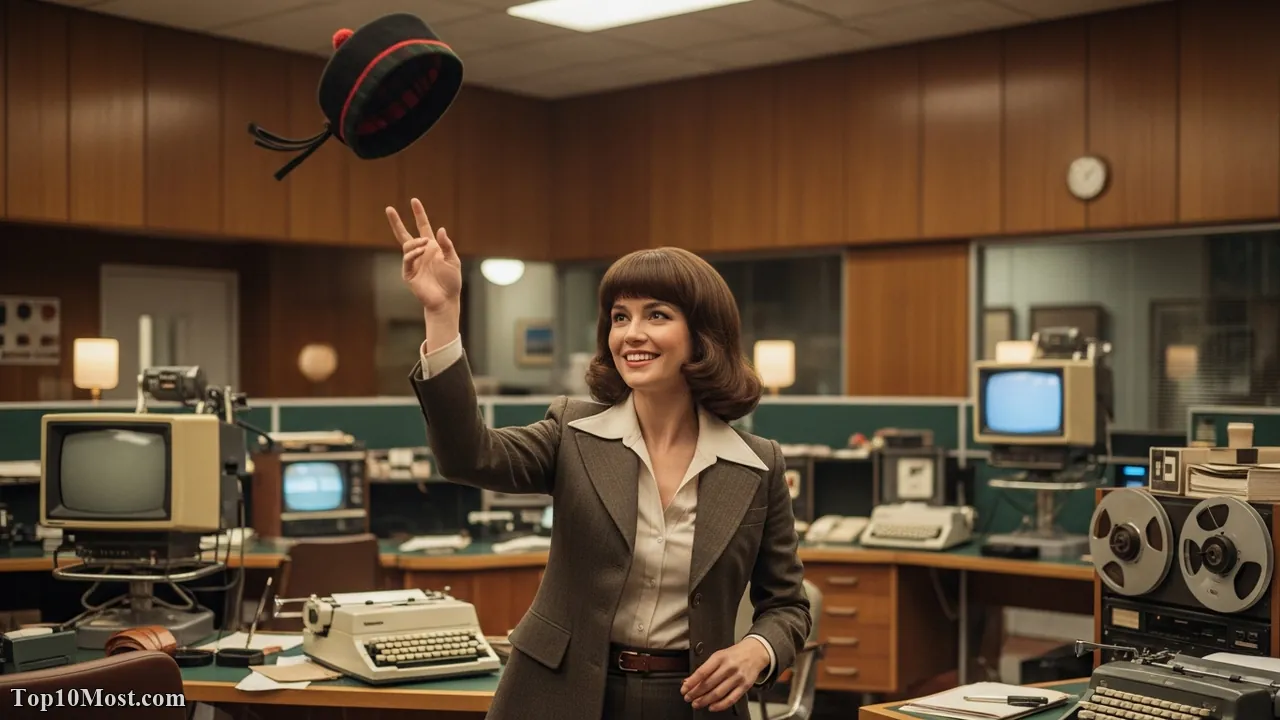
Her iconic status is rooted in her boundary-breaking premise. The series’ famous theme song asked, “How will you make it on your own?” and Mary’s success was a powerful answer for millions of young women. She showed that a female protagonist could be defined by her work and friendships rather than her relationship status, becoming a crucial reference point for female leads in both comedy and drama for decades to follow.
There is a profound comfort in Mary’s optimistic struggle. Her ability to stand up to the gruff Lou Grant or handle the demanding Ted Baxter while always being intrinsically decent is what makes her feel so human. She was the aspirational, yet relatable, friend we all wished we had, proving that strength and independence didn’t require shedding your fundamental warmth or sense of humor.
Key Highlights
- Defined the career-woman archetype for modern television.
- The series was the first to feature a single, working woman as the primary protagonist.
- Mary Tyler Moore earned multiple Emmy Awards for the role.
- The character’s gentle strength was a subtle, yet powerful, feminist statement.
#8. Spock
Mr. Spock, the half-Vulcan, half-human first officer of the Starship Enterprise, is one of the most intellectually enduring figures in science fiction. His relentless pursuit of logic, often expressed through the now-iconic phrase “Fascinating,” served as a perfect foil to Captain Kirk’s passionate humanism and McCoy’s wry cynicism. Leonard Nimoy’s portrayal established Spock not just as a character, but as a philosophical anchor for the entire Star Trek universe.
Spock’s iconic ranking is a testament to the power of intellectualism and empathy disguised as stoicism. He became a global symbol for the internal conflict between reason and emotion, inspiring generations of scientists, engineers, and thinkers. The Vulcan salute and the phrase “Live long and prosper” have become universal shorthand for geek culture and optimistic futurism, demonstrating an unparalleled level of pop cultural saturation.
The true genius of Spock lies in his quiet humanity. Behind the unflappable logic and the raised eyebrow, there was always a sense of struggle, a yearning to understand and embrace the messy, beautiful irrationality of his human crewmates. It is this depth—the internal battle made visible only in the slightest facial contraction—that makes him more than a cerebral concept; he is a deeply moving character.
Key Highlights
- The Vulcan salute and “Live long and prosper” are globally recognized cultural artifacts.
- A symbol of intellectualism and the struggle between logic and emotion.
- A foundational figure in the science fiction genre, inspiring real-world scientific and tech careers.
- Character has been successfully reinterpreted across multiple TV and film generations.
#7. Daenerys Targaryen
Emerging from exile as a frightened young girl, Daenerys Stormborn of the House Targaryen, first of her name, Mother of Dragons, became the undisputed defining figure of modern fantasy television. Her journey on Game of Thrones was a captivating, controversial, and ultimately tragic epic that saw her transition from a hopeful liberator to a feared, fire-wielding queen. Emilia Clarke’s performance captured the immense ambition and moral complexity of a leader determined to reclaim her birthright.

The character’s cultural magnitude stems from her powerful resonance as a symbol of female leadership in a brutal, patriarchal world. Daenerys sparked endless debate on power, morality, and the corruption of idealism, making her a vital reference in discussions about contemporary politics and narrative structure. She is arguably the most famous and debated female character of the 2010s, driving social commentary as intensely as she drove her armies.
What makes her truly unforgettable is the terrifying inevitability of her final arc. The initial promise of the “Breaker of Chains” against the ultimate horror of the “Mad Queen” speaks to the fragility of power and the burden of destiny. Though her conclusion was divisive, it cemented her story as a modern tragedy—a reflection that even the noblest intentions can be consumed by the pursuit of absolute authority.
Key Highlights
- The dominant female character of the most popular fantasy series of the 21st century.
- Her storyline generated massive global debate on narrative and moral ambiguity.
- Known by an extensive collection of unforgettable titles, including “Mother of Dragons.”
- Her visual identity (braids, dragons) became instantly recognizable worldwide.
#6. Archie Bunker
Archie Bunker was the loudly bigoted, working-class patriarch of All in the Family, a character created not to be emulated, but to force America to confront its prejudices. Sitting in his easy chair, pontificating on race, politics, and gender with his signature mix of ignorance and misplaced confidence, Archie provided the lightning rod for one of the most influential sitcoms in television history. Carroll O’Connor’s groundbreaking performance brought a controversial honesty to the small screen.
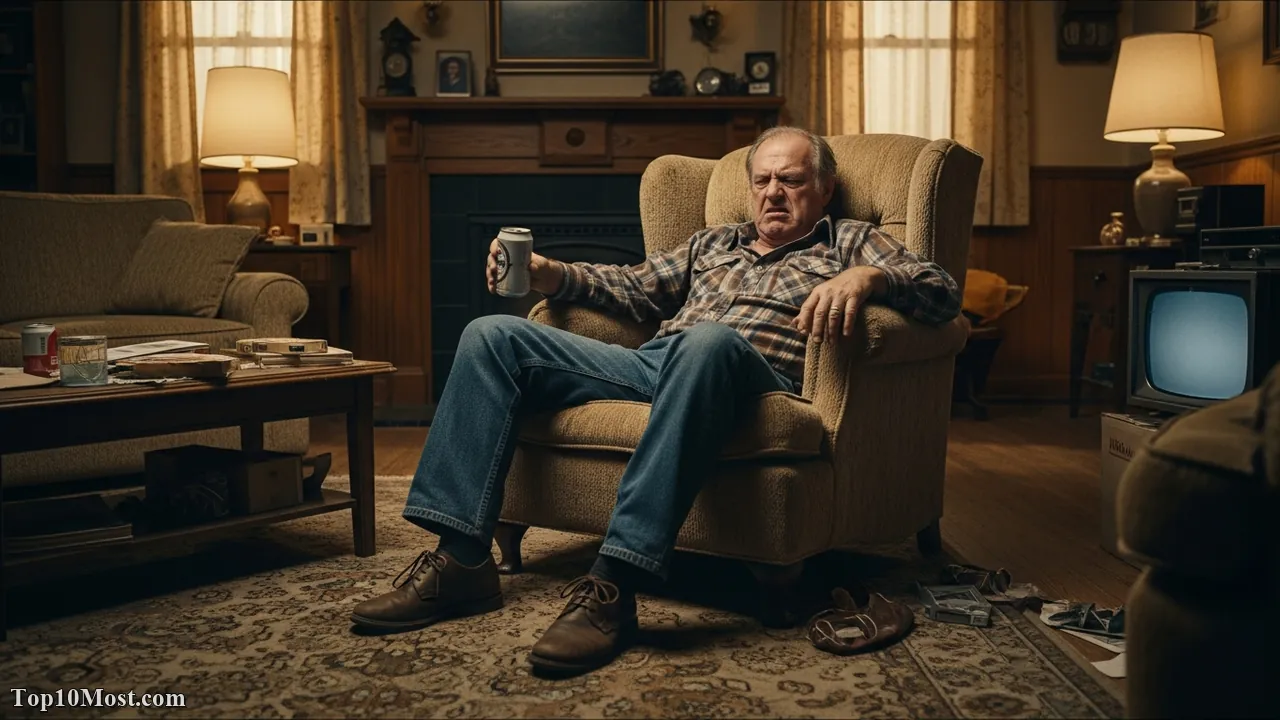
The cultural importance of Archie Bunker cannot be overstated. By centering a show on a character meant to be a parody of right-wing extremism, the show revolutionized the sitcom, making it a viable vehicle for exploring social commentary and serious issues. Archie’s endless arguments with his liberal son-in-law, Mike “Meathead” Stivic, became the proxy for the culture wars that defined the 1970s, establishing a new depth and relevance for network television.
Despite his deeply flawed perspective, there was always a spark of humanity in Archie—a sense of vulnerability and deep-seated confusion about a changing world. It is this paradoxical combination of intolerance and underlying love for his family that prevented him from becoming a simple caricature. He was a complex, imperfect reflection of a demographic that often felt overlooked, making his influence far more enduring than his bigotry.
Key Highlights
- Revolutionized the sitcom genre by introducing serious social and political themes.
- Inspired the political term “Archie Bunker Vote.”
- The character’s chair is housed in the Smithsonian National Museum of American History.
- Launched a successful spin-off, Archie Bunker’s Place, extending his tenure.
#5. Walter White
Walter White, the high school chemistry teacher who breaks bad, represents the ultimate exploration of the American mid-life crisis, turned malignant. His transformation from ‘Mr. Chips’ to ‘Scarface’—from a meek, emasculated man to the terrifying drug kingpin ‘Heisenberg’—is the single most compelling character arc of the 21st century. Bryan Cranston’s portrayal anchored Breaking Bad as a masterpiece of tragic, crime-fueled storytelling.
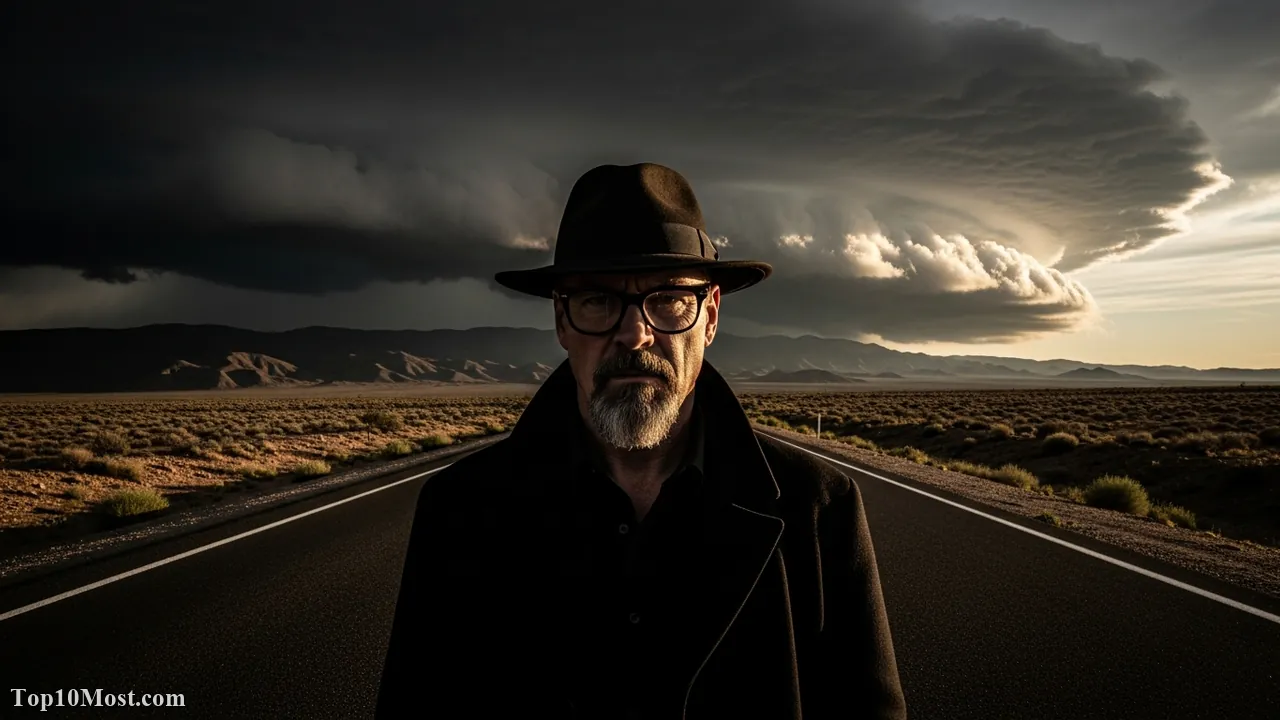
Walter White’s icon status stems from his role in perfecting the modern anti-hero narrative. His journey forced audiences to grapple with his moral choices, creating a complex, dark empathy as he descended into criminality. The show’s tight, five-season structure turned his name and alter-ego into cultural shorthand for ambition, moral rot, and the destructive consequences of unchecked ego, validating the cinematic power of the long-form TV narrative.
The chilling fascination with Walter White is that he proved that every person holds the capacity for monstrous acts, given the right catalyst—in his case, a terminal cancer diagnosis and a desire for financial legacy. His famous declaration, “I am the one who knocks,” is not just a threat; it is the definitive moment the polite, broken man finally embraces his monstrous self, and the audience, despite everything, is compelled to watch.
Key Highlights
- The definitive anti-hero arc of the 2010s, setting a new benchmark for character development.
- His alter-ego, “Heisenberg,” is a globally recognized symbol of ruthlessness.
- Bryan Cranston won four Primetime Emmy Awards for the role.
- The series’ success propelled AMC into the prestige TV space alongside HBO.
#4. Lucy Ricardo
Lucy Ricardo, the eccentric, show-business-obsessed housewife from I Love Lucy, is arguably the most important female figure in the history of American comedy. Played by the irrepressible Lucille Ball, Lucy’s relentless, slapstick schemes to get into her bandleader husband Ricky’s act became the enduring foundation for the entire broadcast sitcom genre. Her physical comedy and over-the-top reactions were unparalleled, establishing a template for female comedic performance.
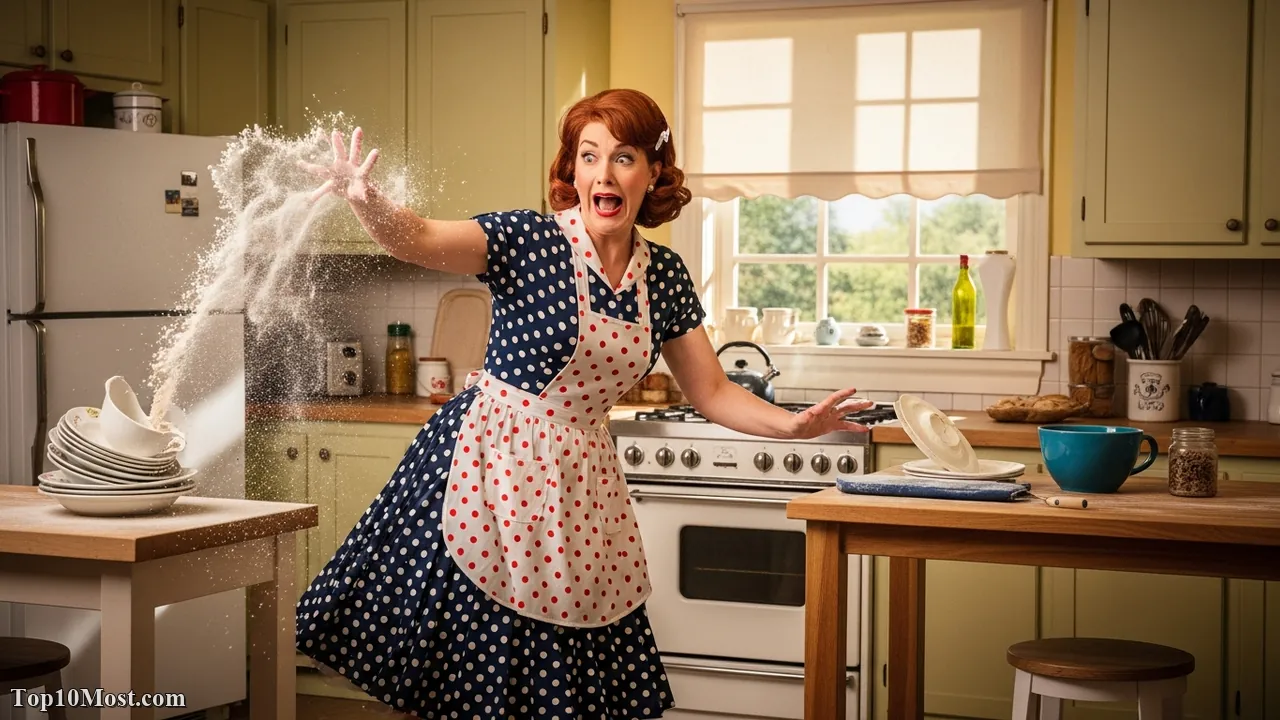
Lucy’s foundational rank is justified by her immense impact on the industry’s mechanics and content. The show was the first to popularize the three-camera setup, filmed before a live studio audience, a format that dominated sitcom production for decades. Furthermore, Lucy was a rare and groundbreaking female clown—the focus of the antics rather than the straight man, proving that women could drive the physical, high-stakes comedy as effectively as men.
The lasting charm of Lucy lies in her sheer, unbridled energy and vulnerability. We watch her fail—time and time again, often covered in grapes or struggling with a conveyor belt—yet she always picks herself up, determined to try a new scheme. This endearing blend of aspiration and incompetence made her deeply relatable, cementing her as an eternal, lovable figure of comedic rebellion against the constraints of domestic life.
Key Highlights
- Lucille Ball pioneered the show’s three-camera filming technique, which became the sitcom standard.
- The show was the first to have a woman serve as a studio head (Desilu Productions).
- Lucy Ricardo defined the genre of physical, high-energy female comedy on television.
- The series’ final episode was one of the highest-rated in history at the time.
#3. Tony Soprano
The therapy-attending mob boss, Tony Soprano, fundamentally changed the way audiences viewed the television protagonist. As the head of a New Jersey crime family who was simultaneously navigating a severe mid-life crisis and anxiety, Tony was a figure of startling, terrifying contradiction. James Gandolfini’s magnetic, deeply complex portrayal forced viewers to empathize with a violent, morally bankrupt character, making him a watershed figure in TV history.
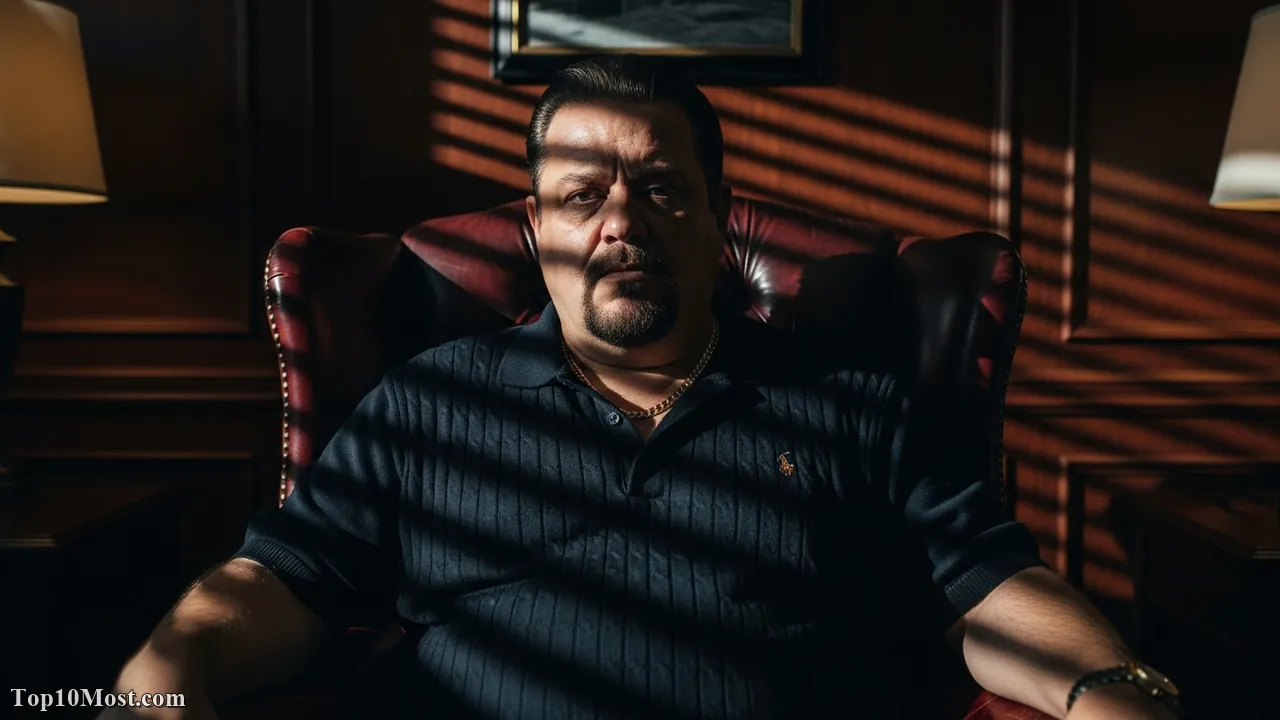
Tony Soprano is rightly credited as the Founding Anti-Hero of Prestige TV. His show, The Sopranos, was the blueprint for the cinematic, serialized drama that HBO—and later all of streaming—would chase for decades. By exploring his psychological world through sessions with Dr. Melfi, the show gave an unprecedented intimacy to his flaws, inspiring the creation of every complex, morally ambiguous lead that followed, from Walter White to Don Draper and beyond.
The reason Tony remains so fascinating is his terrifying relatability. His struggle to balance work, family, and personal demons—albeit an extreme version—tapped into universal anxiety. The show’s famous, ambiguous final cut to black, which left his fate forever unresolved, stands as one of television’s most profound and discussed endings, ensuring that the legacy of this troubled, iconic man is preserved in perpetual mystery.
Key Highlights
- Established the modern “prestige TV” drama format and the sympathetic anti-hero.
- James Gandolfini’s performance is widely regarded as one of the greatest in television history.
- The character is the subject of countless academic studies on morality and psychology in media.
- The series received multiple Emmy Awards and a Peabody Award for excellence.
#2. Homer Simpson
D’oh! The patriarch of the animated cultural juggernaut, Homer J. Simpson, has been a fixture on global television since 1989, becoming the definitive portrait of the lovable, beer-guzzling, deeply flawed, and perpetually relatable American Everyman. With his iconic catchphrases, unpredictable impulses, and deep-seated but often misguided love for his family, Homer is less a character and more a mirror reflecting the contradictions, laziness, and simple desires of modern society.
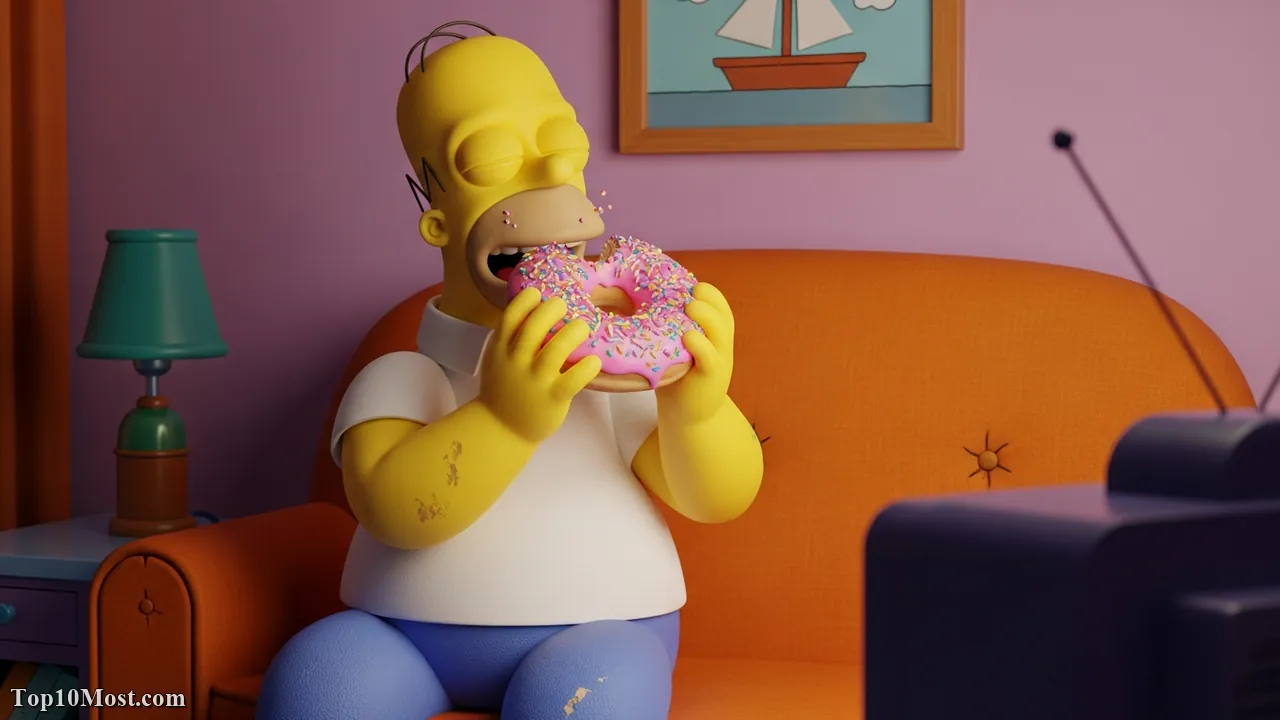
Homer’s number two ranking is secured by his nearly unparalleled longevity and cultural saturation. As the lead of the longest-running scripted show in television history, he is instantly recognizable in virtually every country on Earth. He has influenced comedic writing, satire, animation, and popular vocabulary more profoundly than almost any other character, making him a living, breathing symbol of animation’s power to comment on the human condition.
The true genius of Homer is his ability to embody both ignorance and unexpected depth. While his pursuit of doughnuts and simple comfort drives much of the comedy, moments of genuine, profound tenderness with his children or his wife Marge keep him grounded. He is the ultimate fool, whose foolishness often accidentally teaches us a greater truth about the importance of family and the simple pleasure of a good nap.
Key Highlights
- The main character of the longest-running scripted show in television history (over 35 years as of current time).
- Catchphrases like “D’oh!” and “Mmm…” are globally recognized and dictionary-listed.
- Named the “Greatest Television Character” of the 20th Century by Time magazine.
- A foundational figure who elevated animated satire into a primetime medium.
#1. The Doctor
The Doctor, the eccentric, time-traveling alien from the planet Gallifrey, is not just a character; they are a myth, an immortal force for good constantly renewed through the miracle of regeneration. Since 1963, The Doctor has taken on multiple distinct personalities—each portrayed by a different actor—but the core essence of the whimsical, brilliant, and deeply compassionate Time Lord has remained. This regenerative nature is the secret to the character’s unique, unparalleled longevity.
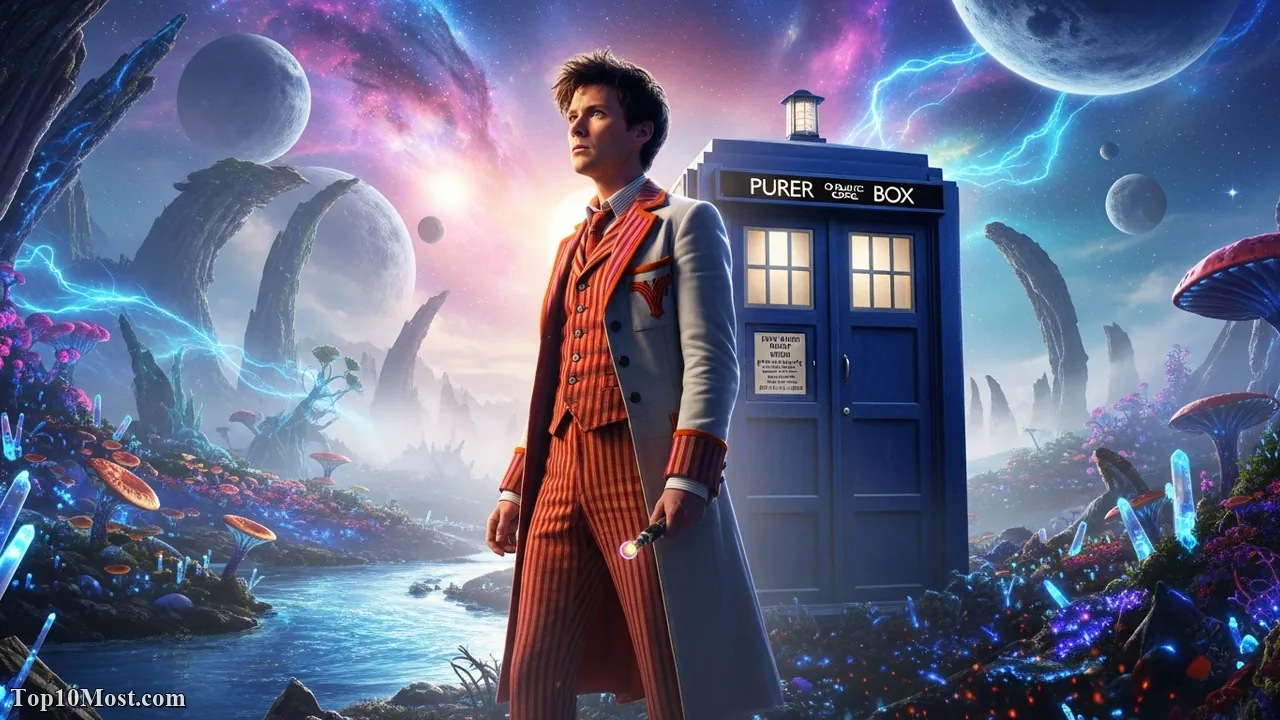
The Doctor holds the top rank because of the character’s unique structural and cultural impact: no other fictional figure has endured and remained culturally relevant for over six decades while deliberately shifting their appearance, gender, and personality. This continuous, flexible identity has allowed the character to constantly adapt to every new generation’s social, scientific, and philosophical anxieties. The Doctor represents boundless optimism, boundless curiosity, and the ultimate, hopeful capacity for self-reinvention—a powerful and enduring message.
What resonates most deeply about The Doctor is the essential kindness and moral clarity that survives every change of face. They are a weaponless hero who defeats monsters with wit, scientific understanding, and a fundamental belief in the good of others. Whether grumpy, dashing, or fiercely clever, The Doctor’s call to adventure remains the same: step outside your front door and be utterly amazed by the wonder and terror of the universe, but always, always, be kind.
Key Highlights
- The central figure of the longest-running science fiction television show in history (1963–Present).
- The concept of “regeneration” allowed the character to survive and reinvent themselves over six decades.
- A global icon symbolizing boundless curiosity, brilliance, and moral heroism.
- The character is internationally influential in science, technology, and fan culture.
Conclusion
The ten figures highlighted here are more than just successful roles; they are permanent landmarks in our collective cultural memory. From the slapstick anarchy of Lucy Ricardo to the profound moral decay of Walter White and the eternal optimism of The Doctor, these characters show us the full spectrum of the human (and sometimes alien) condition. They are the stories we tell ourselves about who we are, who we aspire to be, and the complex nature of power, ambition, and identity in the modern age. At Top 10 Most, we are confident that their legacies will continue to define the gold standard for character creation for generations to come, proving that the most compelling journeys always begin on the small screen.