The human experience is deeply intertwined with the sacred. Across the globe, billions of people pause their daily lives to honor ancient traditions, celebrate divine interventions, and reflect on the mysteries of existence. These holidays are not merely days off work; they are the spiritual anchors of culture, defining the rhythm of the year for major world religions.
In this ranking, we look beyond simple popularity to assess the true weight of these occasions. We consider the theological depth, the sheer number of observers, and the cultural footprint each holiday leaves on the world. As we navigate the close of 2025 and look toward 2026, these festivals remain vital touchstones of identity and community in an increasingly digital world.
The following list represents a reasoned analysis of the world’s most significant religious observances. From the solemn atonement of Yom Kippur to the exuberant colors of Holi, each entry highlights a unique facet of the human spirit’s search for the divine.
Table of the Top 10 Most Important Religious Holidays
| Rank | Holiday | Religion | Approx. Date (2025/2026) | Core Significance |
|---|---|---|---|---|
| 1 | Christmas | Christianity | Dec 25, 2025 | Birth of Jesus Christ (Incarnation) |
| 2 | Eid al-Fitr | Islam | Mar 20, 2026 (Est.) | Festival of Breaking the Fast (End of Ramadan) |
| 3 | Diwali | Hinduism | Nov 8, 2026 | Victory of Light over Darkness |
| 4 | Easter | Christianity | Apr 5, 2026 | Resurrection of Jesus Christ |
| 5 | Eid al-Adha | Islam | May 27, 2026 (Est.) | Festival of Sacrifice (End of Hajj) |
| 6 | Yom Kippur | Judaism | Sep 21, 2026 | Day of Atonement (Holiest day in Judaism) |
| 7 | Vesak | Buddhism | May 31, 2026 | Buddha’s Birth, Enlightenment, and Death |
| 8 | Holi | Hinduism | Mar 4, 2026 | Festival of Colors & Spring |
| 9 | Passover (Pesach) | Judaism | Apr 1, 2026 | Liberation from Egyptian Slavery |
| 10 | Guru Nanak Gurpurab | Sikhism | Nov 24, 2026 | Birth of the First Sikh Guru |
Top 10. Guru Nanak Gurpurab (Sikhism)
The streets of Punjab and Sikh communities worldwide come alive with the mesmerizing glow of processions and the continuous chanting of hymns during Guru Nanak Gurpurab. As the most important festival for Sikhs, it marks the birth anniversary of Guru Nanak Dev Ji, the founder of Sikhism. Gurdwaras (Sikh temples) are illuminated with lights, and langars (community kitchens) work tirelessly to feed millions of people regardless of their caste, creed, or background, embodying the core Sikh principle of selfless service.
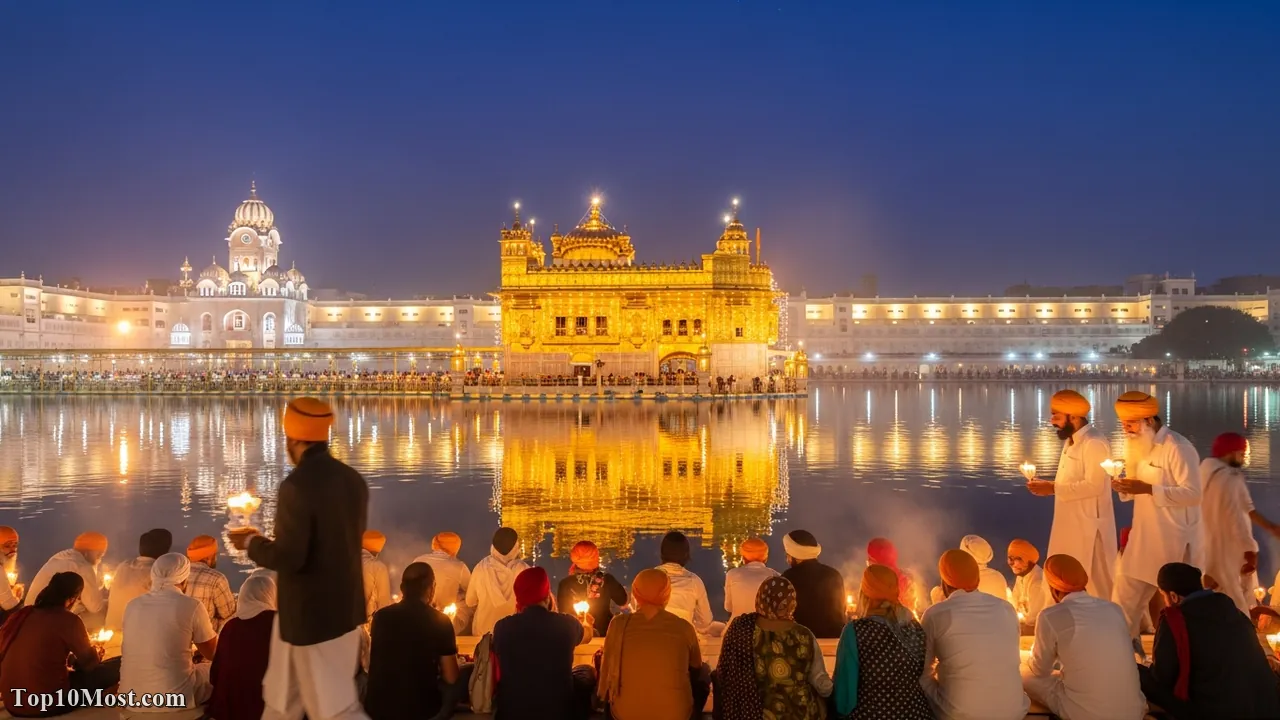
We rank this holiday in the top 10 due to its profound emphasis on equality and community service, which distinguishes Sikhism on the global stage. While the Sikh population is smaller compared to Christianity or Islam, the intensity of devotion and the sheer scale of the Nagar Kirtan (religious processions) make it a massive event. It is not just a birthday celebration; it is a reaffirmation of the teachings of peace, unity, and the oneness of God that Guru Nanak preached over 500 years ago.
There is something deeply moving about the atmosphere of a Gurpurab celebration. Witnessing thousands of volunteers preparing food for strangers captures the essence of humanity at its best. It serves as a powerful reminder that true spirituality is found not just in prayer, but in the service of others. In a divided world, the open doors of the Gurdwara during this festival stand as a beacon of radical inclusion.
Key Highlights
- Significance: Celebrates the birth of Guru Nanak, the founder of Sikhism.
- Key Tradition: Langar (free community meals) served to everyone without discrimination.
- Global Reach: Major celebrations in India, Canada, the UK, and the USA.
Top 9. Passover / Pesach (Judaism)
Passover is the foundational narrative of the Jewish people, a week-long observance that retells the story of the Exodus from Egypt. Families gather around the dinner table for the Seder, a ritual-rich meal where the story of liberation is read from the Haggadah. Matzah (unleavened bread) is eaten to remember the haste with which the Israelites fled slavery, leaving no time for their dough to rise. It is a holiday of memory, transmitted from generation to generation through taste, song, and question-and-answer.
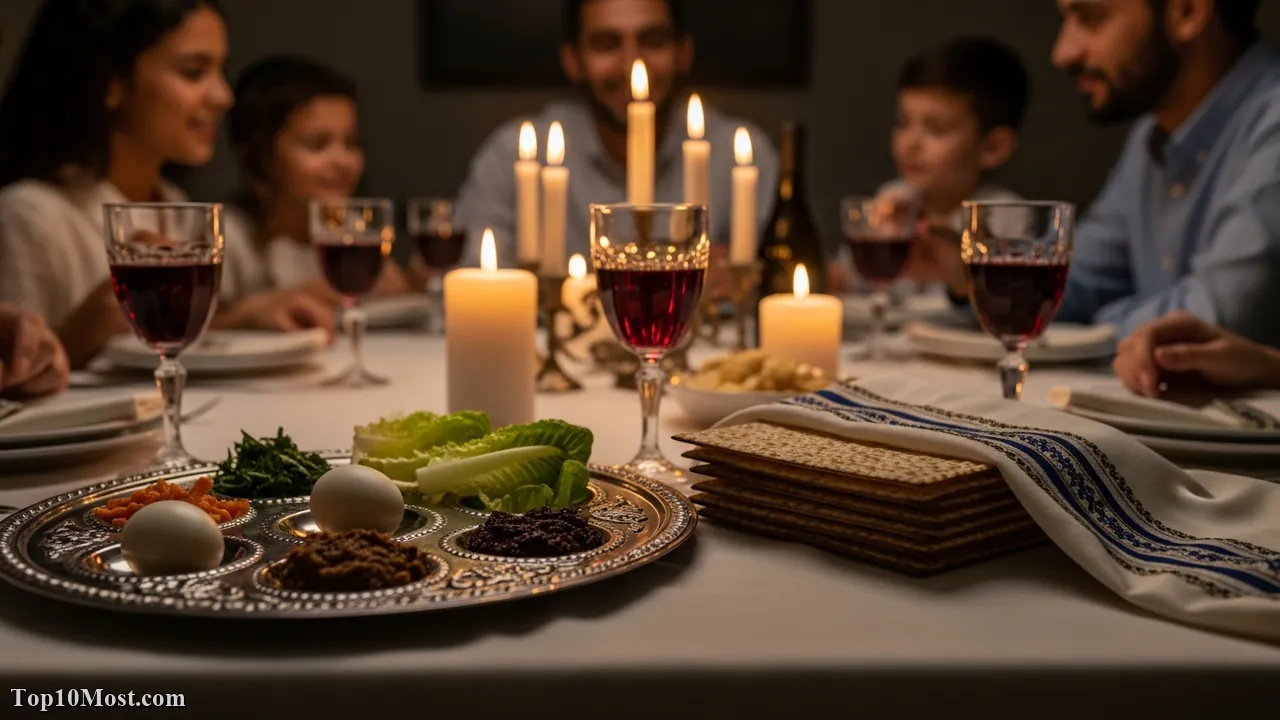
This holiday secures its place on our list because of its immense theological weight; it is the festival of freedom that defines Jewish identity. Unlike more public festivals, Passover is intensely domestic and educational, designed to instill history and values into the youth. Its themes of oppression and liberation have resonated far beyond Judaism, inspiring civil rights movements and freedom struggles globally.
The beauty of Passover lies in its order—the word “Seder” literally means order. In a chaotic world, there is comfort in a ritual that has remained largely unchanged for millennia. Breaking the matzah and dipping herbs in saltwater connects the modern observer directly to ancestors who walked the desert thousands of years ago. It is a poignant reminder that freedom is fragile and must be actively remembered and guarded.
Key Highlights
- Significance: Commemorates the liberation of Israelites from Egyptian slavery.
- Key Tradition: The Seder meal and eating Matzah (unleavened bread).
- Duration: Observed for 7 or 8 days, depending on location and tradition.
Top 8. Holi (Hinduism)
Few religious festivals are as visually arresting as Holi, the Hindu “Festival of Colors.” Marking the arrival of spring and the victory of good over evil (specifically the burning of the demoness Holika), the day turns streets into shifting clouds of pink, yellow, and green powder (gulal). Social boundaries dissolve as rich and poor, friend and stranger, drench each other in colored water and powder in a chaotic, joyous celebration of life and love.
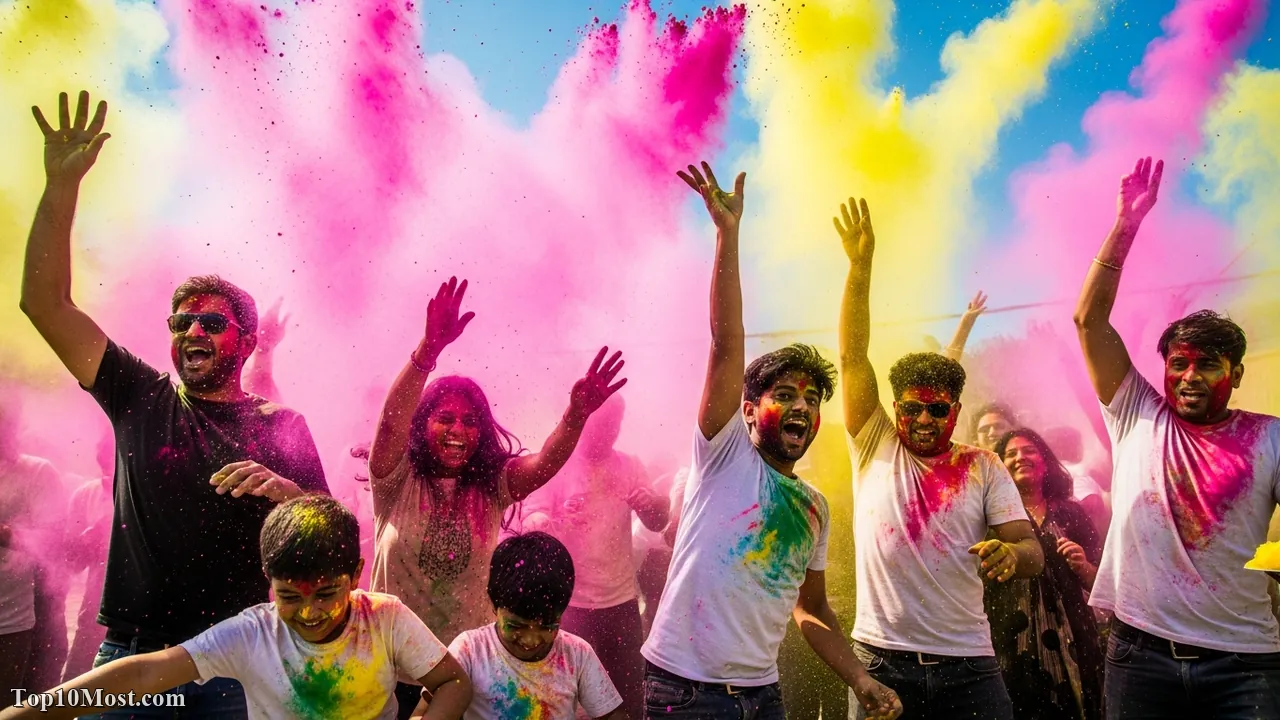
Holi ranks highly not just for its religious roots, but for its explosive global popularity. It has transcended its Hindu origins to become a cultural phenomenon celebrated in non-religious contexts across Europe and the Americas. However, at its core, it remains a sacred day in India and Nepal, symbolizing the divine love of Radha and Krishna and the rejuvenating power of nature.
Participating in Holi feels like a release valve for society. For one day, the rigid structures of daily life are washed away in a flood of color. It is a messy, loud, and utterly human celebration that forces you to let go of your inhibitions. The sight of a crowd, indistinguishable from one another under layers of paint, offers a fleeting glimpse of a world where our superficial differences no longer matter.
Key Highlights
- Significance: Welcomes spring and celebrates the triumph of good over evil.
- Key Tradition: Throwing colored powder (Gulal) and water at one another.
- Visual Identity: Known globally as the “Festival of Colors.”
Top 7. Vesak / Buddha Day (Buddhism)
Vesak is the holiest day for millions of Buddhists, particularly in the Theravada tradition. It is a “triple celebration,” commemorating the birth, enlightenment (nirvana), and death (parinirvana) of Siddhartha Gautama, the Buddha. Temples across Asia are adorned with lanterns and flowers, and devotees dress in white, spending the day in meditation, chanting, and performing acts of generosity known as dana.
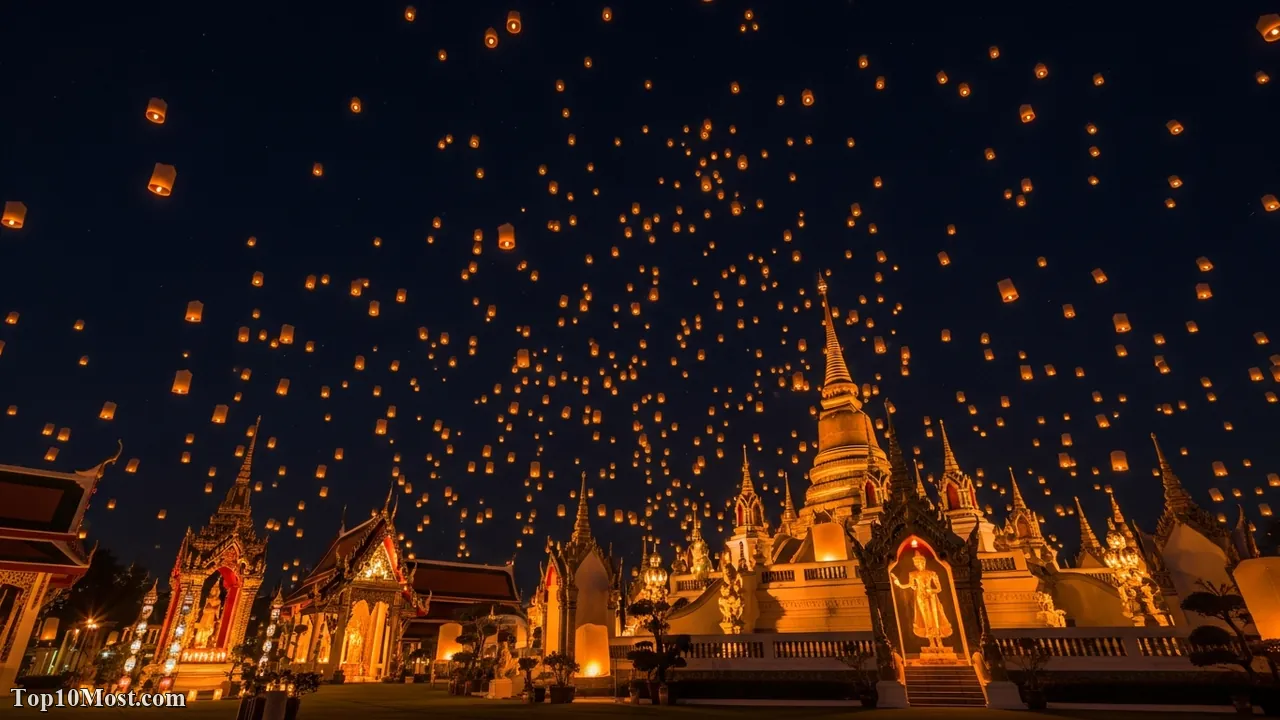
We place Vesak in the top tier because it honors the life of one of history’s most influential spiritual teachers. The festival is unique in its quietude compared to the boisterousness of other holidays; it is an inward-looking celebration focused on peace, compassion, and the cessation of suffering. In 1999, the United Nations recognized Vesak internationally, acknowledging the Buddha’s contribution to global spirituality.
There is a profound tranquility to Vesak that stands in stark contrast to the modern “hustle culture.” Watching the candlelight processions that often take place at dusk, one feels a collective slowing down—a shared breath. It is a day that asks us to look at the world with compassion and to remember that, like the lotus flower often associated with the Buddha, we too can rise above the mud of attachment to find clarity.
Key Highlights
- Significance: The Birth, Enlightenment, and Passing of the Buddha.
- Key Tradition: Lighting lanterns, meditation, and “bathing” the Buddha statue.
- Observation: Widely celebrated in Sri Lanka, Thailand, Vietnam, and East Asia.
Top 6. Yom Kippur (Judaism)
Yom Kippur, the Day of Atonement, is the holiest and most solemn day in the Jewish calendar. It marks the culmination of the “High Holy Days” that begin with Rosh Hashanah. For nearly 26 hours, observers abstain from food, drink, and other physical comforts to focus entirely on repentance and spiritual cleansing. Synagogues are full as the community recites prayers seeking forgiveness for sins committed against God and fellow human beings.
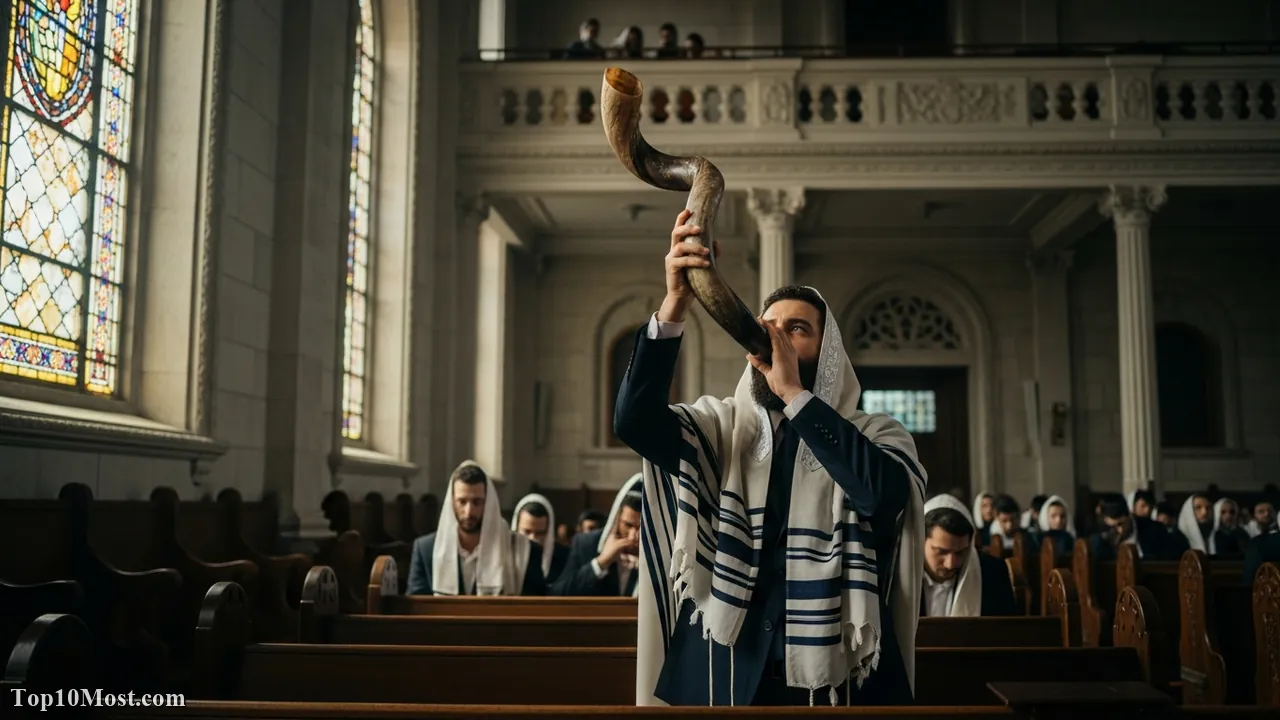
The ranking of Yom Kippur reflects its intense theological gravity. It is not a festival of feasting, but of fasting; not of celebration, but of introspection. It commands a level of reverence and participation that is rare, with even many secular Jews observing the fast. It represents the ultimate “reset button” for the soul, offering a chance to close the book on the past year and begin the new one with a clean slate.
The final hour of Yom Kippur, known as Ne’ilah, is incredibly powerful. As the sun sets and the fast nears its end, the congregation prays with increasing urgency before the “gates of heaven” close. The single, piercing blast of the Shofar (ram’s horn) that marks the end of the holiday brings a visceral sense of relief and renewal. It is a stark reminder of our mortality and the precious opportunity we have to change.
Key Highlights
- Significance: The Day of Atonement; the holiest day in Judaism.
- Key Tradition: 25-hour complete fast and intensive prayer.
- Tone: Solemn, reflective, and ultimately restorative.
Top 5. Eid al-Adha (Islam)
Known as the “Festival of Sacrifice,” Eid al-Adha honors the willingness of the Prophet Ibrahim (Abraham) to sacrifice his son as an act of obedience to God, before God provided a ram to sacrifice instead. Coinciding with the final days of the Hajj pilgrimage in Mecca, this holiday is marked by the ritual sacrifice of an animal (Qurbani), the meat of which is divided into three parts: one for the family, one for relatives, and one for the poor.
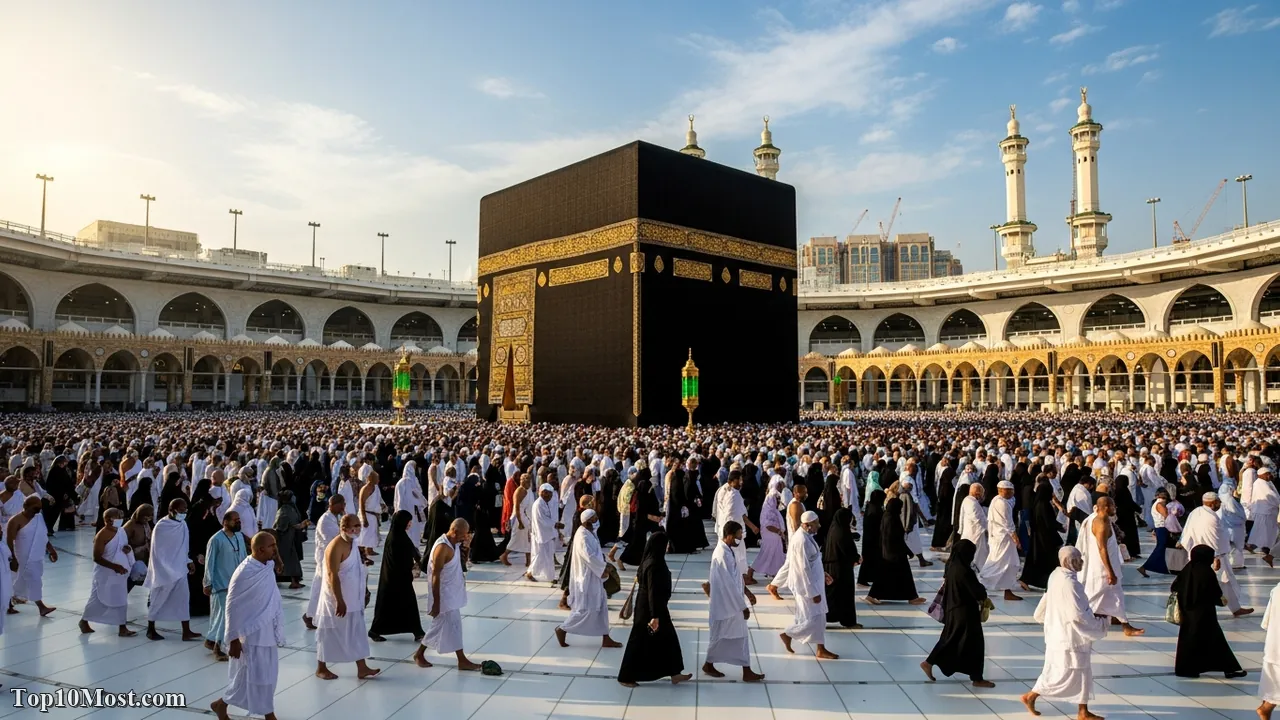
Eid al-Adha is theologically considered the “Greater Eid,” surpassing even Eid al-Fitr in holiness. Its ranking at number 5 is due to its deep connection to the Hajj, one of the Five Pillars of Islam. The festival underscores the concepts of submission to the divine will and charity. The mandatory distribution of meat ensures that even the poorest members of the community can join in the feast, highlighting Islam’s focus on social welfare.
Beyond the rituals, Eid al-Adha is a profound lesson in letting go. It asks the believer: what are you holding onto that matters more than your principles? The act of sharing the bounty with the less fortunate grounds the holiday in reality. It transforms a theological story into a tangible act of kindness, bridging the gap between ancient scripture and modern social responsibility.
Key Highlights
- Significance: Honors Abraham’s devotion; marks the end of the Hajj pilgrimage.
- Key Tradition: Qurbani (sacrifice of livestock) and charity to the poor.
- Status: Considered the holiest of the two Islamic Eids.
Top 4. Easter (Christianity)
Easter Sunday is the cornerstone of the Christian faith, celebrating the resurrection of Jesus Christ three days after his crucifixion. It marks the end of Holy Week and the penitential season of Lent. Churches worldwide, from the Vatican to small village chapels, erupt in joyous celebration with the proclamation “He is risen!” The day is filled with special liturgical services, flowers (often lilies), and feasting.
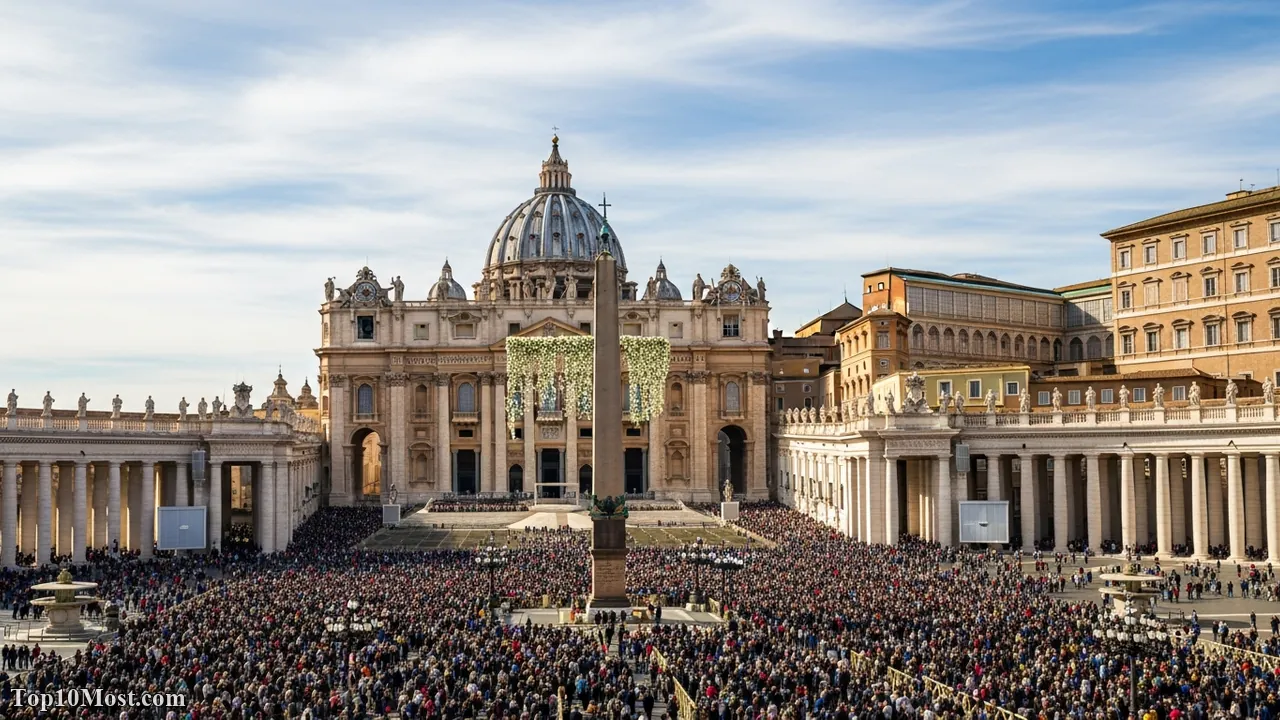
While Christmas may be more culturally pervasive, Easter is theologically the most important day in Christianity. Without the Resurrection, the Christian faith would not exist. We rank it here because it is the central event for the world’s largest religion (approx. 2.4 billion adherents). The diverse traditions—from the lighting of the Paschal candle to sunrise services—reflect a global faith that has adapted to every culture it touches.
Easter carries a universal message of hope and renewal that resonates even outside the church. It speaks to the possibility of new life emerging from the depths of despair. Whether it’s the solemnity of the sunrise service or the simple joy of an egg hunt with children, Easter signals that winter is over, both seasonally and spiritually. It is a triumphant affirmation of life.
Key Highlights
- Significance: The Resurrection of Jesus Christ; victory over death.
- Key Tradition: Sunrise services, Paschal greetings, and feasting.
- Theology: The absolute central feast of the Christian liturgical year.
Top 3. Diwali (Hinduism)
Diwali, the “Festival of Lights,” is a dazzling five-day celebration that spiritually signifies the victory of light over darkness, good over evil, and knowledge over ignorance. Homes, shops, and public places are decorated with small oil lamps called diyas. The skies of India—and increasingly cities like London, Dubai, and New York—light up with fireworks. It is a time for family gatherings, new clothes, and the worship of Lakshmi, the goddess of wealth and prosperity.
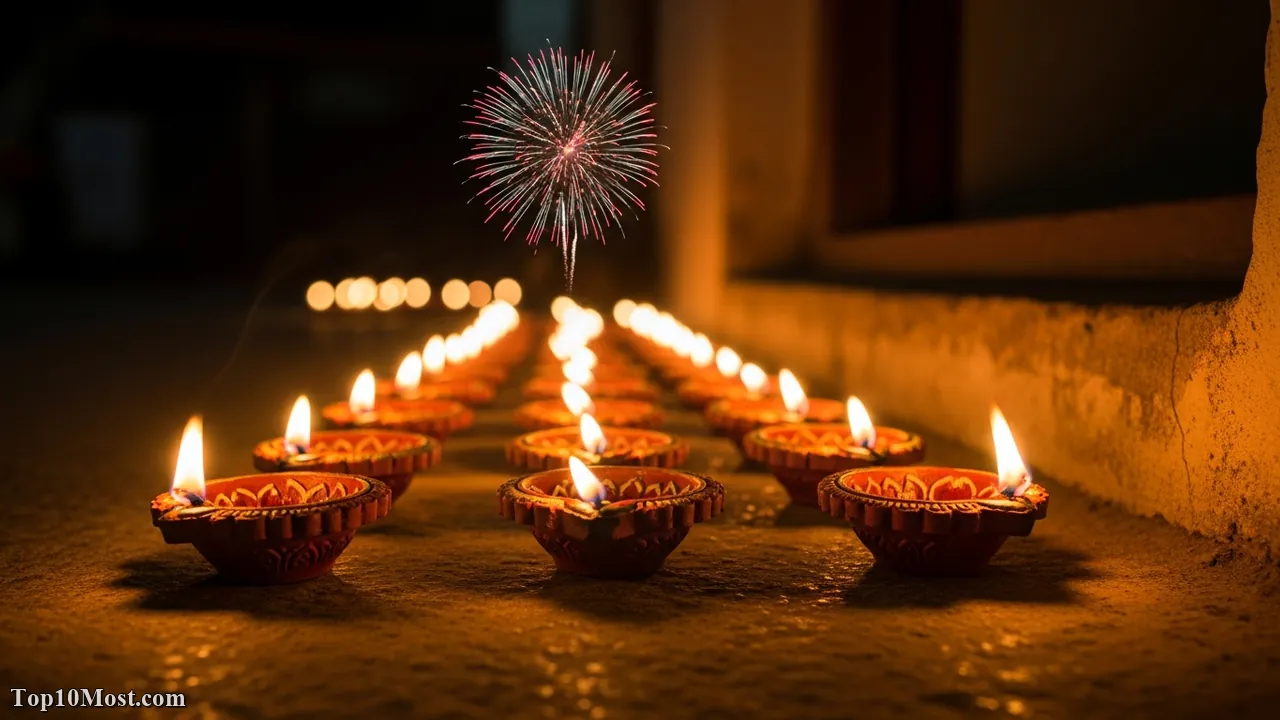
Diwali enters the top 3 due to its sheer scale and visual magnificence. It is the biggest holiday for Hindus, Jains, and Sikhs (who celebrate Bandi Chhor Divas concurrently), uniting over a billion people. The economic and cultural impact of Diwali is staggering, comparable to the Christmas season in the West. It is a festival that engages all the senses, from the brightness of the lamps to the taste of endless sweets (mithai).
There is a magical quality to a Diwali night. Walking through a neighborhood lit by thousands of flickering earthen lamps invokes a sense of warmth and welcome. It reminds us that no matter how dark the world may seem, a single light can make a difference. The tradition of leaving windows open to welcome Goddess Lakshmi is a beautiful metaphor for keeping our hearts open to prosperity and grace.
Key Highlights
- Significance: Victory of light over darkness; return of Lord Rama.
- Key Tradition: Lighting diyas (oil lamps) and firework displays.
- Reach: The primary festival for over 1 billion Hindus worldwide.
Top 2. Eid al-Fitr (Islam)
Eid al-Fitr, the “Festival of Breaking the Fast,” is the joyous conclusion to Ramadan, the Islamic month of fasting, prayer, and reflection. As the new moon is sighted, the solemnity of Ramadan dissolves into three days of vibrant celebration. The day begins with a special communal prayer at the mosque or open grounds, followed by visiting family and friends, exchanging gifts, and enjoying grand feasts during daylight hours for the first time in a month.
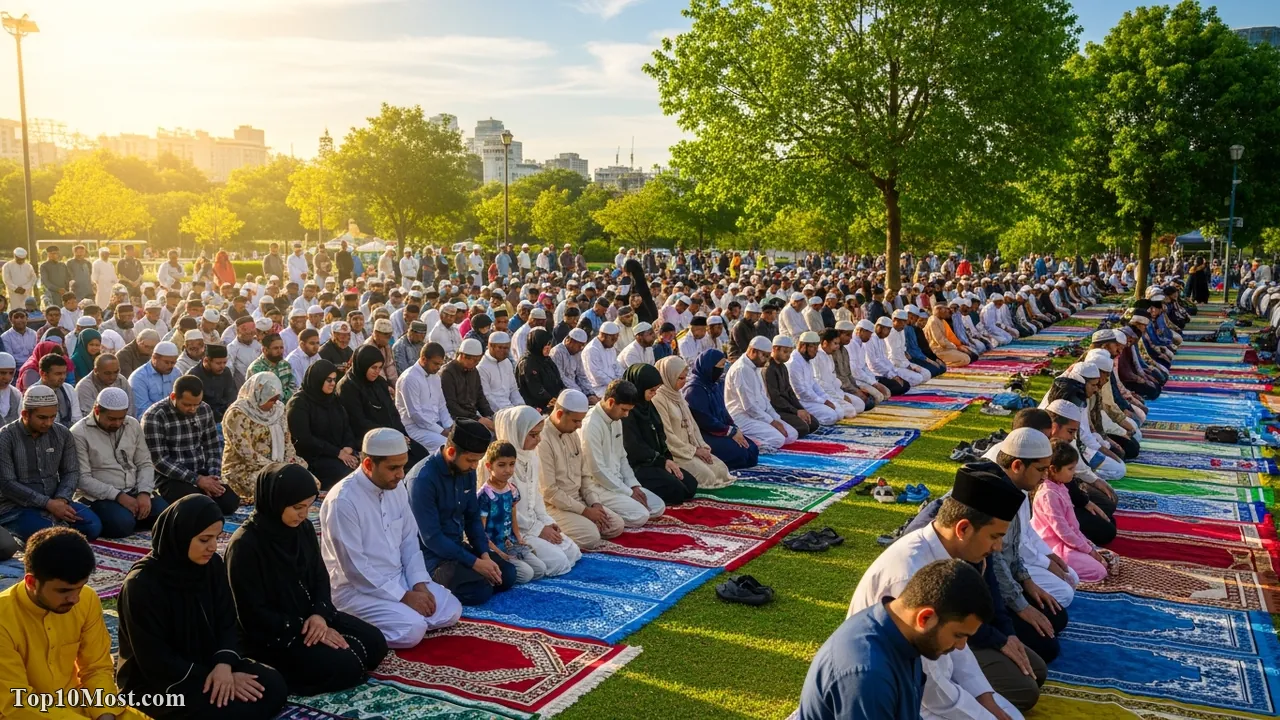
We rank Eid al-Fitr at number 2 because of the intense collective experience that precedes it. After 30 days of shared discipline and hunger, the release of Eid creates a palpable wave of joy across the Muslim world—from Indonesia to Morocco. With nearly 2 billion Muslims participating, it is one of the largest synchronized human events on the planet. It is not just a party; it is a spiritual thanksgiving for having the strength to complete the fast.
The spirit of Eid is best captured in the greeting “Eid Mubarak” (Blessed Eid) exchanged between strangers and friends alike. The emphasis on Zakat al-Fitr (mandatory charity given before the prayer) ensures that the joy is inclusive. It is a holiday that perfectly balances personal spiritual achievement with communal solidarity, reminding us that true celebration involves lifting others up with us.
Key Highlights
- Significance: Marks the end of the holy month of Ramadan.
- Key Tradition: Communal prayers, feasting, and wearing new clothes.
- Vibe: Joyful, communal, and charitable.
Top 1. Christmas (Christianity)
Christmas, commemorating the birth of Jesus Christ, stands as the most widely observed religious holiday on Earth. While its theological roots are in the Nativity story found in the Gospels, its reach has expanded to become a global cultural phenomenon. From the Midnight Mass in quiet churches to the bustling markets of secular cities, December 25th (or January 7th for Orthodox Christians) halts the world in a way no other date does.

Christmas takes the #1 spot not only because of the 2.4 billion Christians who observe it as a holy day but because of its unparalleled ability to cross boundaries. It is the only religious festival that is a national holiday in over 160 countries. The fusion of sacred traditions (carols, nativity scenes) with secular customs (gift-giving, family reunions) creates a season that dominates the global consciousness for weeks.
At its heart, stripped of the commercialism, Christmas is about a miracle in a manger—a story of humility and love entering the world in the most vulnerable form. It triggers a “Christmas Spirit” of generosity that seems to soften the world, even if just for a few days. The sight of lights in the darkness of winter speaks to a primal human need for hope. It is the ultimate connector, bringing families home and inviting the world to pause and rejoice.
Key Highlights
- Significance: The Nativity (Birth) of Jesus Christ.
- Global Status: Public holiday in 160+ nations; largest economic impact.
- Core Theme: Peace on Earth, goodwill to all.
Conclusion
The diversity of these “Top 10” holidays reveals a singular truth: humanity has a deep, intrinsic need to mark time with meaning. Whether it is through the fasting of Yom Kippur, the feasting of Eid, or the lighting of lamps during Diwali, we are all seeking connection—with the divine, with our history, and with each other.
As we move through late 2025 and into 2026, these days serve as necessary pauses in our accelerated lives. They remind us that while our theologies may differ, our values of gratitude, sacrifice, hope, and charity are universally shared. At Top 10 Most, we believe that understanding these holy days is not just about religious literacy; it is about understanding the heartbeat of the human family.