Architecture is more than just shelter; it is the physical language of human history, a freezing of music into stone, steel, and glass. As we move through 2025, a year where the architectural world is increasingly focused on biophilic design and sustainability, our appreciation for the aesthetic triumphs of the past has only deepened. In an era of rapid digital fabrication and AI-generated concepts, the tactile, deliberate beauty of historic styles offers a grounding sense of humanity.
The data and analysis in this article are compiled based on information and critical aesthetic consensus updated as of December 2025. While beauty is inherently subjective, certain styles have transcended their eras to become universal standards of elegance, power, and harmony. Our ranking is not just a list of “pretty buildings,” but an examination of styles that have successfully married form, function, and emotion.
At Top 10 Most, we look for the “soul” in the structure. We have evaluated these styles based on their historical significance, their adherence to the golden ratios of design, and their lasting ability to evoke awe in the modern viewer. From the soaring heights of the medieval age to the clean lines of the 20th century, these are the styles that stand the test of time.
Table of the Top 10 Most Beautiful Architectural Styles
| Rank | Architectural Style | Key Characteristic | Iconic Example |
|---|---|---|---|
| 1 | Classical (Greek & Roman) | Symmetry, Columns, Proportion | The Parthenon (Athens) |
| 2 | Gothic | Pointed Arches, Verticality | Notre-Dame de Paris |
| 3 | Art Deco | Geometric, Glamorous, Vertical | Chrysler Building (NYC) |
| 4 | Renaissance | Harmony, Geometry, Humanism | St. Peter’s Basilica (Vatican) |
| 5 | Baroque | Drama, Motion, Opulence | Palace of Versailles (France) |
| 6 | Art Nouveau | Organic Lines, Asymmetry | Casa Batlló (Barcelona) |
| 7 | Neoclassical | Grandeur, Order, Simplicity | The White House (USA) |
| 8 | Islamic (Moorish) | Intricate Geometry, Courtyards | The Alhambra (Spain) |
| 9 | Bauhaus (Modernism) | Functionality, Clean Lines | Bauhaus Dessau (Germany) |
| 10 | Victorian | Ornamentation, Eclecticism | Painted Ladies (San Francisco) |
Top 10. Victorian
Victorian architecture, dominant during the reign of Queen Victoria (1837–1901), is less a single style and more a collection of romantic revivals, including Gothic Revival and Queen Anne. It is characterized by its unapologetic complexity: asymmetrical facades, steeply pitched roofs, decorative trim (often called “gingerbread”), and vibrant colors. In the current time, we often associate this style with the charming “dollhouse” aesthetic seen in San Francisco or the imposing brick row houses of London. It represents a time when industrial mass production allowed middle-class homeowners to add lavish ornamentation to their dwellings.

We rank Victorian at number 10 because it captures the beauty of detail and nostalgia. While modern trends often lean toward minimalism, Victorian architecture is a celebration of “more is more.” The beauty lies in the texture; the bay windows that invite light, the turrets that offer a sense of whimsy, and the intricate woodwork that showcases human craft. It is a style that tells a story, often feeling cozy and domestic despite its ornate nature.
Walking past a well-preserved Victorian home feels like stepping into a novel. There is a distinct warmth to these structures; they were built to accommodate large families and complex social lives. In 2025, as we seek to reclaim “character” in our living spaces, the eccentricity of the Victorian style reminds us that our homes can be expressions of personality rather than just efficient boxes.
Key Highlights
- Era: Mid-to-late 19th Century (Industrial Revolution peak).
- Signature Feature: Intricate wooden trim (“gingerbread”) and asymmetrical shapes.
- Emotional Impact: Evokes nostalgia, whimsy, and domestic warmth.
Top 9. Bauhaus (Modernism)
Emerging from the German art school operative from 1919 to 1933, the Bauhaus style radically transformed the world by declaring that “form follows function.” This architectural philosophy stripped away the ornamentation of the past, favoring steel, glass, and concrete in simple, geometric forms. It is the grandfather of the skyscrapers and minimalist homes we see today. The beauty of Bauhaus is not in what is added, but in what is removed, revealing the honest structure of the building.

The inclusion of Bauhaus in a list of “beautiful” styles is controversial to traditionalists, but essential for a reasoned analytical perspective. Its beauty is intellectual and clarifying. There is a profound elegance in a building that works perfectly, where light and space are the primary decorations. In our current cluttered information age, the visual silence and clarity of a Bauhaus structure offer a peaceful respite. It proves that utility does not have to be ugly; it can be sublime.
When I look at a Bauhaus building, I don’t see “coldness”—I see optimism. This style was born from a desire to use technology to improve life for everyone, not just the elite. It represents a democratic kind of beauty. The clean lines and open floor plans compel us to live with intention, removing the unnecessary to focus on what truly matters.
Key Highlights
- Philosophy: Form follows function; rejection of unnecessary ornament.
- Materials: Industrial materials like glass, steel, and reinforced concrete.
- Legacy: The direct ancestor of almost all contemporary commercial architecture.
Top 8. Islamic (Moorish)
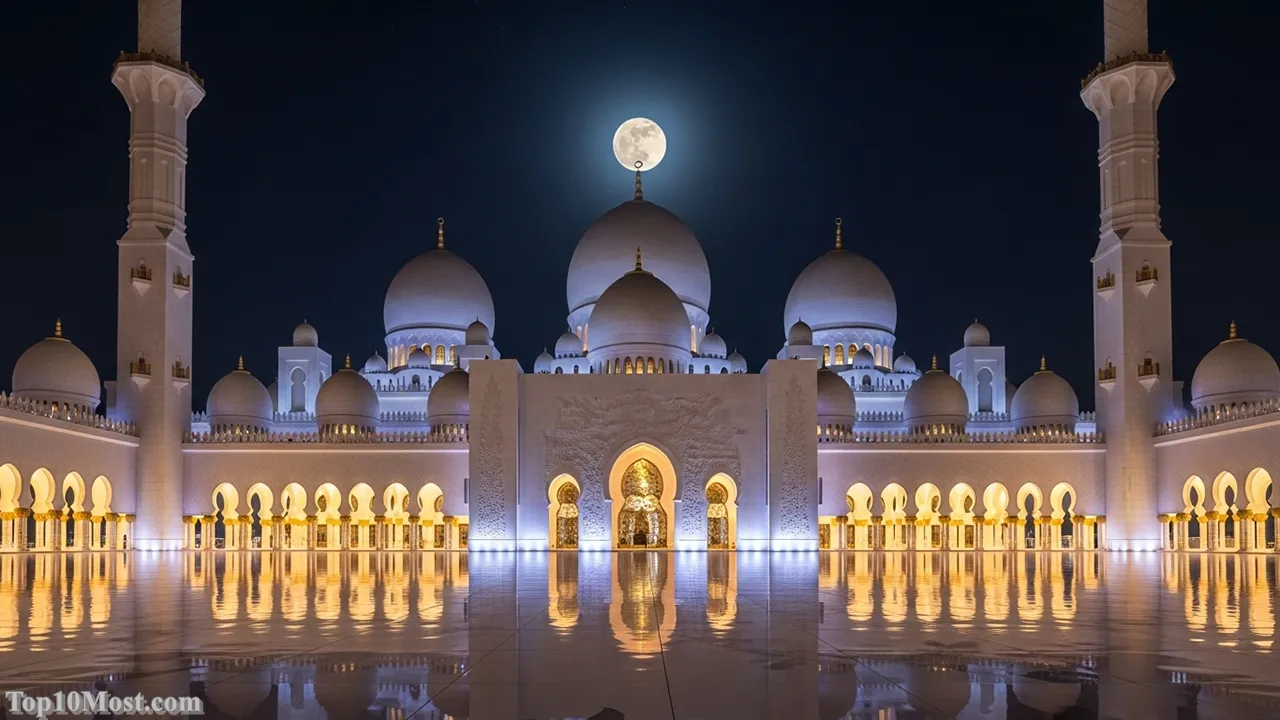
Islamic architecture, particularly the Moorish style seen in North Africa and Spain, offers a dazzling alternative to the Western canon. Because the depiction of sentient beings was often discouraged in religious contexts, architects channeled their creativity into complex geometry, calligraphy, and arabesque patterns. Key features include the horseshoe arch, the muqarnas (honeycomb vaulting), and an emphasis on interior courtyards (riads) that create a private, paradise-like oasis protected from the outside world.

The beauty here is mathematical and spiritual. The intricate geometric patterns are theoretically infinite, meant to encourage contemplation of the infinite nature of the divine. We rank this style highly because it masters the manipulation of light and shadow. The perforated screens and water features common in these structures create a sensory experience that is cooling, calming, and visually hypnotic. It is architecture designed to engage the mind as much as the eye.
There is a profound sense of “hidden treasure” in Islamic architecture. The exteriors are often modest, focusing inward toward a central courtyard filled with water and greenery. This contrast—the humble shell protecting a jewel-like interior—is a beautiful metaphor for the human soul. Standing in the Alhambra, listening to the trickle of water amidst thousands of carved tiles, one feels a serenity that few other styles can achieve.
Key Highlights
- Key Element: Infinite geometric patterns and arabesques.
- Focus: Internal beauty (courtyards) over external imposition.
- Vibe: Serene, mathematical, and contemplative.
Top 7. Neoclassical
Rising in the mid-18th century as a reaction against the excessive ornamentation of Rococo and Baroque, Neoclassical architecture sought to return to the purity of Rome and Greece. This is the style of government: the White House, the British Museum, and the pantheons of Paris. It is characterized by grand scale, blank walls, massive columns, and a strict adherence to symmetry. It conveys permanence, rationality, and civic virtue.
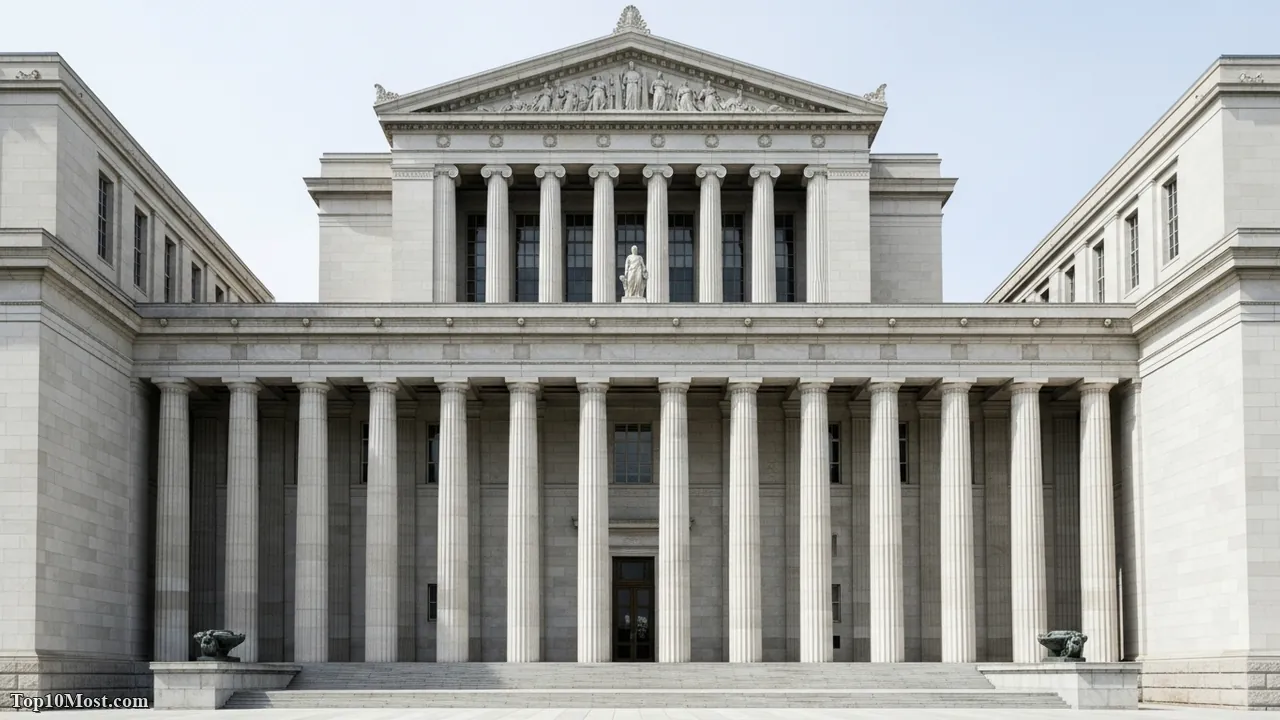
Neoclassical architecture earns its place as the embodiment of authority and order. It is beautiful because it feels stable. In a volatile world, the heavy, grounded nature of Neoclassical buildings provides a psychological anchor. The style does not ask for attention with flashy details; it commands respect through proportion and scale. It represents the Enlightenment ideals of reason and democracy, making it the chosen aesthetic for the world’s great public institutions.
While some may find it rigid, I view Neoclassical architecture as a cleansing of the palette. It is the architectural equivalent of a well-tailored suit—timeless, dignified, and always appropriate. It reminds us of our collective history and the foundations upon which our modern societies are built. There is a comforting rhythm in the repetitive columns that speaks to the enduring nature of civilization.
Key Highlights
- Inspiration: A revival of Greek and Roman logic during the Enlightenment.
- Purpose: Often used for libraries, museums, and government buildings to project stability.
- Aesthetic: Clean, symmetrical, and monumental.
Top 6. Art Nouveau
Flourishing briefly between 1890 and 1910, Art Nouveau (“New Art”) was a dramatic attempt to break away from historical imitation. Architects like Antoni Gaudí and Victor Horta turned to nature for inspiration, rejecting straight lines in favor of “whiplash” curves, organic forms, and asymmetry. Buildings in this style often look like they were grown rather than built, featuring ironwork twisted into vines, stained glass depicting flowers, and undulating walls.
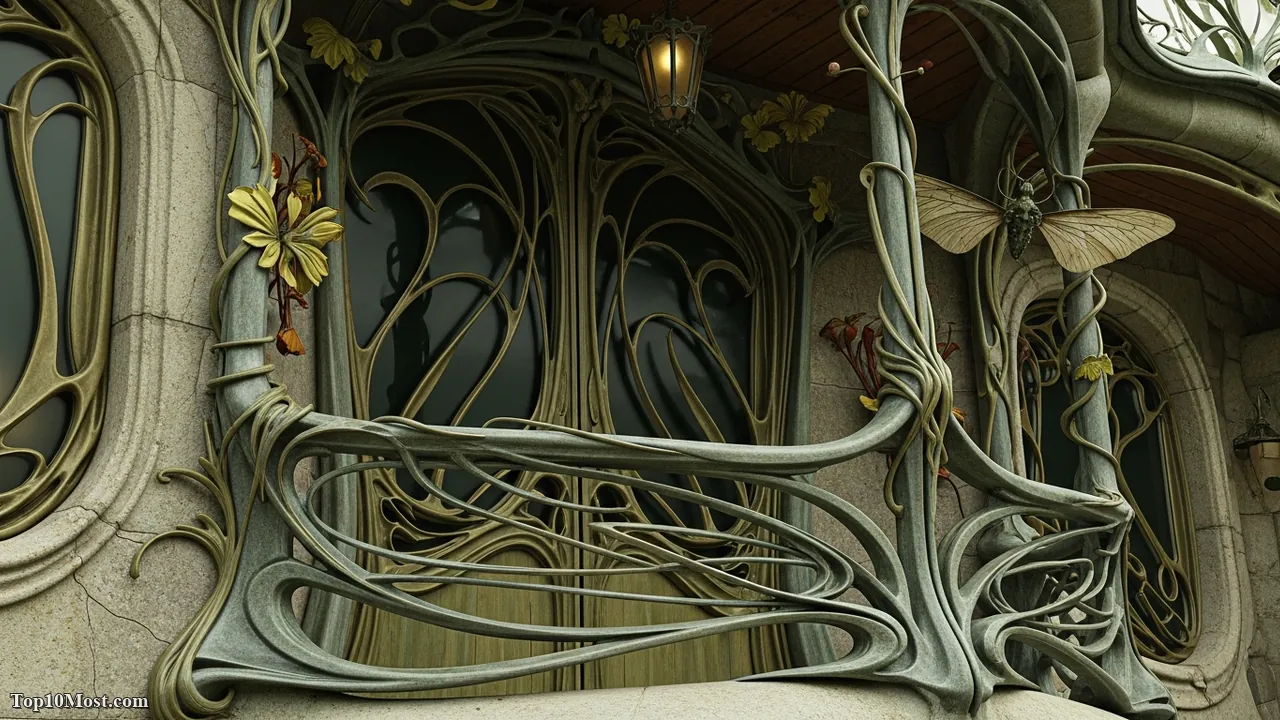
Art Nouveau is the rebellion of beauty against the industrial machine. We rank it here because it is arguably the most “alive” of all styles. It aligns perfectly with the 2025 interest in biophilic design, as it sought to blur the line between the natural and the man-made. The beauty lies in its fluidity; the building feels dynamic, as if it is constantly in motion. It transforms hard materials like metal and stone into something that appears soft and yielding.
There is a dreamlike quality to Art Nouveau that is utterly unique. It feels optimistic and slightly fantastical, a brief moment in history where architects decided that utility was not enough—buildings had to be enchanting. Gaudí’s works in Barcelona, for instance, don’t just house people; they invite them into a fairy tale. It is a reminder that imagination is a valid structural element.
Key Highlights
- Motto: Inspired by natural forms and structures, not flowers but the stems.
- Characteristics: “Whiplash” curves, asymmetry, stained glass, and organic ironwork.
- Legacy: A precursor to modernism, bridging the gap between craft and industry.
Top 5. Baroque
Originating in late 16th-century Italy, Baroque architecture was designed to impress and awe. It was the style of the Catholic Church and absolute monarchs, used to express triumph and power. Baroque buildings are theatrical: they use painted ceilings, dramatic lighting, bold contrasts, and curving walls to create illusions of movement and infinity. The Palace of Versailles and St. Paul’s Cathedral are prime examples of this high-drama aesthetic.

Baroque is the architecture of emotion and spectacle. It creates a physical reaction in the viewer—a gasp of wonder. We consider it one of the most beautiful styles because it understands the power of light. Baroque architects mastered chiaroscuro, manipulating sunlight to highlight specific religious or royal focal points. It is not subtle; it is an overwhelming sensory experience designed to make the viewer feel small in the presence of greatness.
While it can be seen as excessive by modern standards, the sheer ambition of Baroque is deeply moving. It represents a time when humanity tried to pull the heavens down to earth. The integration of painting, sculpture, and architecture into one cohesive “Gesamtkunstwerk” (total work of art) is a testament to human creativity unleashed without restraint.
Key Highlights
- Keywords: Theatrical, emotional, opulent, dynamic.
- Technique: Use of light and shadow, trompe-l’œil painting, and oval shapes.
- Goal: To evoke awe and inspire religious or political devotion.
Top 4. Renaissance
The Renaissance (“Rebirth”) marked a return to the classical clarity of Rome but filtered through a new lens of humanism and intellect. Starting in Florence in the 15th century with architects like Brunelleschi, this style emphasized symmetry, proportion, and geometry (the circle and the square). Unlike the soaring, mysterious Gothic style that preceded it, Renaissance architecture was grounded, rational, and comprehensible to the human eye.

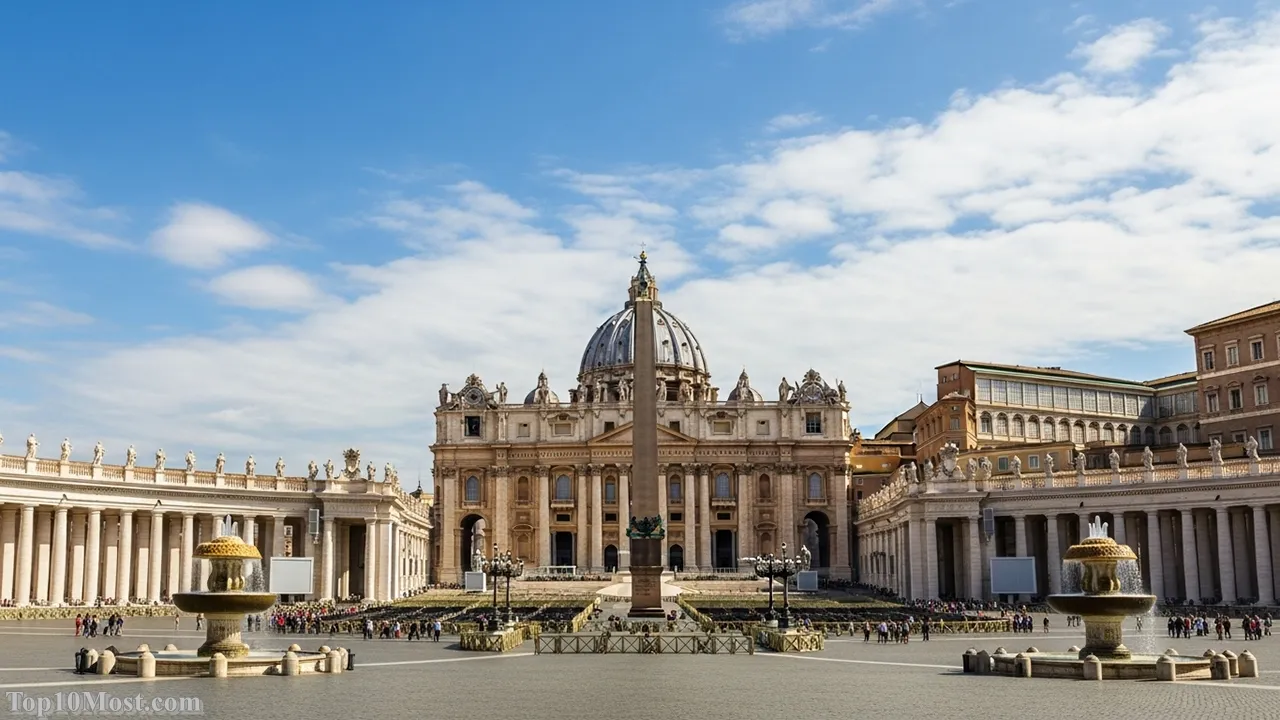
This style is the definition of harmonic beauty. It ranks in the top four because it represents the perfect balance between the human scale and the divine. Renaissance buildings, such as St. Peter’s Basilica or the palazzos of Florence, feel “right” to us because they are designed according to mathematical ratios that exist in nature (like the Golden Ratio). There is no chaos here, only a peaceful, logical order that elevates the human spirit.
The Renaissance taught us that beauty is a science. When I look at a Renaissance facade, I see the awakening of the modern mind—a shift from superstition to calculation. Yet, it is not cold calculation; it is a warm, humanist approach that places humanity at the center of the universe. It is the architecture of enlightenment, standing as a monument to what human reason can achieve.
Key Highlights
- Core Principle: A revival of Ancient Roman forms emphasizing symmetry and proportion.
- Key Features: Domes, columns, pilasters, and lintels.
- Atmosphere: Rational, peaceful, and harmonious.
Top 3. Art Deco
Bursting onto the scene in the 1920s and 30s, Art Deco is the style of the Machine Age, jazz, and the skyscraper. It combines the verticality of Gothic with modern geometric motifs and luxurious materials like chrome, glass, and exotic woods. It is streamlined and sleek, often featuring “ziggerat” (stepped) shapes and sunburst patterns. It is the visual language of The Great Gatsby and the skyline of New York City.
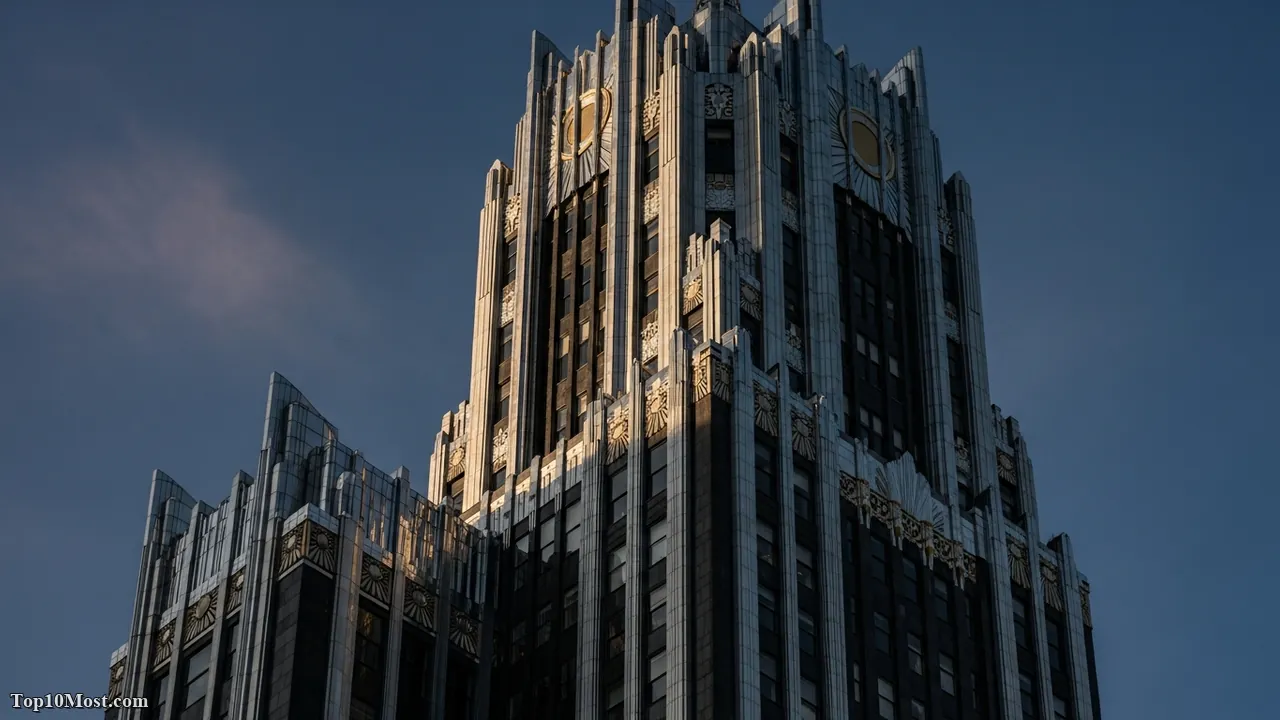
Art Deco is the architecture of optimism and glamour. It takes the bronze medal because it is fiercely distinct and universally loved. It managed to be modern without being boring, and decorative without being old-fashioned. The style exudes a sense of forward momentum; the vertical lines draw the eye upward, symbolizing progress and the future. In the context of 2025, Art Deco remains the gold standard for “cool” elegance.
There is a cinematically heroic quality to Art Deco. It was born between two world wars, a desperate grasp for beauty and luxury in uncertain times. That resilience resonates today. When you see the stainless steel gargoyles of the Chrysler Building gleaming in the sun, you aren’t just looking at a building; you are looking at the sheer confidence of the 20th century. It is bold, stylish, and unapologetically beautiful.
Key Highlights
- Era: Roaring Twenties to the Great Depression.
- Aesthetic: Vertical lines, geometric shapes, expensive materials, and streamlining.
- Symbolism: Progress, luxury, and the modern age.
Top 2. Gothic
Developing in France in the 12th century, Gothic architecture solved the problem of dark, heavy buildings by inventing the flying buttress, the ribbed vault, and the pointed arch. These innovations allowed walls to become thinner and higher, opening up vast spaces for stained glass. This is the style of the great cathedrals: Notre-Dame, Chartres, and Westminster Abbey. It is a skeletal stone framework wrapped in light.
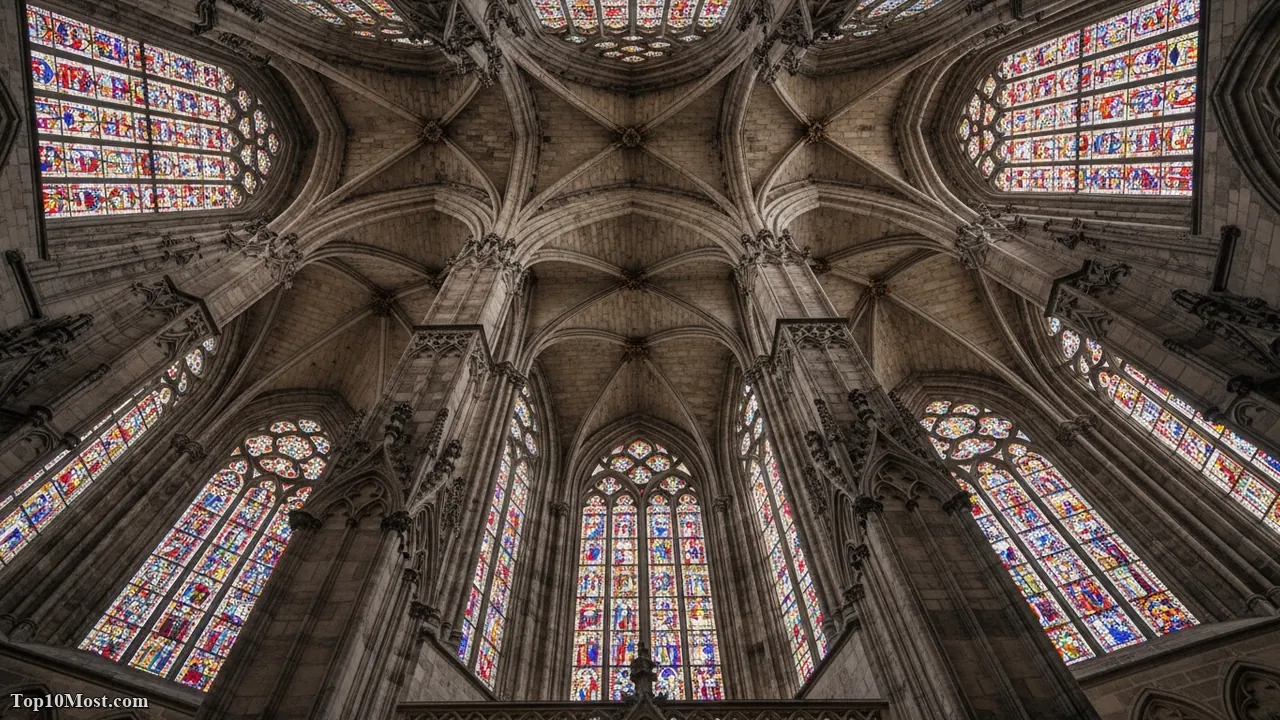
Gothic is the architecture of the sublime. It is ranked second because no other style captures the emotional longing of the human spirit quite like it. The verticality forces your eyes—and your spirit—upward. The kaleidoscope of light filtering through stained glass creates a mystical atmosphere that changes with the time of day. It is an engineering miracle disguised as art, transforming heavy stone into something that looks like lace.
To stand inside a Gothic cathedral is to feel a physical sense of transcendence. These buildings were constructed over centuries, often by people who would never see them finished. This generational dedication imbues the stones with a profound weight of history. In our fast-paced, instant-gratification world of 2025, the slow, impossibly intricate beauty of Gothic architecture is a humbling reminder of endurance and faith.
Key Highlights
- innovations: Flying buttresses, pointed arches, and ribbed vaults.
- Effect: Maximum height and light; walls of stained glass.
- Feeling: Ethereal, vertical, and awe-inspiring.
Top 1. Classical (Greek & Roman)
At the pinnacle of our list lies the foundation of Western architecture: the Classical style of Ancient Greece and Rome. Characterized by the use of the “orders” (Doric, Ionic, Corinthian), strict symmetry, and the pediment, this style established the vocabulary of beauty that we still use today. From the Parthenon in Athens to the Pantheon in Rome, these structures were designed to align with the cosmic order.
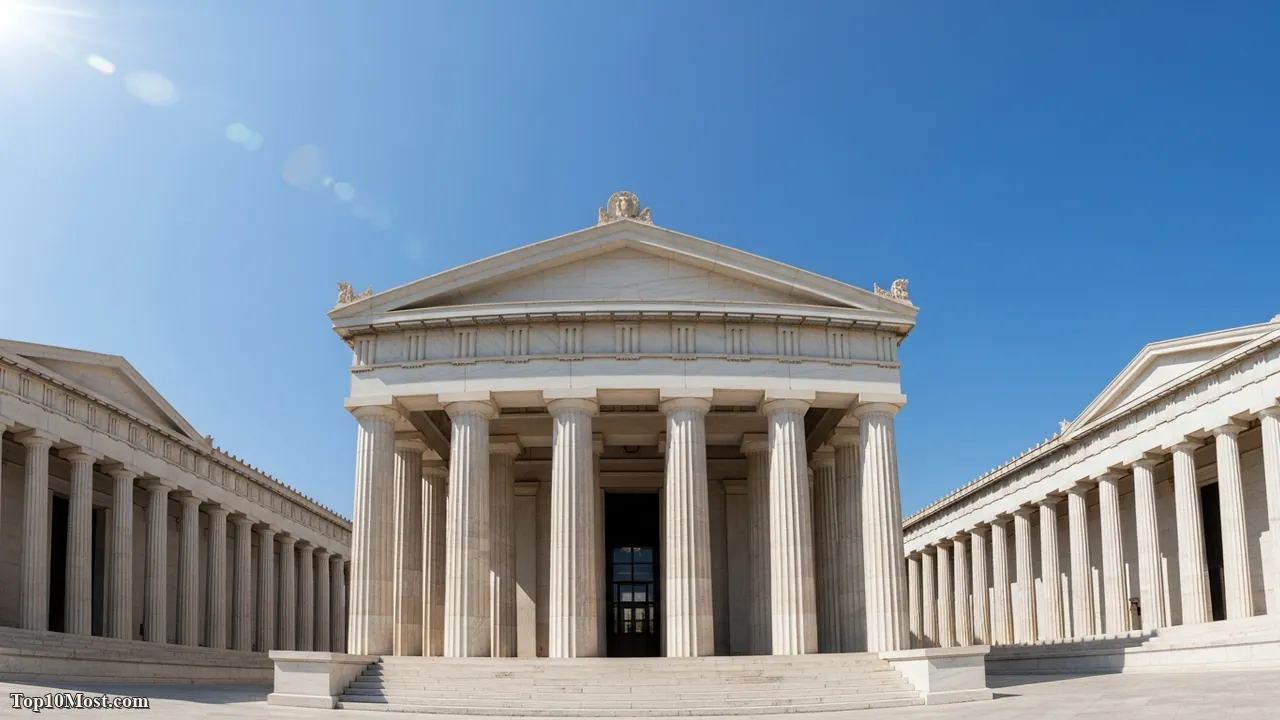
We rank Classical architecture as Top 1 because it is the eternal standard. Almost every other style on this list is either a revival of Classical principles (Renaissance, Neoclassical) or a reaction against them (Gothic, Modernism). It is the “source code” of architectural beauty. The proportions used—often derived from the Golden Ratio—are naturally pleasing to the human eye. It evokes a sense of permanence, democracy, and intellectual clarity that has never been surpassed.
There is a reason why, for over 2,500 years, humanity has returned to these forms. Classical architecture feels inevitable, as if it is a part of nature itself. It does not age; it merely matures. In a world of fleeting trends and digital impermanence, the white marble column standing against a blue sky remains the ultimate symbol of civilization and beauty. It is the anchor of our aesthetic history.
Key Highlights
- The Origin: The template for Western beauty (5th Century BCE – 4th Century CE).
- The Orders: Doric (Strength), Ionic (Wisdom), Corinthian (Beauty).
- Why #1: It is the timeless reference point against which all other architecture is measured.
Conclusion
Reviewing the Top 10 Most Beautiful Architectural Styles reveals a fascinating dialogue between humanity and its environment. From the mathematical precision of the Classical era to the emotional verticality of the Gothic and the streamlined optimism of Art Deco, each style offers a different lens through which to view the world. In late 2024 and 2025, as we grapple with environmental challenges and digital saturation, these physical monuments of beauty serve as vital touchstones.
Ultimately, the “most beautiful” style is the one that resonates with your own internal rhythm. Whether you find peace in the clean lines of the Bauhaus or inspiration in the organic curves of Art Nouveau, architecture remains the most public and influential art form. It shapes how we live, how we feel, and how we remember the past.