The definition of a “perfect” beach is subjective, yet there are certain coastlines where the convergence of geology, water clarity, and flora creates a scene so arresting it demands global recognition. At Top 10 Most, we move beyond simple vacation recommendations to analyze the landscapes that define natural beauty. In the current era of travel, where preservation is as vital as exploration, the “most beautiful” designation is reserved for locations that offer pristine environments alongside their aesthetic grandeur.
This year’s ranking reflects a significant shift in the travel landscape. We are seeing a move away from the purely commercialized resort strips toward protected marine reserves and remote geological wonders. The data in this article is compiled and analyzed based on information updated as of late 2024 and early 2025, drawing from major recent accolades including Lonely Planet’s 2025 picks, TripAdvisor’s Travelers’ Choice awards, and ecological surveys of marine health.
Our criteria for “beauty” in this list is threefold: visual distinctiveness (such as unique sand color or rock formations), water clarity and quality, and the preservation of the surrounding natural habitat. From the swirling silica sands of the Whitsundays to the pink shores of Crete, these are the coasts that truly stand above the rest.
Table of the Top 10 Most Beautiful Beaches on Earth
| Rank | Beach Name | Location | Primary Distinction |
|---|---|---|---|
| 1 | Whitehaven Beach | Whitsunday Island, Australia | 98% pure silica sand & swirling tidal patterns |
| 2 | Elafonissi Beach | Crete, Greece | Rare pink sand from crushed shells |
| 3 | Trunk Bay | St. John, US Virgin Islands | Protected National Park status & underwater trails |
| 4 | Anse Source d’Argent | La Digue, Seychelles | Giant granite boulders & shallow lagoons |
| 5 | Grace Bay | Providenciales, Turks & Caicos | World-renowned water clarity and calm barrier reef |
| 6 | Kelingking Beach | Nusa Penida, Indonesia | Dramatic “T-Rex” cliff formation |
| 7 | Cala Mariolu | Sardinia, Italy | Limestone pebbles & electric blue Mediterranean water |
| 8 | Playa Balandra | Baja California Sur, Mexico | Famous “Mushroom Rock” & shallow sandbars |
| 9 | Baía do Sancho | Fernando de Noronha, Brazil | UNESCO site with difficult access preserving nature |
| 10 | Railay Beach | Krabi, Thailand | Towering limestone karsts & emerald waters |
Top 10. Railay Beach
Railay Beach is a stunning testament to the power of geology. Accessible only by boat due to the massive limestone cliffs that cut it off from the mainland, this Thai peninsula feels like a lost world. The cliffs, towering hundreds of feet above the emerald Andaman Sea, act as a natural fortress, keeping modern development at bay and preserving a vibe that is equal parts serene and dramatic. It isn’t just a beach; it is a vertical landscape where rock climbers hang from stalactites just meters above sunbathers.
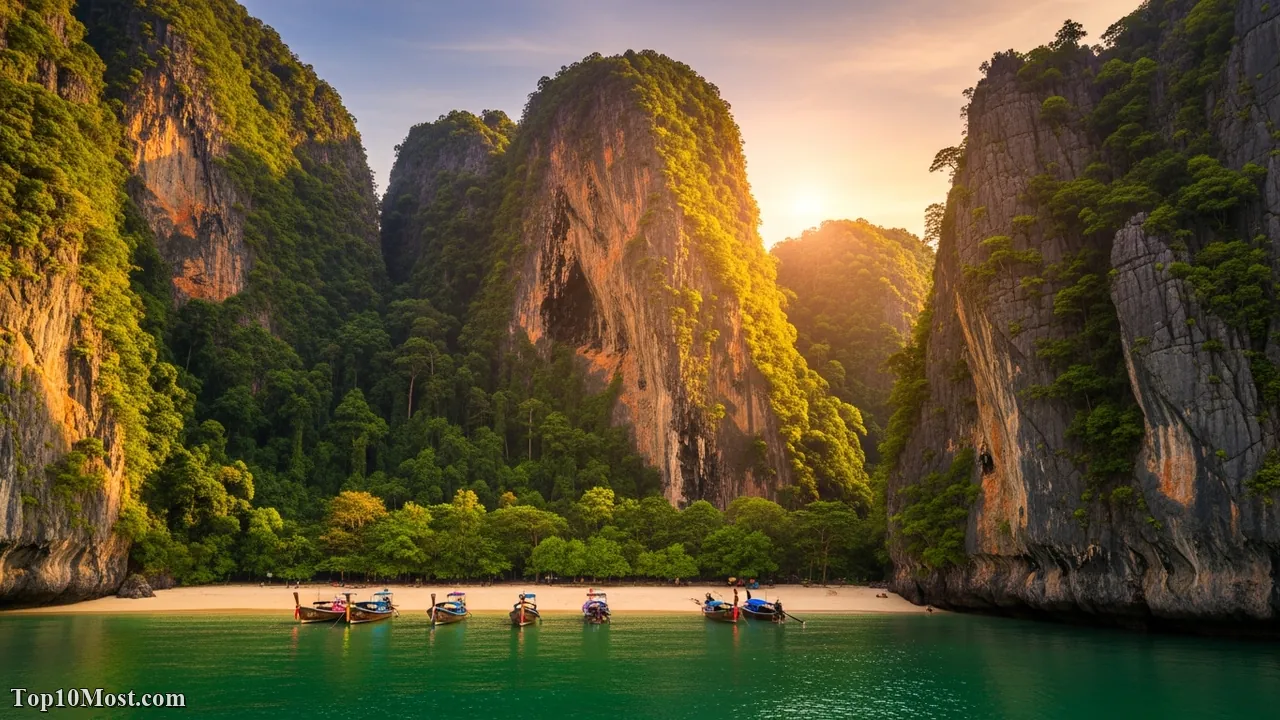
The ranking of Railay at number 10 highlights its enduring legacy as the quintessential tropical karst landscape. While other beaches rely on sand quality alone, Railay offers a 360-degree visual experience. The interplay of the jagged limestone against the softness of the water creates a high-contrast beauty that is rare in the flat topography of many island destinations. Current conservation efforts have also helped restore the marine life in the bay, improving water clarity significantly in recent years.
There is a specific moment at sunset on Phra Nang Cave Beach (the southern strip of Railay) that feels almost spiritual. As the sun dips behind the offshore rock formations, the limestone walls turn a deep, burning orange, reflecting onto the water. It’s a reminder that true beauty often requires a bit of effort to reach—in this case, a long-tail boat ride through the waves.
Key Highlights:
- Access: Reached only by boat (usually from Ao Nang), ensuring no cars disrupt the peace.
- Geology: Famous for world-class rock climbing on limestone karsts.
- Features: Includes the sacred Phra Nang Cave, filled with offerings from local fishermen.
Top 9. Baía do Sancho
Hidden within the volcanic archipelago of Fernando de Noronha, Baía do Sancho is often cited by ecological experts as one of the best-preserved beaches in the world. Its isolation is its greatest asset; located 200 miles off the coast of Brazil, the island limits the number of visitors, ensuring the ecosystem remains virtually untouched. To reach the sands, visitors must descend a steep metal ladder through a split in the rock wall, a journey that filters out the casual tourist and rewards the adventurous.
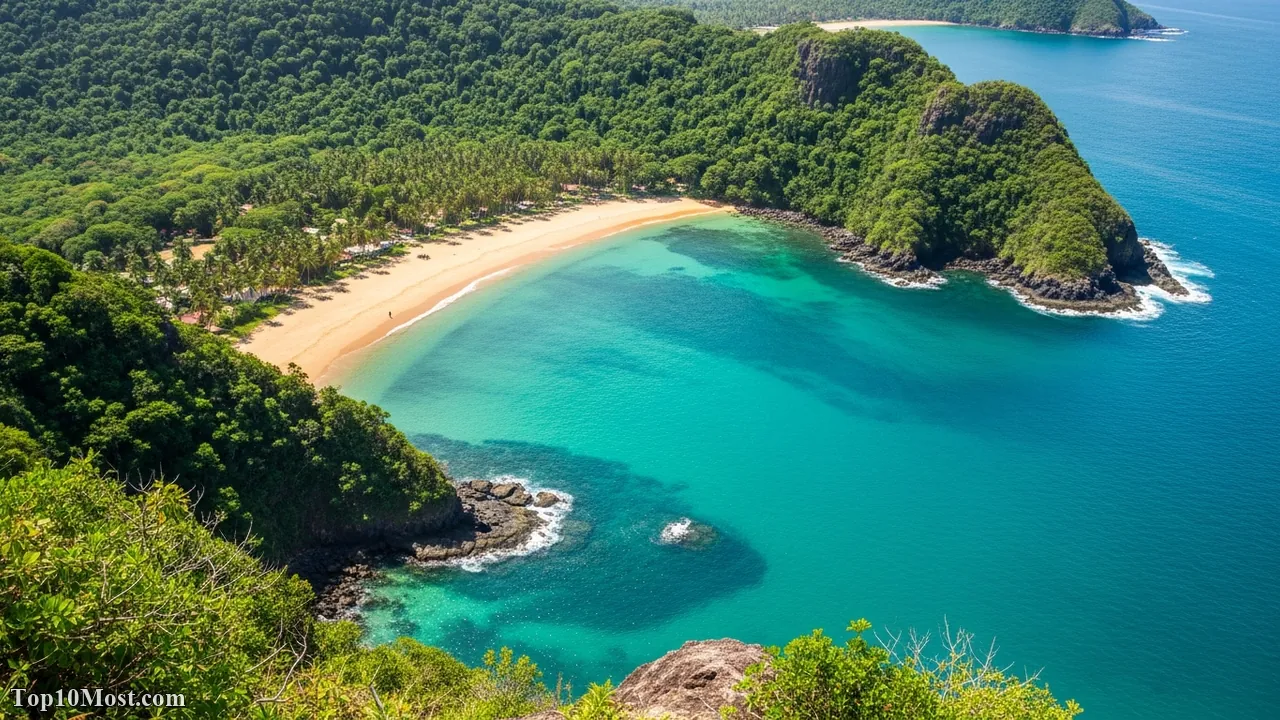
We rank Baía do Sancho here because it represents the gold standard of marine preservation. As a UNESCO World Heritage site, the waters here are not just clear—they are teeming with life in a way few other public beaches are. It is common to swim alongside hawksbill turtles, rays, and dolphins in the shallows. The crescent shape of the bay protects it from strong currents, creating a natural swimming pool backed by dense, lush vegetation rather than hotels.
Standing at the top of the cliffs before descending the ladder offers a perspective that is hard to shake. You look down into water so transparent that you can count the rocks on the seabed from a hundred feet up. It feels less like a vacation spot and more like a protected sanctuary where humans are merely temporary guests.
Key Highlights:
- UNESCO Status: Strictly protected marine park with a cap on daily visitors.
- Wildlife: High probability of spotting dolphins and sea turtles near the shore.
- Adventure: Access requires descending a narrow ladder through a rock crevice.
Top 8. Playa Balandra
Located in La Paz, Mexico, Playa Balandra is a visual anomaly—a beach that looks more like a desert mirage than a typical oceanfront. The defining feature here is the depth, or lack thereof. Visitors can walk hundreds of meters out into the bay, and the water will rarely rise above their waists. This shallow, lagoon-like environment creates a kaleidoscope of turquoise hues that shift intensely as the sun moves across the Baja sky.
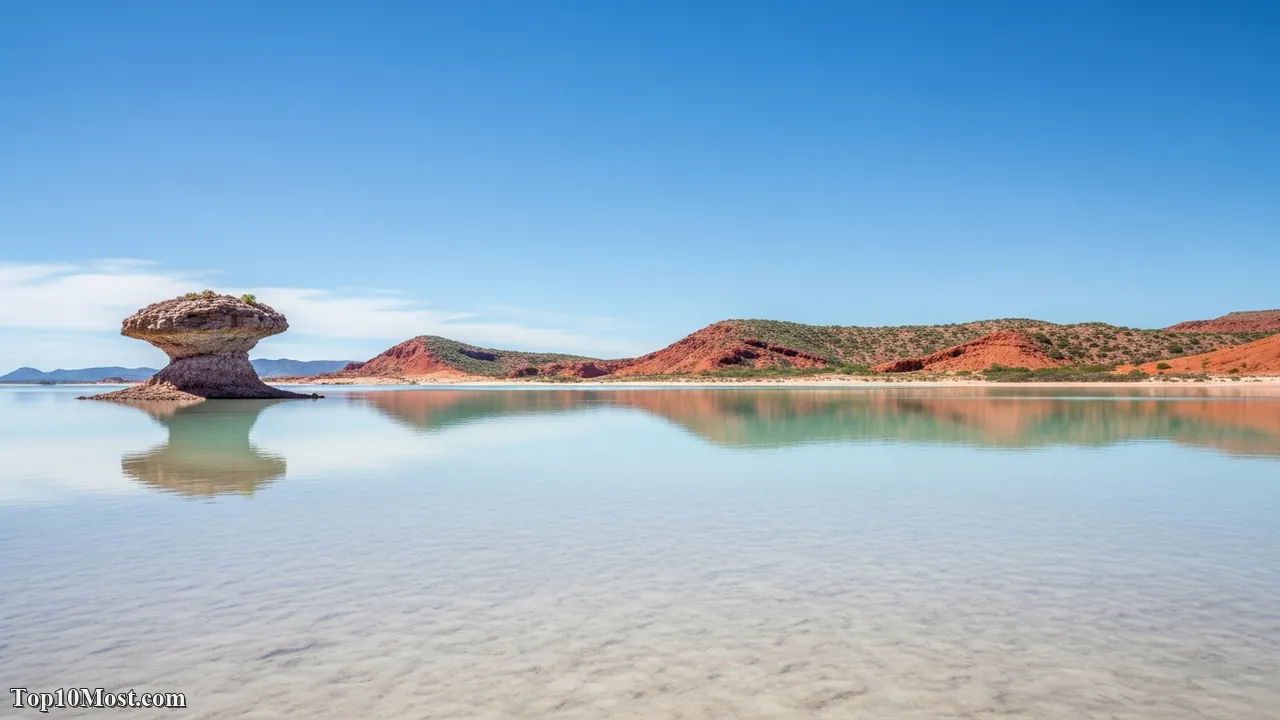
Balandra earns its spot for its unique “wild” beauty. It lacks the palm trees of the Caribbean, replacing them with red desert hills and cardon cacti that contrast sharply with the white sand. The bay is also home to the iconic “Mushroom Rock” (Hongo de Balandra), a natural stone formation sculpted by wind and tide. Recent regulations have limited visitor numbers per shift, a necessary move that has successfully preserved the pristine quality of its shallow sandbars.
Walking through Balandra is a surreal experience. The silence here is profound, dampened by the surrounding hills, and the water is often as still as glass. It feels like walking on the surface of another planet, one where the ocean is friendly, warm, and endlessly blue.
Key Highlights:
- Water Depth: Extremely shallow waters allow walking across the bay.
- Landmark: Home to the iconic “Mushroom Rock” formation.
- Ecosystem: Located within a protected flora and fauna protection area.
Top 7. Cala Mariolu
Sardinia’s Gulf of Orosei is legendary, but Cala Mariolu is the jewel in its crown. This beach is composed not of fine sand, but of tiny, smooth white pebbles that resemble snowflake-colored marble. This geological quirk is crucial—because there is no sand to kick up, the water retains an electric, impossible clarity that rivals any swimming pool. The water color shifts from a deep indigo to a glowing neon blue as it nears the shore.
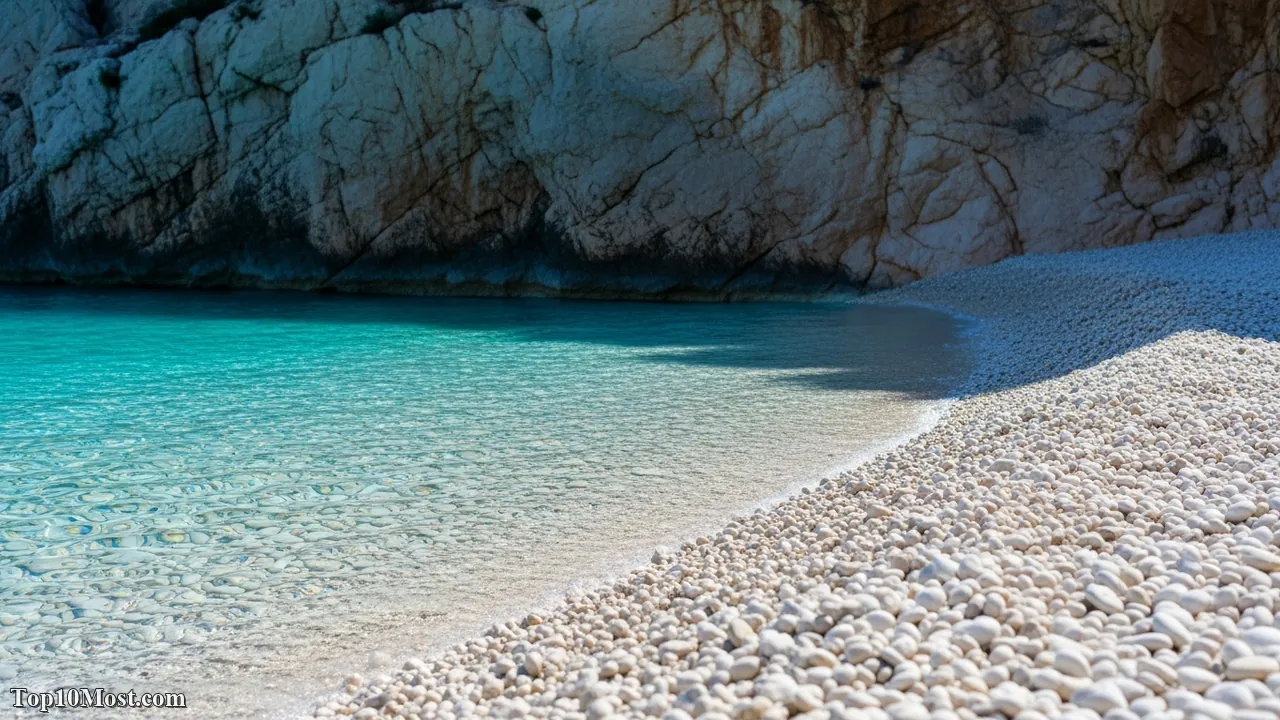
Its position on this list is justified by its intimate, dramatic setting. The beach is backed by a formidable limestone cliff that provides natural shade in the afternoon, while large rocks scattered in the shallows create private “zones” for swimmers. It is a favorite among snorkelers because the visibility is practically unlimited, allowing for perfect views of the Mediterranean marine life darting among the rocks.
There is a tactile joy to Cala Mariolu that is unique. The sound of the water retreating over the millions of small pebbles creates a gentle, rhythmic clatter that is hypnotic. It is a place that feels clean in the absolute sense of the word—crisp air, polished stones, and water so clear it creates vertigo.
Key Highlights:
- Surface: Composed of small, smooth white pebbles (ispuligidenie) rather than sand.
- Water Quality: Exceptional visibility due to the lack of suspended sand.
- Access: Best reached by boat from the port of Cala Gonone.
Top 6. Kelingking Beach
Kelingking Beach on Nusa Penida has arguably become the most viral coastal image of the last decade, and for good reason. The land formation, often compared to the head of a T-Rex drinking from the ocean, is a geological marvel. Towering hundreds of meters above the Indian Ocean, the green-capped limestone cliffs hold a small, crescent-shaped patch of powdery white sand in their embrace. The sheer scale of the drop is humbling and terrifying.
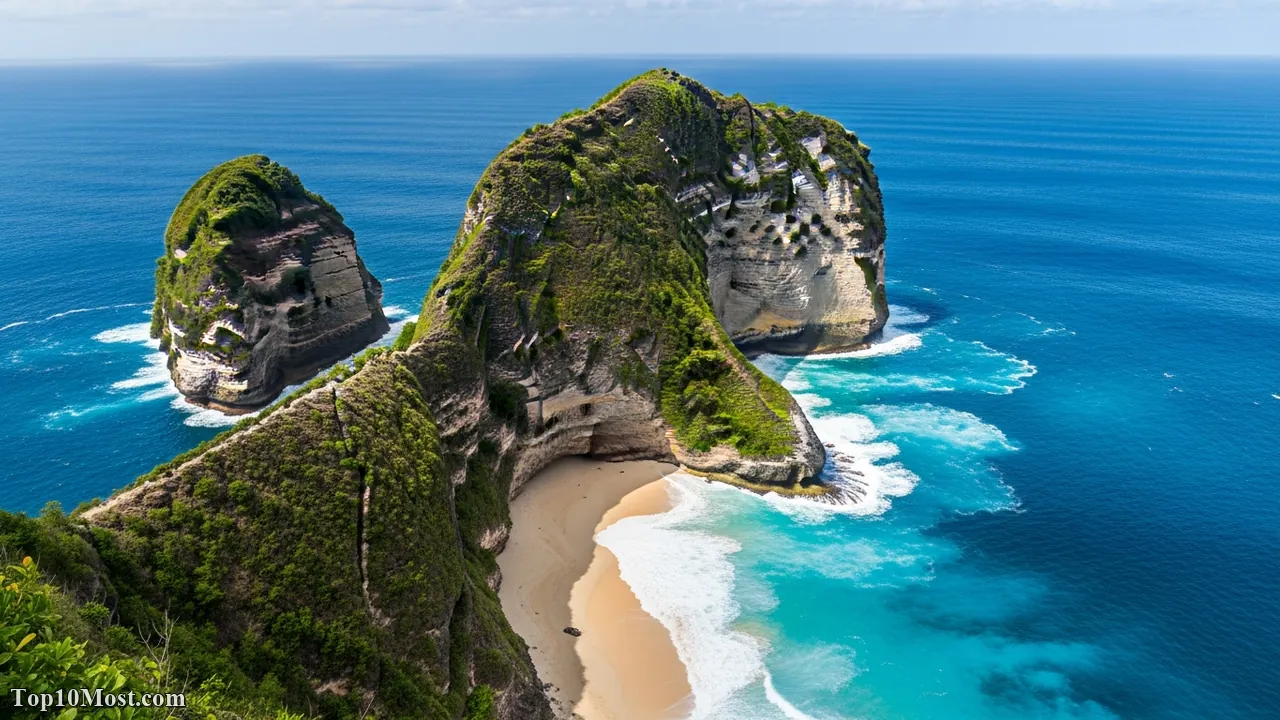
We rank Kelingking highly not just for the “Instagram” view, but for the raw power of the beach below. The hike down is grueling—a steep, makeshift bamboo-railed scramble—but it serves as a filter. Those who make it to the bottom find a beach that feels wild and untamed. The waves here are heavy and powerful, crashing against the cliffs with a thunderous roar that reminds visitors of nature’s force.
Looking up from the beach offers a perspective few see. The “T-Rex” looms above, blocking out the world, making you feel incredibly small. It is a beautiful, adrenaline-fueled reminder that the earth is ancient and powerful. This is not a beach for a casual swim; it is a beach for witnessing the drama of the planet.
Key Highlights:
- Geography: Famous “T-Rex” shaped cliff formation visible from above.
- Access: Requires a challenging, steep hike to reach the shoreline.
- Atmosphere: Powerful waves and strong currents make it better for viewing than swimming.
Top 5. Grace Bay
If you were to ask a child to draw a perfect beach, they would draw Grace Bay. Located in Turks and Caicos, this beach is the definition of conventional perfection. It features three miles of uninterrupted, sugar-white sand and water so turquoise it looks dyed. Unlike many other top beaches which are remote or rugged, Grace Bay is accessible and luxurious, yet it manages to maintain a pristine ecosystem thanks to the barrier reef a mile offshore.
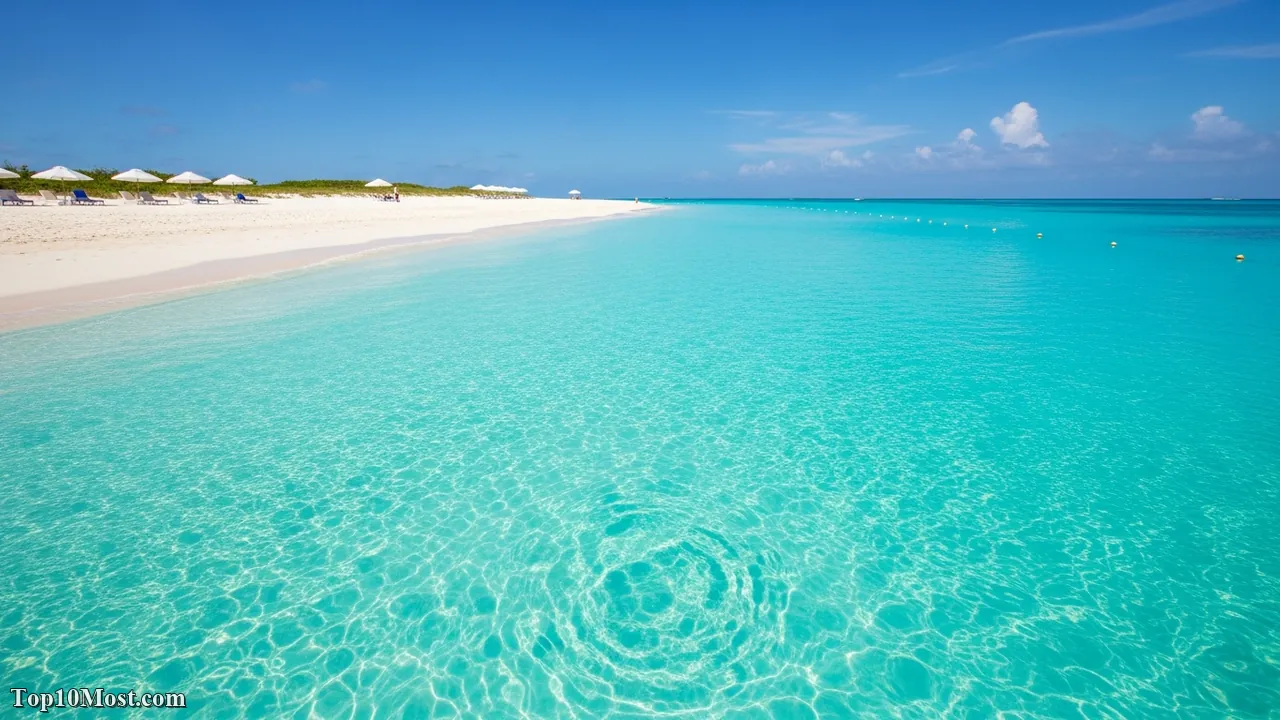
Grace Bay creates the top 5 because of its consistency. Year after year, the water quality remains unmatched. The offshore reef breaks the Atlantic swells, leaving the water at the shore calm, safe, and crystal clear. It creates a safe haven for marine life and swimmers alike, free from rocks, seaweed, or pollution. It is the “resort beach” idealized, but with a natural purity that is rare in developed areas.
The sensation of walking on Grace Bay is distinct; the sand is soft and cool to the touch, even in the midday sun. Floating in the water here creates a sensation of weightlessness, as if suspended in blue air. It is the ultimate location for those seeking stress-free, uncomplicated beauty.
Key Highlights:
- Protection: Shielded by one of the largest barrier reefs in the world.
- Sand Quality: Exceptionally soft, white sand that stays cool.
- Recognition: Consistently voted the world’s leading beach destination.
Top 4. Anse Source d’Argent
Anse Source d’Argent in the Seychelles is more than a beach; it is a living art gallery. Located on the island of La Digue, it is famous for its massive granite boulders—sculpted by millions of years of weathering—that are scattered across the sand and in the shallows. These grey, striated rocks contrast beautifully with the dazzling white sands and the shallow, warm waters of the Indian Ocean.
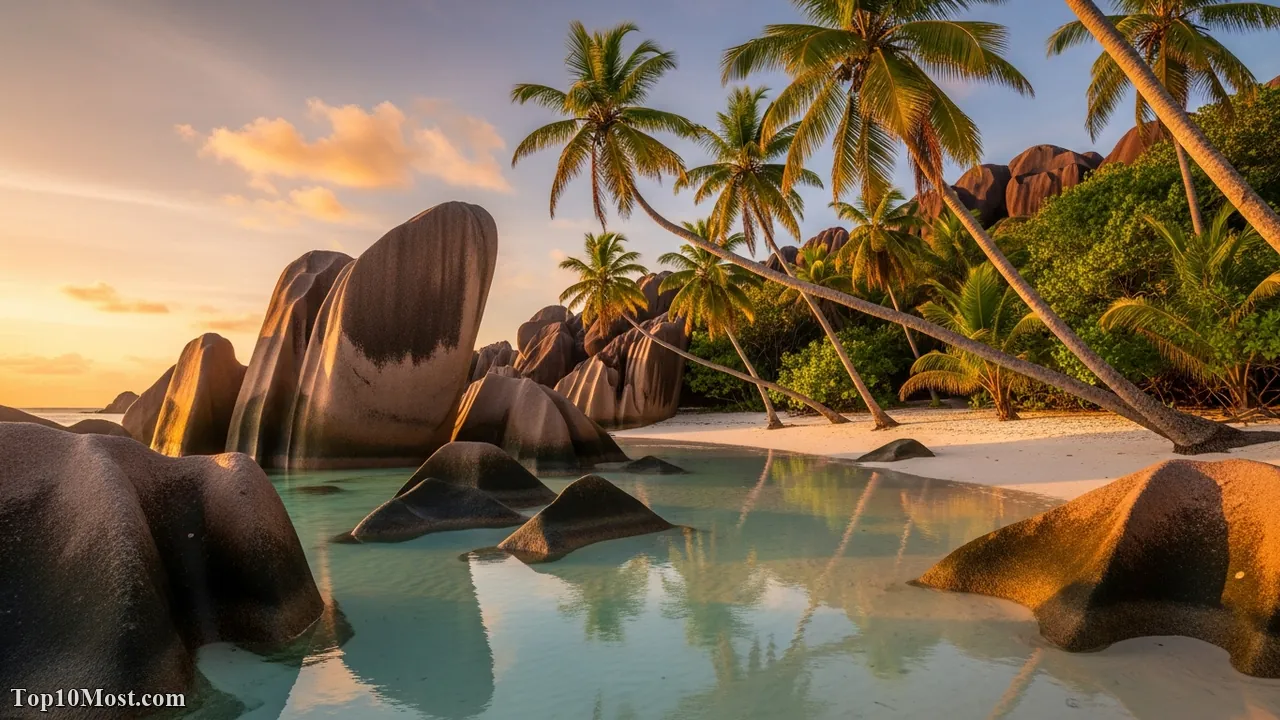
This beach ranks fourth because of its unparalleled photographic beauty. The landscape is segmented into small, private coves by the boulders, creating intimate spaces for exploration. The reef here is very close to the shore, which keeps the water extremely shallow—often only knee-deep for hundreds of meters out—making it look like a shimmering mirror reflecting the granite giants.
There is a prehistoric feeling to Anse Source d’Argent. Walking among the towering boulders, you half-expect to see a dinosaur emerge from the palms. It captures the essence of a “lost paradise,” a place that looks exactly as it likely did thousands of years ago, untouched by time.
Key Highlights:
- Geology: Iconic, massive granite boulders eroded into unique shapes.
- Water: Extremely shallow, warm lagoon water ideal for wading.
- Setting: Accessed through a historic coconut and vanilla plantation (L’Union Estate).
Top 3. Trunk Bay
Topping the “World’s 50 Best Beaches” list in 2024, Trunk Bay in the US Virgin Islands is a triumph of conservation. Donated to the National Park Service by Laurence S. Rockefeller over 50 years ago, the beach has been spared the high-rise development that plagues other Caribbean destinations. The result is a lush, green backdrop of sea grapes and coconut palms that spills directly onto pristine white sands.
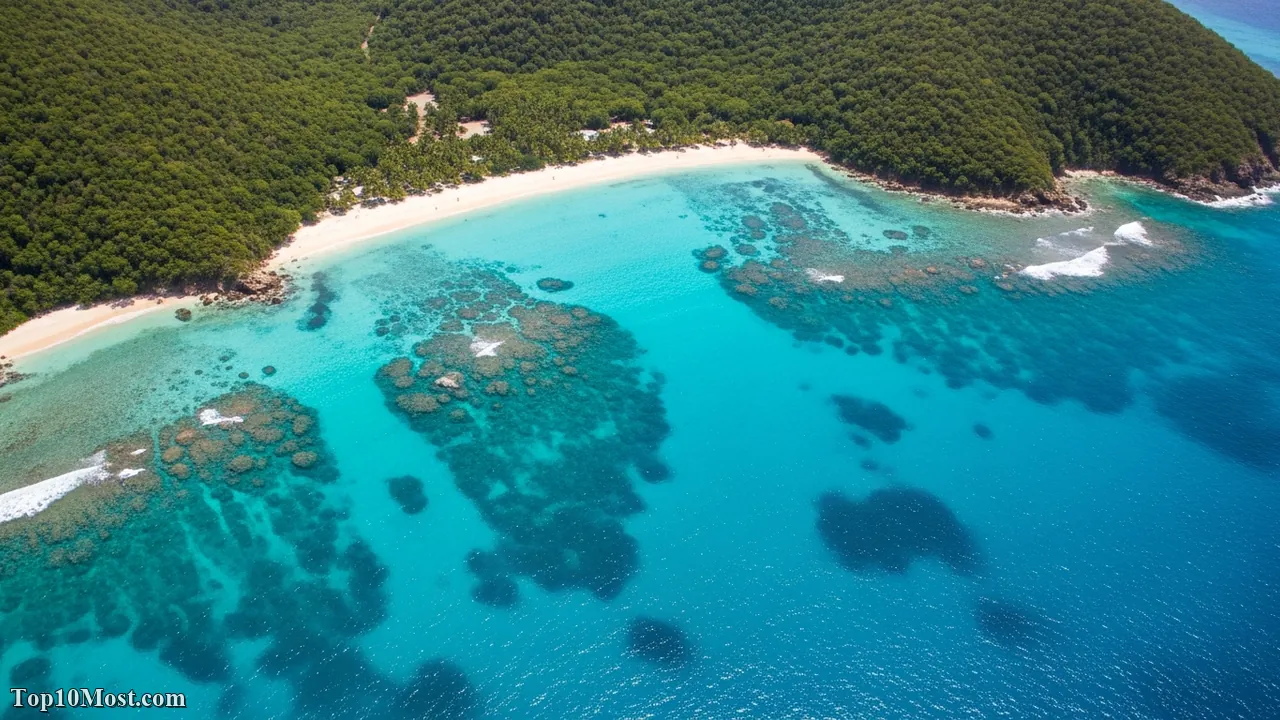
Trunk Bay secures the bronze medal for its harmonious blend of land and sea. It features a unique 225-yard underwater snorkeling trail, complete with underwater plaques guiding swimmers through the coral formations. The water is consistently calm and clear, and the lack of commercial noise allows the natural sounds of the jungle and ocean to take center stage.
The beauty of Trunk Bay lies in its vibrancy. The green of the hills is intense, the blue of the water is piercing, and the white of the sand is blinding. It feels like a high-definition experience. Swimming the underwater trail, you realize this isn’t just a place to sunbathe; it’s a place to learn and connect with a protected living reef.
Key Highlights:
- Conservation: Part of the Virgin Islands National Park, ensuring no commercial development.
- Activity: Famous for its marked underwater snorkeling trail.
- Landscape: lush, green vegetation meets the sand without concrete interruption.
Top 2. Elafonissi Beach
Taking the top spot on TripAdvisor’s 2025 forecast, Elafonissi Beach in Crete is a magical anomaly. It is not just a beach but an oblong peninsula, which often breaks into a separate island at high tide, forming a shallow lagoon. Its claim to fame, however, is the color. Millions of crushed foraminifera shells mix with the white sand to create a distinct, pastel-pink shoreline that borders the turquoise lagoon.
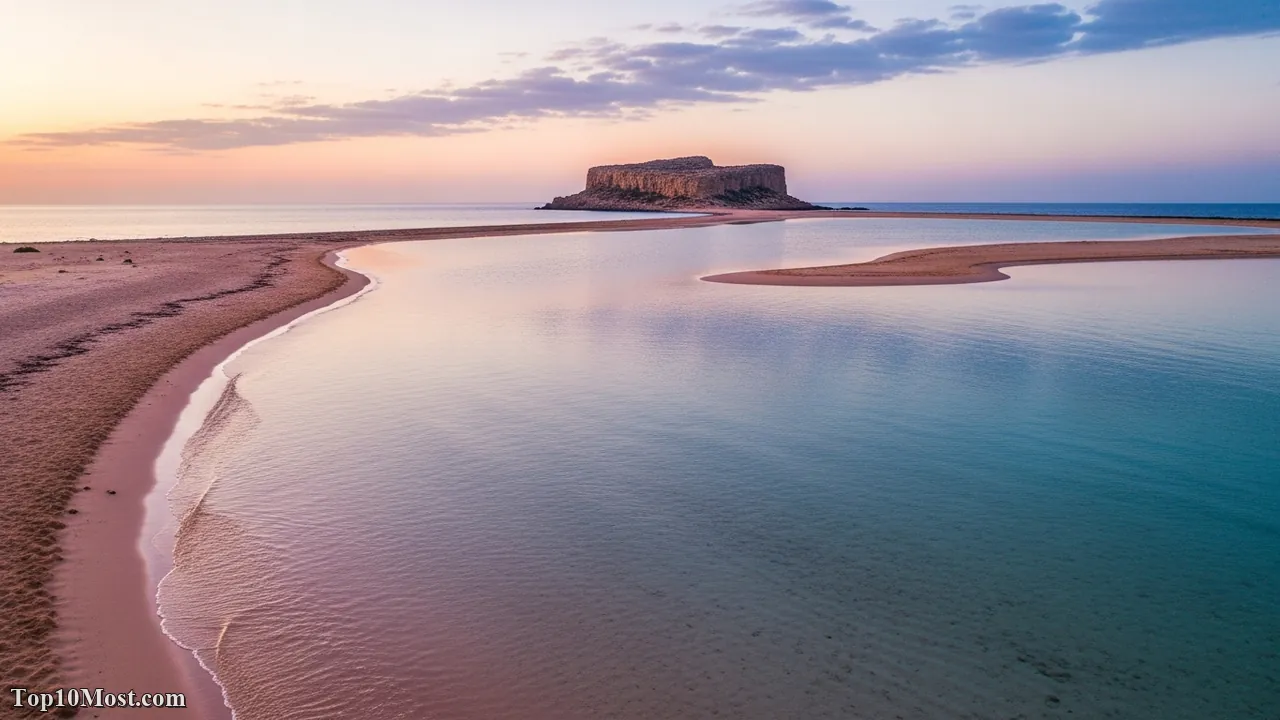
Elafonissi is at number 2 because it offers a visual phenomenon found in very few places on Earth. The contrast of the pink sand against the pale blue water is surreal and dreamlike. Beyond the color, the beach is a protected Natura 2000 area, home to rare plants like the sea daffodil and the endangered loggerhead sea turtle. The lagoon waters are warm and shallow, making it a natural spa.
Visiting Elafonissi requires timing. In the early morning or late afternoon, when the day-trippers have left, the pink hues of the sand seem to glow. Walking through the shallow lagoon to the island section feels like an exploration of a fantasy world. It is a delicate, rare ecosystem that commands respect and awe.
Key Highlights:
- Color: Famous for pink sand created by pigmented microorganisms and crushed shells.
- Ecology: A protected Natura 2000 nature reserve.
- Structure: A natural lagoon connects the mainland to the Elafonissi islet.
Top 1. Whitehaven Beach
Crowned the #1 beach in the world by Lonely Planet for 2025, Whitehaven Beach in Australia is the undisputed champion of coastal beauty. Stretching over 7 kilometers along Whitsunday Island, it is defined by its sand—98% pure silica. This specific mineral content means the sand is blindingly white, never retains heat (it stays cool even on the hottest days), and has a consistency akin to baby powder.
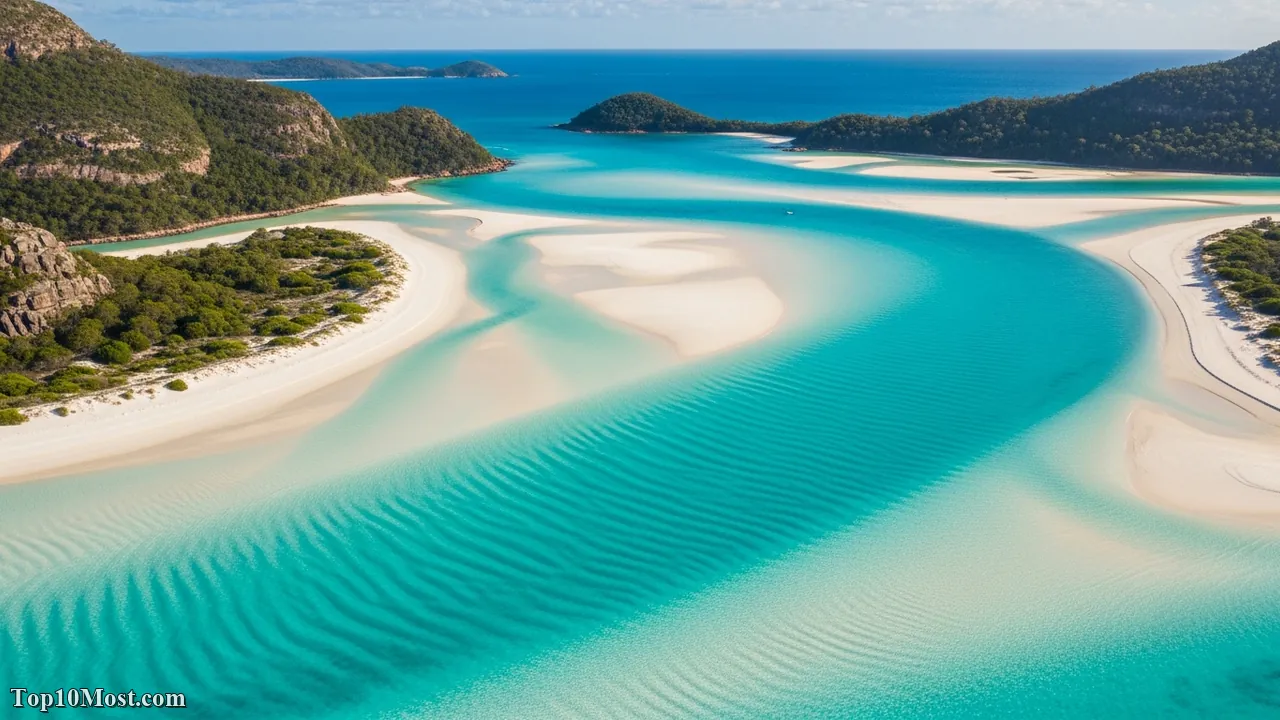
The primary reason for its top ranking is the “Hill Inlet” at the northern end of the beach. Here, the shifting tides swirl the white silica sand and the azure water together, creating a breathtaking fusion of colors that looks like a moving painting. It is a view that has no equal anywhere else on the planet. The isolation of the beach—part of a national park with no residents or hotels—ensures it remains in a state of pristine perfection.
Standing at the Tongue Point lookout and seeing the swirls of Hill Inlet is a “pinch-me” moment. It looks like the earth is marbleized. Down on the beach, the silence is profound, and the water is so clear it’s like swimming in bottled water. Whitehaven isn’t just beautiful; it is geologically flawless. It sets a standard for purity and visual impact that no other beach can currently match.
Key Highlights:
- Sand: 98% pure silica sand that is incredibly soft and does not get hot.
- Phenomenon: The shifting tides at Hill Inlet create world-famous swirling patterns.
- Preservation: Protected within the Whitsunday Islands National Park.
Conclusion
From the rugged, dinosaur-like cliffs of Indonesia to the silica swirls of Australia, the “most beautiful” beaches of 2025 share a common thread: they are landscapes where nature is the architect. These top 10 locations remind us that the earth is capable of creating art on a massive scale. They are not merely places to tan; they are sanctuaries of geology and marine life that require our respect and protection.
As travel becomes more accessible, the responsibility falls on us, the visitors, to ensure these rankings remain valid for future generations. Whether it is adhering to the strict “leave no trace” policies at Whitehaven or respecting the turtle nesting grounds at Baía do Sancho, visiting these sites is a privilege. We hope this guide inspires you not just to travel, but to witness the profound beauty of our blue planet.