Mountains have long captivated the human imagination, serving as physical challenges, spiritual icons, and reminders of nature’s raw power. From the granite spires of Patagonia to the symmetrical volcanoes of Japan, the peaks listed here are not merely geologic formations; they are cultural landmarks that define the skylines of our planet. “Breathtaking” is a subjective measure, yet certain summits command a universal awe through their unique shapes, sheer vertical prominence, or vibrant coloration.
This ranking goes beyond simple altitude. While elevation is a factor, we prioritize aesthetic impact, geological uniqueness, and photographic majesty. We have analyzed traveler sentiment, photographic popularity, and geological significance to curate a list of the most visually stunning peaks currently accessible to the global admirer.
At Top 10 Most, we don’t just list the highest points; we explore the visual and emotional magnitude of these giants. Whether you are a mountaineer seeking the next summit or a traveler admiring from the base, these ten mountains represent the pinnacle of Earth’s natural beauty.
Table of the Top 10 Most Breathtaking Mountains
| Rank | Mountain Name | Location | Elevation | Key Feature |
|---|---|---|---|---|
| 1 | Mount Fuji | Japan (Honshu) | 3,776 m | Perfect Conical Symmetry |
| 2 | The Matterhorn | Switzerland / Italy | 4,478 m | Iconic Pyramid Shape |
| 3 | Mount Everest | Nepal / China | 8,849 m | Earth’s Highest Point |
| 4 | Denali | USA (Alaska) | 6,190 m | Massive Vertical Relief |
| 5 | Mount Kilimanjaro | Tanzania | 5,895 m | Tallest Free-Standing Mountain |
| 6 | Aoraki / Mount Cook | New Zealand | 3,724 m | Rugged Southern Alps Beauty |
| 7 | Mount Fitz Roy | Argentina / Chile | 3,405 m | Dramatic Granite Spires |
| 8 | Kirkjufell | Iceland | 463 m | Fantasy-Like “Arrowhead” |
| 9 | Table Mountain | South Africa | 1,086 m | Urban Plateau Backdrop |
| 10 | Vinicunca (Rainbow Mtn) | Peru | 5,200 m | Natural Technicolor Stripes |
Top 10. Vinicunca (Rainbow Mountain)
Hidden deep within the Andes of Peru, Vinicunca—commonly known as Rainbow Mountain—offers a visual spectacle unlike any other peak on this list. Once covered by permafrost, the mountain was revealed only recently due to melting snow, unveiling a surreal series of multicolored stripes. The striking bands of turquoise, lavender, gold, and red are created by the weathering of various minerals, resulting in a landscape that looks more like a painting than a geological reality.
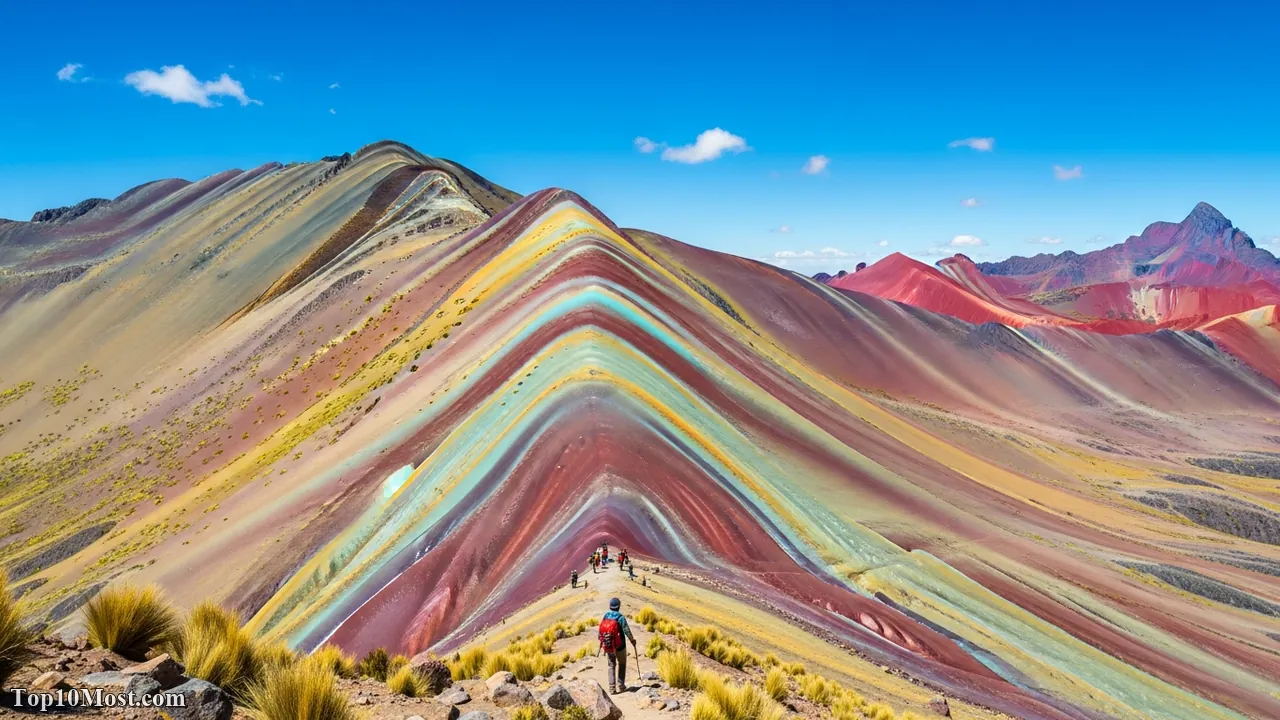
We rank Vinicunca here because it redefines what a mountain can look like. While it lacks the jagged silhouette of a traditional peak, its aesthetic impact is undeniable. Standing at a breathless 5,200 meters, the hike to the viewpoint is physically demanding, but the reward is a view that has exploded in popularity, becoming one of South America’s most shared travel images in the current time.
The experience of seeing Vinicunca is almost psychedelic. It challenges your brain’s expectation of earth tones, replacing them with a vibrant palette that contrasts sharply against the often moody Andean sky. It is a stark reminder of the hidden artistry buried beneath the Earth’s surface.
Key Highlights
- Colors: Created by mineral sediments (iron, copper, sulfur).
- Discovery: Only became a major tourist attraction in the last decade due to snowmelt.
- Altitude: High elevation requires significant acclimatization before visiting.
Top 9. Table Mountain
Dominating the skyline of Cape Town, Table Mountain is perhaps the most recognizable coastal landmark in the Southern Hemisphere. Its defining feature is its flat, plateau-like summit, which stretches approximately three kilometers from side to side. Often draped in a layer of clouds affectionately known as the “Tablecloth,” this mountain creates a dramatic, vertical wall that rises directly from the city bowl and the Atlantic Ocean.
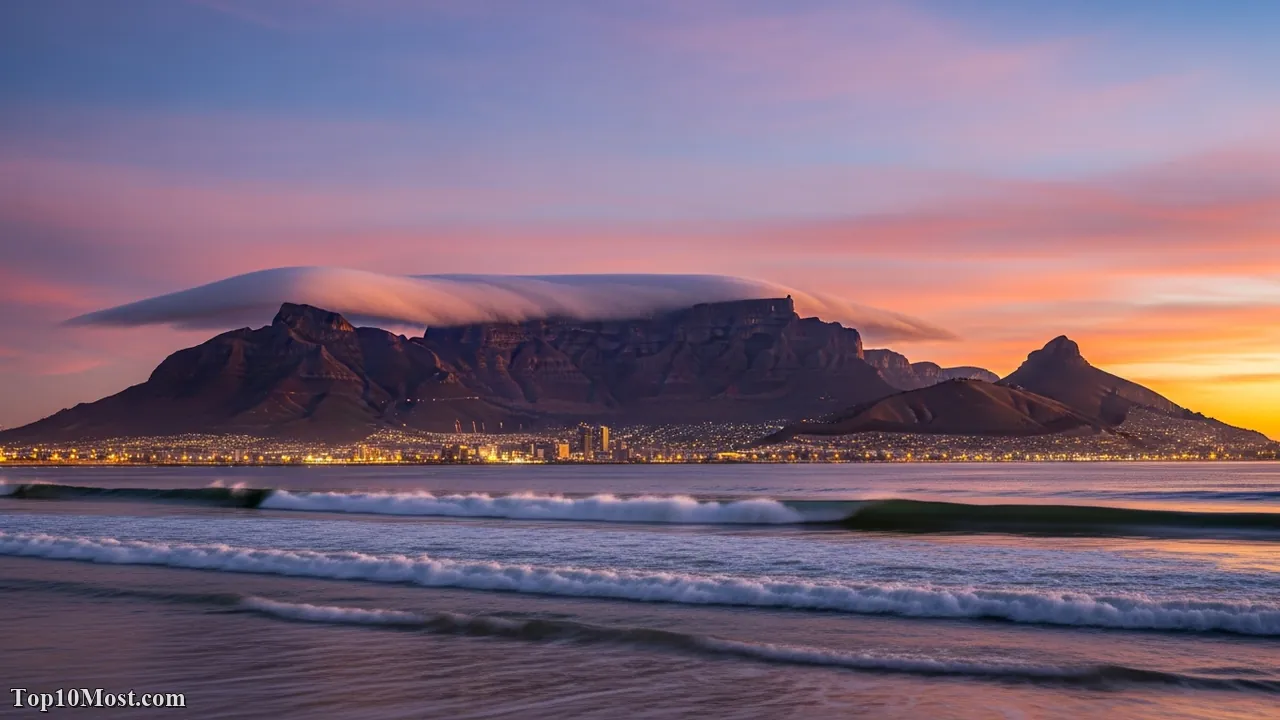
Table Mountain earns its spot for its unique accessibility and its symbiotic relationship with the city below. It is one of the few mountains in the world that defines a major metropolis so completely. The contrast between the rugged sandstone cliffs and the urban sprawl of Cape Town, framed by the deep blue ocean, offers a panoramic view that is architecturally and naturally stunning.
Standing atop the plateau gives you a feeling of being on a separate island in the sky. The flat terrain hosts an incredibly diverse array of flora, specifically fynbos vegetation, much of which is found nowhere else on Earth. It is a fortress of nature standing guard over the bustle of civilization.
Key Highlights
- Shape: Distinctive 3km-wide flat plateau.
- Biodiversity: Home to over 1,400 plant species (part of the Cape Floral Kingdom).
- Access: Accessible via a rotating cable car or steep hiking trails.
Top 8. Kirkjufell
Rising in isolation from the Snæfellsnes Peninsula in Iceland, Kirkjufell (Church Mountain) is a masterclass in atmospheric beauty. Though it stands only 463 meters tall—a dwarf compared to others on this list—its distinct, arrowhead shape and steep, symmetrical slopes make it visually arresting. It is frequently framed by the nearby waterfall, Kirkjufellsfoss, creating a composition that photographers consider one of the finest on the planet.
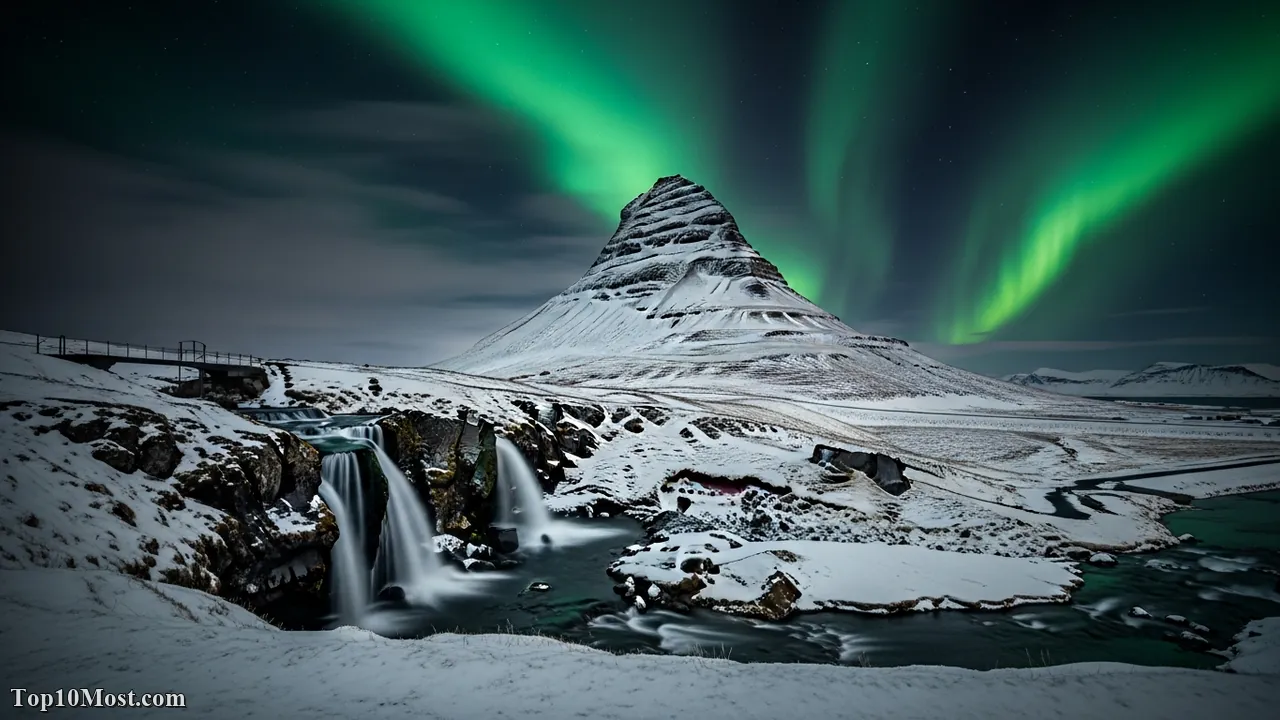
The reasoning for this ranking lies in its fantasy-like quality. Kirkjufell gained massive global recognition as a filming location for Game of Thrones, but its allure goes beyond pop culture. It changes character completely with the seasons: lush green in summer, and stark white in winter, often dancing under the Northern Lights. It proves that a mountain doesn’t need to be a giant to be breathtaking.
There is a mystical silence around Kirkjufell. Because it sits near the ocean, the interplay of light, water, and rock creates a moody, ethereal vibe that feels ancient. It is the kind of mountain that looks like it was sculpted by folklore rather than geology.
Key Highlights
- Height: 463 meters (1,519 ft), proving size isn’t everything.
- Fame: Known as the “Arrowhead Mountain” in popular media.
- Setting: Best viewed with the Northern Lights or the Midnight Sun.
Top 7. Mount Fitz Roy
Located on the border of Argentina and Chile in the Southern Patagonian Ice Field, Mount Fitz Roy is the jagged crown jewel of the Andes. Its silhouette is unmistakable: a series of razor-sharp granite shark teeth piercing the sky, often shrouded in a swirl of rapid-moving clouds. For mountaineers and trekkers, the sight of Fitz Roy glowing fiery red at sunrise is a spiritual experience.
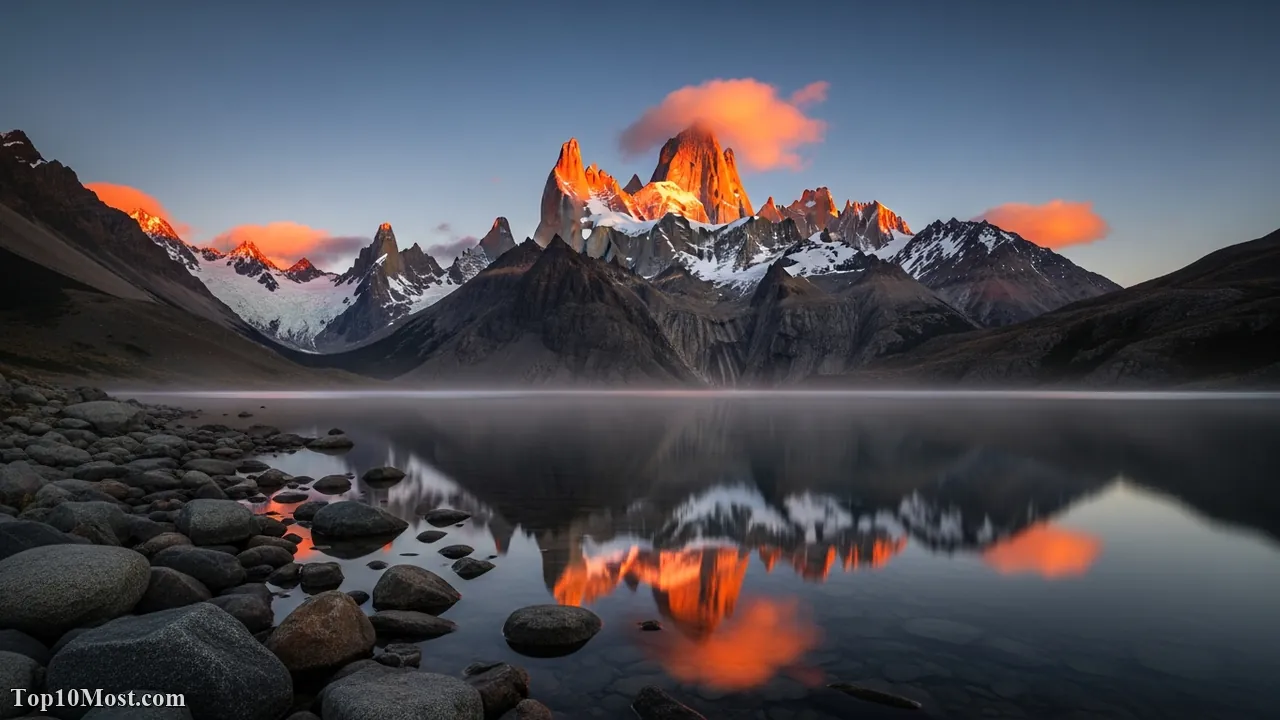
We include Fitz Roy for its dramatic structure and the sheer wildness of its environment. Unlike the conical volcanoes on this list, Fitz Roy is a monolith of sheer granite that presents one of the most technically difficult climbs in the world. The surrounding landscape of glacial lakes (Laguna de los Tres) and twisted lenga forests adds to the sense of remote, untouched wilderness.
Looking at Fitz Roy feels like witnessing the earth in the midst of a violent upheaval. The vertical faces are so steep that snow cannot cling to them, leaving the rock bare and imposing against the glaciers below. It is a place that demands respect and humbles every visitor.
Key Highlights
- Geology: Composed of igneous rock, forming vertical walls.
- Climate: Notorious for extreme, sudden weather changes.
- Symbolism: The profile of the mountain is the logo for the clothing brand Patagonia.
Top 6. Aoraki / Mount Cook
Aoraki / Mount Cook is the commanding peak of New Zealand’s Southern Alps, rising 3,724 meters above the rugged landscape of the South Island. It is a mountain of immense gravitation, surrounded by 72 glaciers and 140 peaks that stand over 2,000 meters. The Ngāi Tahu iwi (Māori tribe) consider Aoraki a sacred ancestor, and its physical presence lives up to that reverence.
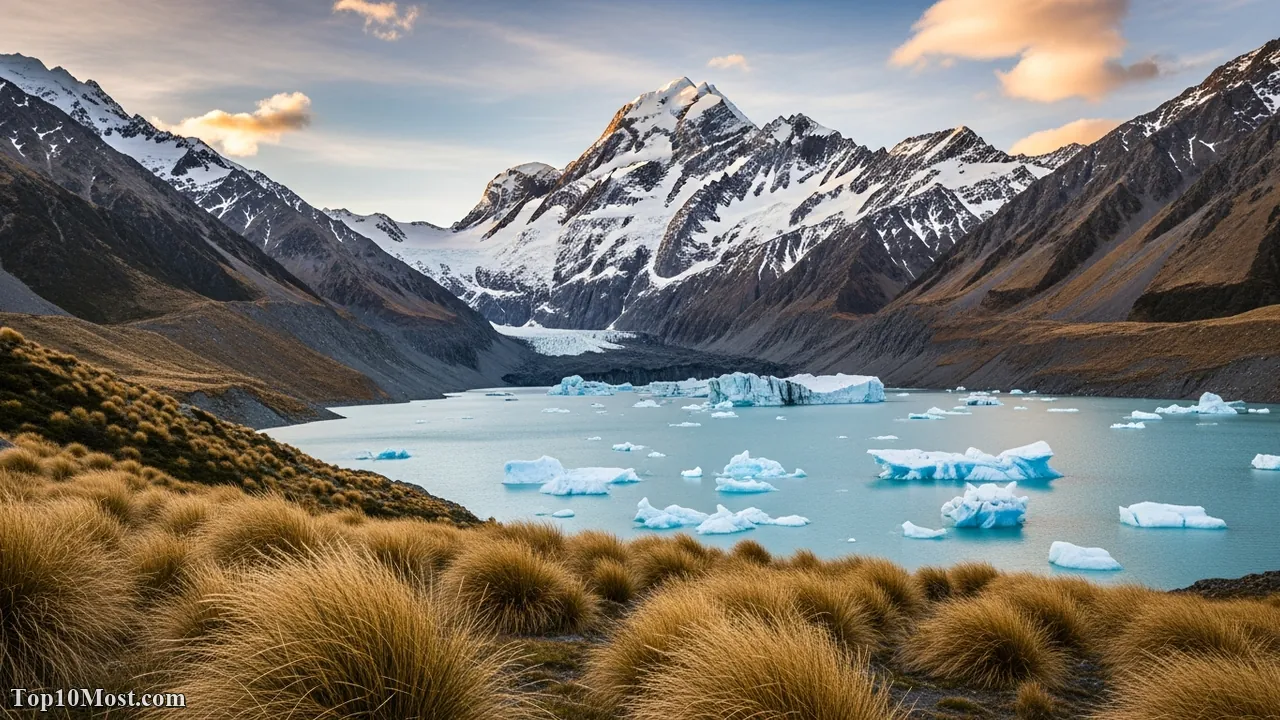
The ranking is justified by the mountain’s dynamic alpine environment. This is not a static postcard; it is a landscape of moving ice, crumbling rock, and roaring avalanches. The Hooker Valley track, which leads to the base, offers unmatched views of the mountain reflecting in glacial lakes filled with icebergs. It is the ultimate representation of the Southern Hemisphere’s alpine grandeur.
There is a dangerous beauty here. The sheer verticality of the South Face is intimidating, yet the surrounding national park is accessible and serene. Standing in the shadow of Aoraki, you feel the connection between the land and the sky that has defined New Zealand mythologies for centuries.
Key Highlights
- Status: New Zealand’s highest mountain.
- Culture: Sacred to the Māori people; climbing the very tip is culturally discouraged.
- Environment: Surrounded by the Tasman Glacier, NZ’s largest glacier.
Top 5. Mount Kilimanjaro
Mount Kilimanjaro is the “Roof of Africa,” a dormant volcano in Tanzania that stands as the tallest free-standing mountain in the world. Unlike peaks found in mountain ranges, Kilimanjaro rises in isolation from the savannah plains, creating a surreal image of a snow-capped giant hovering above elephants and giraffes. It comprises three volcanic cones: Kibo, Mawenzi, and Shira.
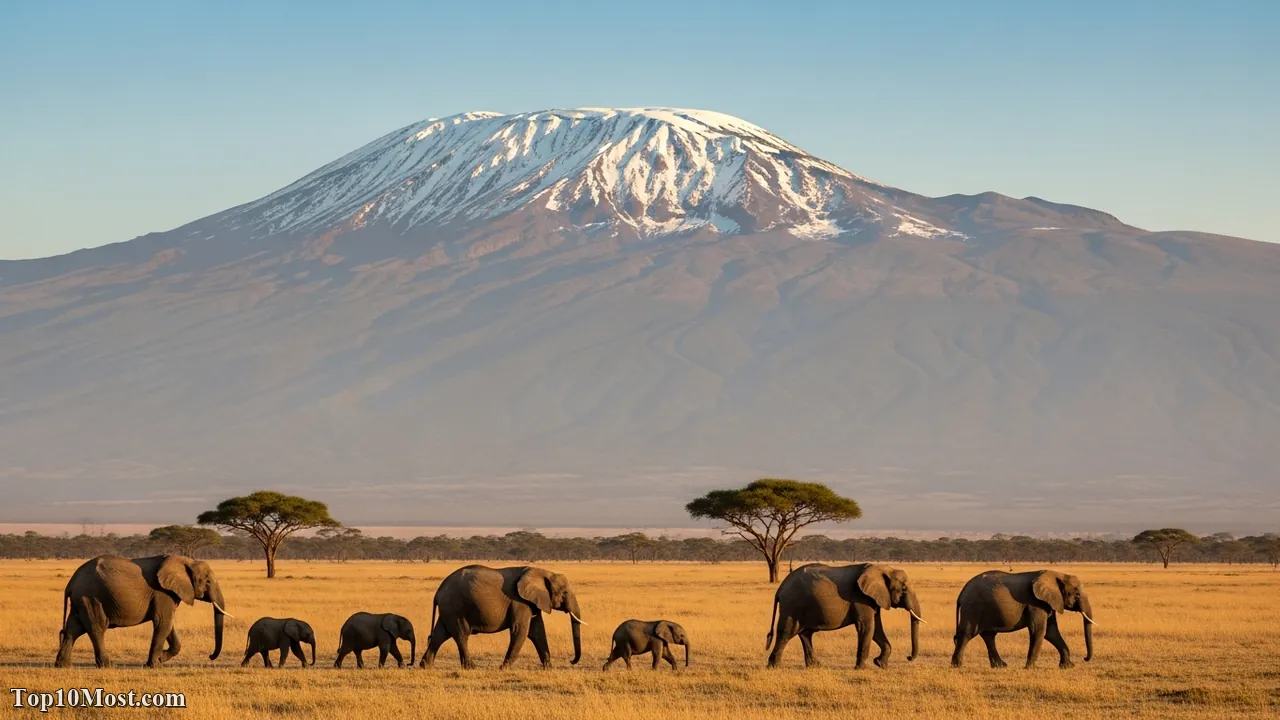
This mountain is unique for its ecological diversity. Climbers pass through five distinct climate zones on their way to the summit, ranging from rainforest and heath to alpine desert and the arctic zone at the peak. This journey from the tropics to the ice in a single climb makes it one of the most distinctive geographic experiences on Earth.
The sight of Kilimanjaro’s shrinking glaciers is both beautiful and melancholic. It stands as a solitary sentinel over the East African plains, a beacon that has guided explorers and locals for millennia. The contrast between the heat of the savannah and the ice of the summit is a paradox that is truly breathtaking.
Key Highlights
- Prominence: Highest free-standing mountain on Earth (5,895 m).
- Ecology: Features five distinct climate zones from base to summit.
- Accessibility: One of the few “Seven Summits” climbable without technical mountaineering gear.
Top 4. Denali
Denali, formerly known as Mount McKinley, is the centerpiece of the Alaskan wilderness and the highest peak in North America. While Everest is higher above sea level, Denali is taller from base to summit, rising a staggering 5,500 meters from its surrounding plains. This massive vertical rise gives it a bulk and dominance that few other mountains can match.
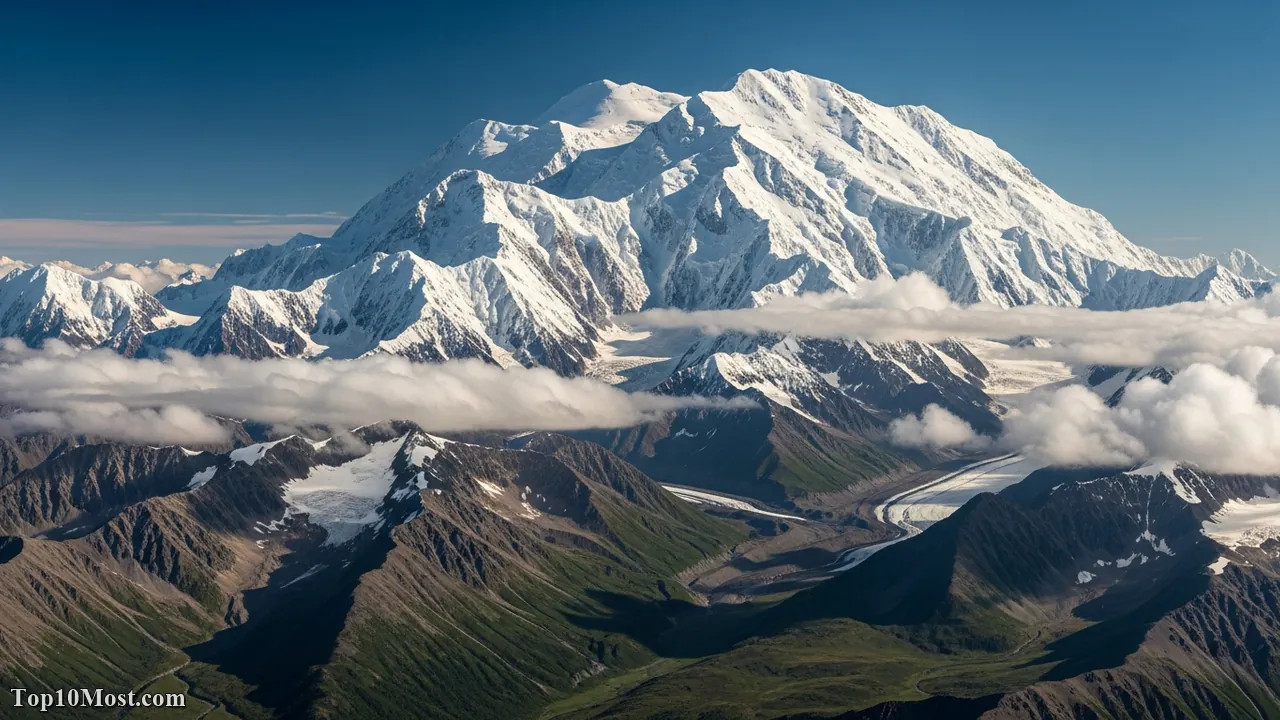
Denali represents the raw, unforgiving beauty of the subarctic. Its location near the Arctic Circle means the weather is notoriously severe, and the air is thinner than at similar altitudes at the equator. The mountain is often shrouded in clouds for days, making a clear view of “The Great One” a rare and coveted prize for visitors to the national park.
To see Denali is to understand the scale of the North. It feels impossibly huge, a wall of white consuming the horizon. The wilderness surrounding it is vast and untamed, lacking the teahouses and villages found in the Himalayas, preserving a sense of pure, ancient isolation.
Key Highlights
- Height: 6,190 meters (20,310 ft).
- Base-to-Summit: Taller vertical rise than Everest.
- Location: Interior Alaska, near the Arctic Circle.
Top 3. Mount Everest
Mount Everest, or Sagarmatha in Nepali and Chomolungma in Tibetan, needs little introduction. Standing at 8,849 meters, it is the highest point on Earth, the ceiling of our world. Located in the Mahalangur Himal sub-range of the Himalayas, its black rock pyramid summit is the ultimate destination for high-altitude adventurers and the subject of countless triumphs and tragedies.
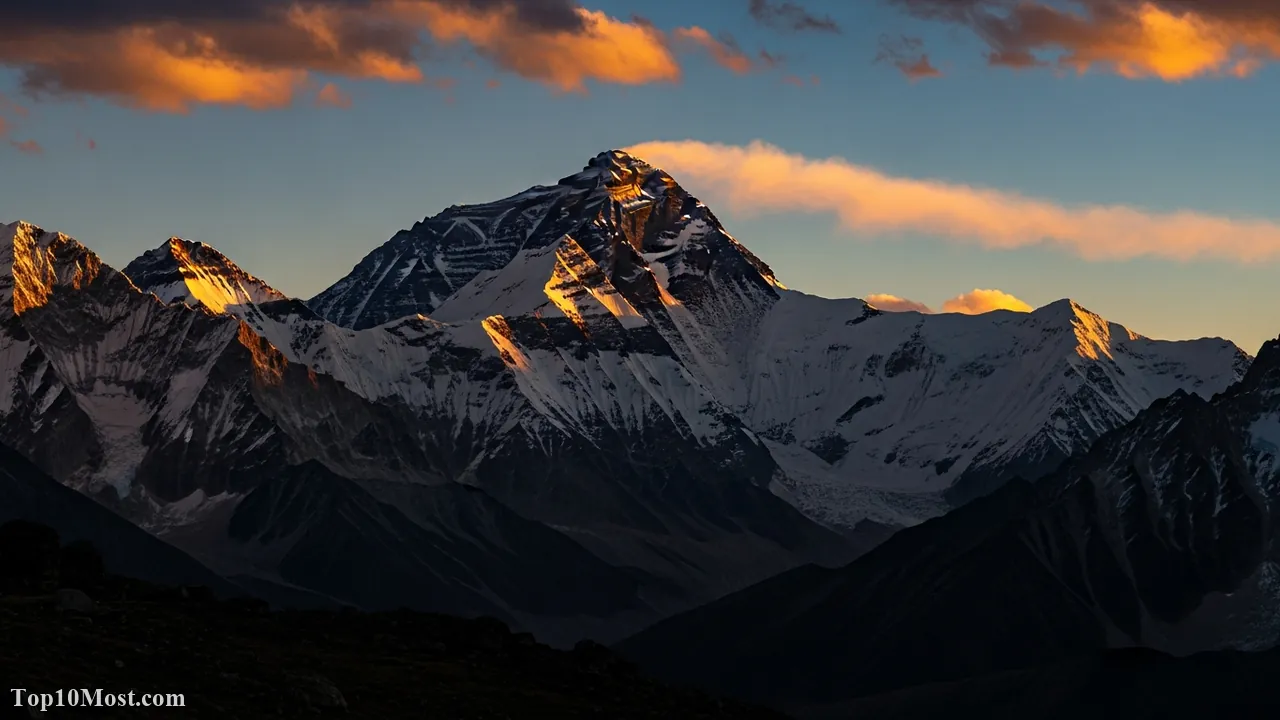
Everest ranks in the top three not just for its height, but for its sheer atmospheric presence. While some argue other peaks are more “beautiful” in shape, the psychological and physical impact of looking at the highest point on the planet is unmatched. The jet stream often creates a “plume” of cloud trailing from the summit, a signature flag of its immense altitude.
Standing near Everest, you are acutely aware of your own fragility. It is a place where human biology struggles to survive, yet its grandeur draws thousands. It is the monarch of mountains, a place where the earth touches the stratosphere, and the sky turns a darker shade of blue.
Key Highlights
- Elevation: 8,848.86 meters (official height).
- Significance: The absolute highest point on Earth’s surface.
- Culture: Revered as “Goddess Mother of the World” by Tibetans.
Top 2. The Matterhorn
Straddling the border between Switzerland and Italy, the Matterhorn is the platonic ideal of a mountain. Its near-perfect pyramidal shape, with four distinct faces aligning with the compass points, makes it the most recognizable peak in the Alps and perhaps the world. It rises like a jagged tooth 4,478 meters into the sky, completely isolated from its immediate neighbors.
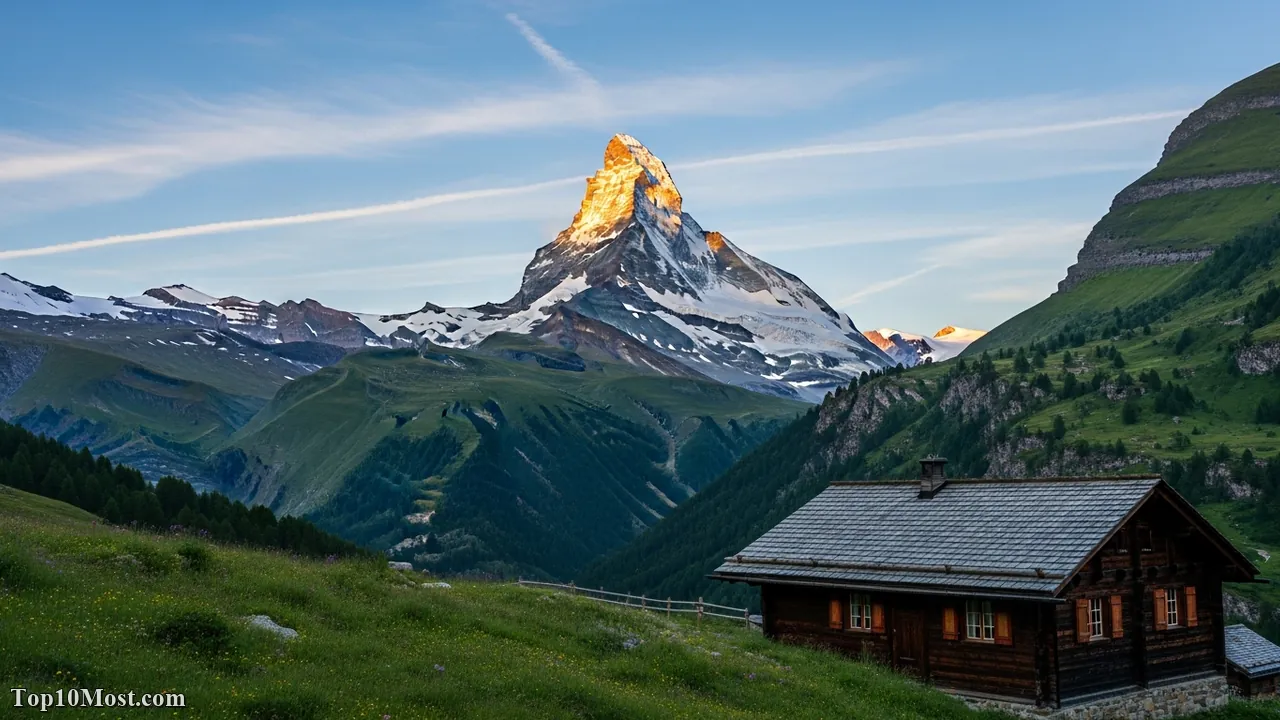
The Matterhorn is the definition of “breathtaking” because of its impossible aesthetics. It looks designed, a graphic emblem of the Swiss Alps that has inspired everything from chocolate bars (Toblerone) to amusement park rides. The view from Zermatt, particularly at sunrise when the peak glows gold while the valley sleeps in shadow, is iconic.
There is a terrifying elegance to the Matterhorn. It is beautiful to look at but deadly to climb, holding a storied history in the annals of mountaineering. It stands as a monument to the golden age of alpinism, a sharp, solitary reminder of the vertical limits of our world.
Key Highlights
- Shape: Distinct, isolated pyramid with four steep faces.
- Location: Overlooking the Swiss town of Zermatt.
- History: First ascent in 1865 marked the end of the “Golden Age of Alpinism.”
Top 1. Mount Fuji
Topping our list is Japan’s Mount Fuji, a stratovolcano of such exceptional symmetry and cultural weight that it transcends geography to become art. Rising 3,776 meters on the island of Honshu, its lonely, snow-capped cone has been the subject of poetry, painting, and pilgrimage for centuries. It is not the highest nor the hardest to climb, but it is arguably the most perfectly formed mountain on Earth.
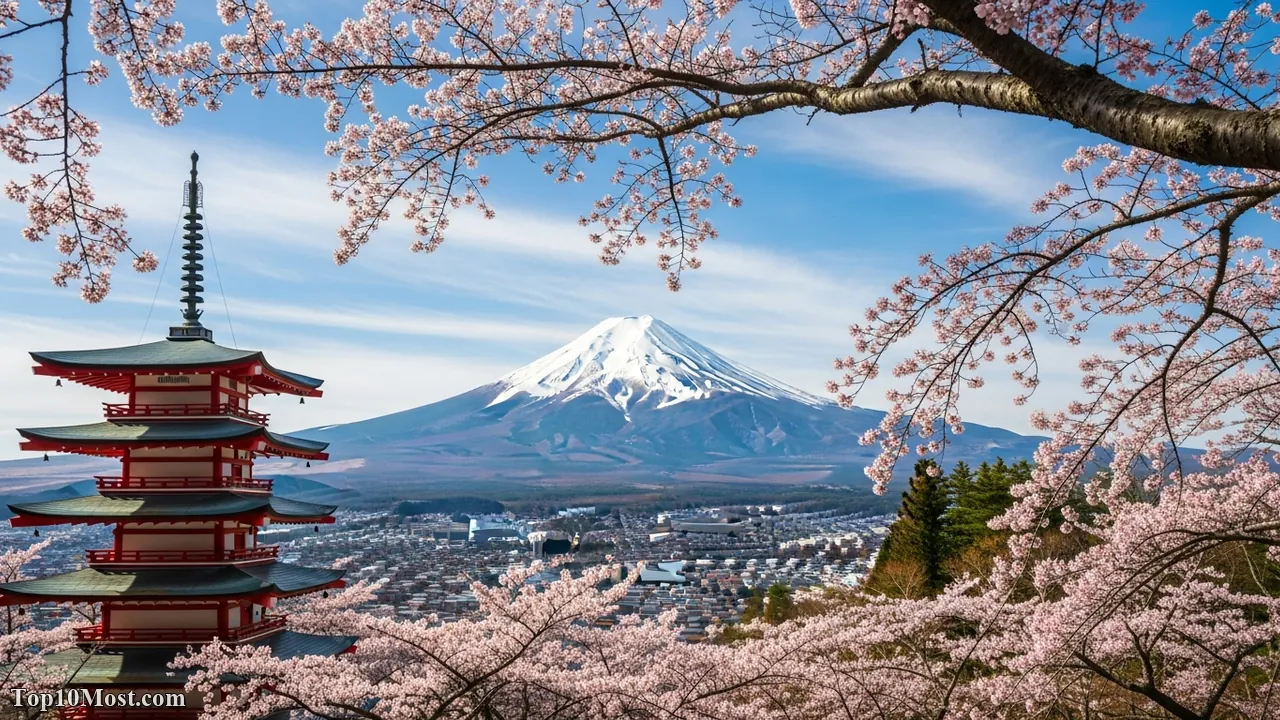
Mount Fuji takes the number one spot because it combines geological perfection with deep spiritual resonance. Whether viewed from the Five Lakes, the bullet train, or the bustling streets of Tokyo on a clear winter day, it commands a serene, majestic presence. It is a UNESCO World Heritage site, recognized not just for its nature, but as a “sacred place and source of artistic inspiration.”
There is a peace in viewing Fuji that is absent in the jagged violence of the Himalayas or the Andes. It sits with a quiet dignity, a solitary cone rising from the sea. To see Fuji is to witness a balance between the earth and the sky that feels almost divine, making it, in our view, the most breathtaking mountain on Earth.
Key Highlights
- Aesthetics: Renowned for its exceptionally symmetrical cone.
- Status: An active stratovolcano and Japan’s highest peak.
- Significance: A central icon of Japanese cultural and spiritual identity.
Conclusion
The mountains on this list are more than just piled rock and ice; they are the cathedrals of the natural world. From the colorful stripes of Vinicunca to the terrifying grace of the Matterhorn and the serene perfection of Mount Fuji, each peak offers a different definition of beauty. They remind us that the Earth is dynamic, violent, and capable of creating structures that silence us with their scale.
Whether you are planning an expedition or simply admiring these giants from afar, they serve as a necessary perspective check. They have stood for millennia before us and will stand for millennia after. In a world of constant change, the “breathtaking” nature of these mountains remains a constant, grounding truth.