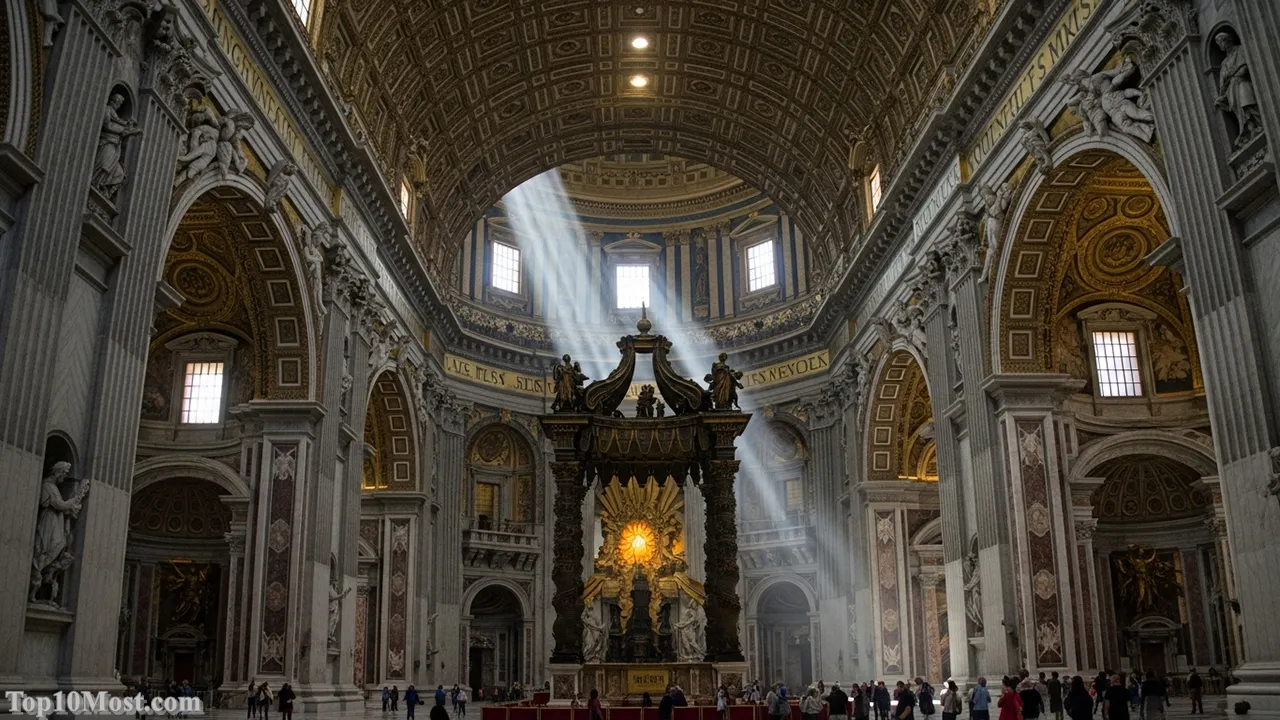
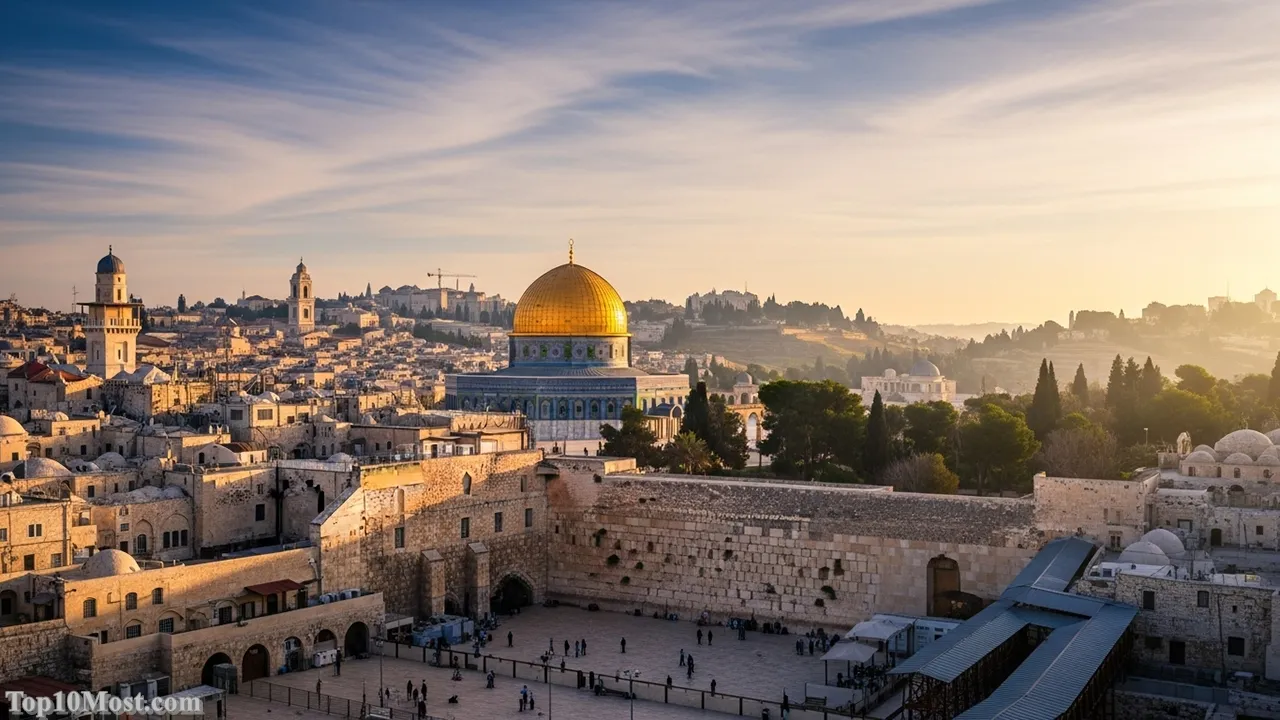
There is a profound human need to gather, to shake off the mundane, and to celebrate existence through color, sound, and tradition. In an increasingly digital era, the value of visceral, face-to-face celebration has only skyrocketed. The festivals listed here are not merely parties; they are colossal cultural engines that drive tourism, define national identities, and offer a collective release for millions of souls.
From the samba-fueled streets of Rio de Janeiro to the sacred, lamp-lit riverbanks of India, these events represent the pinnacle of human expression. Our analysis prioritizes global fame, attendance numbers, cultural depth, and the sheer “bucket list” status of these events. We have looked beyond simple ticket sales to understand which festivals truly capture the world’s imagination.
The data and rankings in this article are compiled and analyzed based on information updated as of December 2025, reflecting the most recent attendance figures and cultural trends observed throughout the year.
Table of the Top 10 Most Celebrated Festivals
| Rank | Festival | Location | Primary Celebration Month |
|---|---|---|---|
| 1 | Rio Carnival | Rio de Janeiro, Brazil | February / March |
| 2 | Oktoberfest | Munich, Germany | September / October |
| 3 | Diwali | India (Global) | October / November |
| 4 | Chinese New Year | China (Global) | January / February |
| 5 | Holi | India / Nepal | March |
| 6 | Mardi Gras | New Orleans, USA | February / March |
| 7 | Venice Carnival | Venice, Italy | February |
| 8 | Dia de los Muertos | Mexico | November |
| 9 | Songkran | Thailand | April |
| 10 | La Tomatina | Buñol, Spain | August |
Top 10. La Tomatina
While it may lack the spiritual depth of Diwali or the grandeur of Rio, La Tomatina earns its place on this list through sheer, unadulterated absurdity and joy. Held in the small Valencian town of Buñol, this event transforms a quiet street into the world’s largest food fight. For one hour on the last Wednesday of August, thousands of participants from every corner of the globe pelt each other with over 100 metric tons of over-ripe tomatoes, turning the town into a river of red pulp.
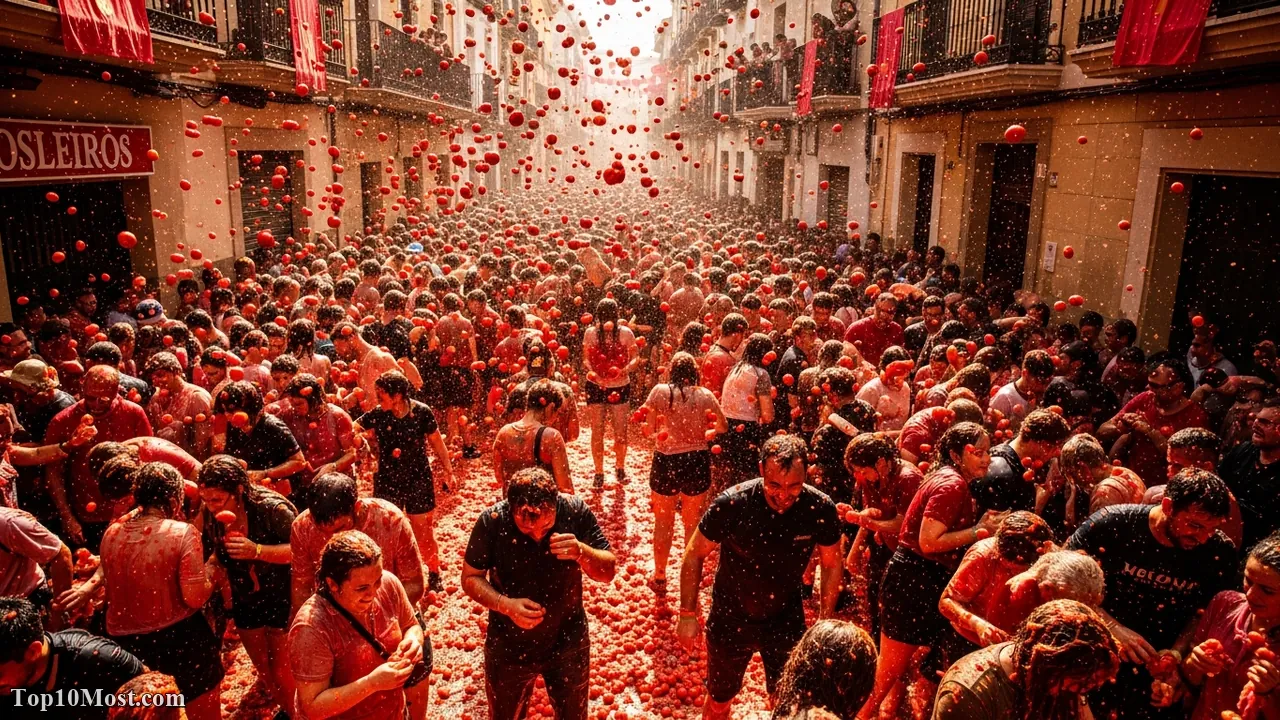
The ranking of La Tomatina is secured by its unique status as a viral cultural phenomenon. It doesn’t pretend to be high art; it is a chaotic release of energy that dates back to a spontaneous brawl in 1945. Its limited capacity (ticketed to around 20,000 people as of 2025) makes it an exclusive yet accessible experience for those lucky enough to attend, proving that sometimes, the best celebrations are simply about letting go of all inhibition.
There is something strangely purifying about standing ankle-deep in tomato juice, laughing with strangers who don’t speak your language. It’s a messy, sticky reminder that at our core, humans just want to play. In a world that is often too serious, La Tomatina offers a brief, messy respite where the only objective is to get dirty.
Key Highlights
- Attendance Cap: Strictly limited to ~20,000 ticketed participants to ensure safety.
- Ammunition: Approximately 120,000 kg (265,000 lbs) of tomatoes are used annually.
- Duration: The actual fight lasts exactly one hour, marked by water cannons.
Top 9. Songkran (Water Festival)
Songkran marks the traditional Thai New Year and is arguably the most refreshing festival on Earth. Taking place during the hottest month of the year in Thailand, what began as a gentle tradition of sprinkling water on elders and Buddha images for purification has evolved into a nationwide, three-day water battle. From the bustling streets of Bangkok to the moats of Chiang Mai, the entire country shuts down to engage in friendly aquatic warfare.
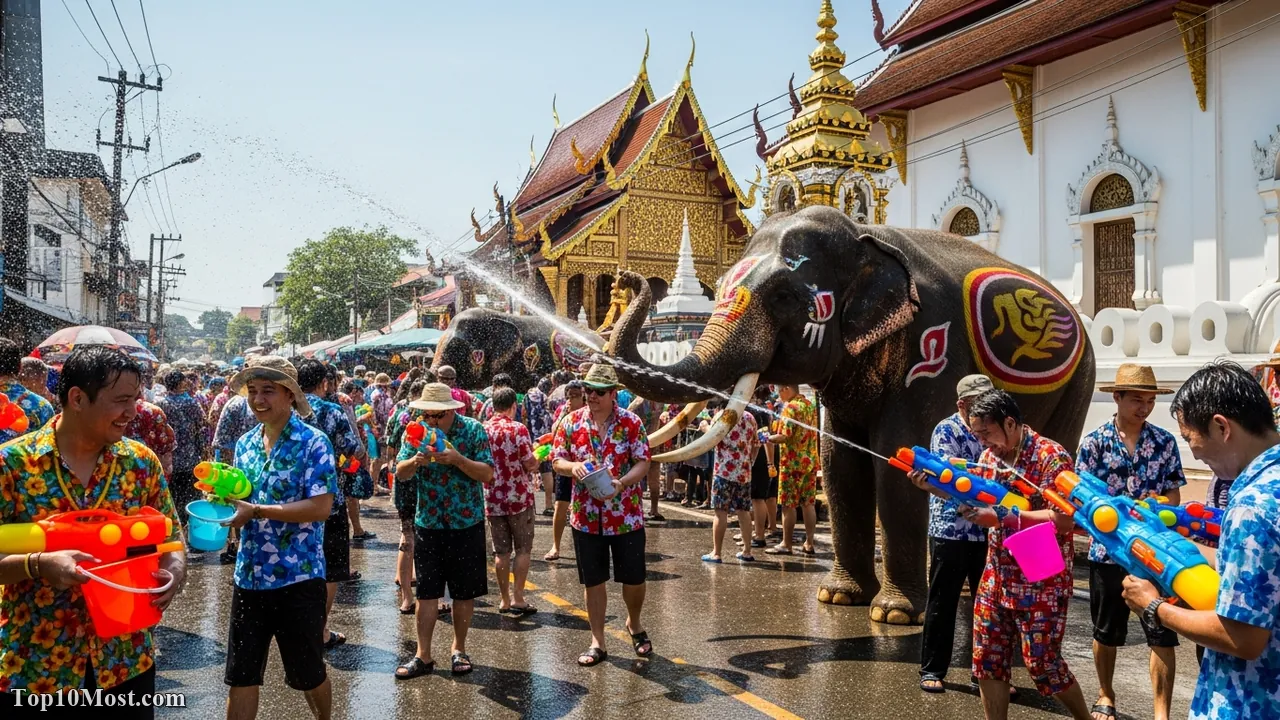
We rank Songkran here because it perfectly blends ancient tradition with modern fun. It is one of the few festivals where tourists are not just observers but active participants—you will get wet, regardless of who you are. The festival symbolizes the washing away of the previous year’s misfortunes, a concept that resonates universally, especially in the post-pandemic era where the idea of “renewal” carries heavy emotional weight.
Walking through a Songkran celebration feels like returning to childhood. The distinct lack of malice—water is splashed with smiles and “Sawasdee Pi Mai” (Happy New Year) greetings—creates an atmosphere of communal joy that is rare in modern cities. It is a festival that physically cools you down while warming your heart.
Key Highlights
- Date: Fixed annually on April 13–15.
- Significance: Represents purification and the washing away of bad luck.
- Scale: Celebrated nationwide, with Chiang Mai hosting the largest street parties.
Top 8. Dia de los Muertos (Day of the Dead)
Far from a somber affair, Mexico’s Day of the Dead is a vibrant, colorful explosion of life affirming the bonds between the living and the deceased. Rooted in Aztec traditions and merged with Catholicism, this festival sees families building elaborate ofrendas (altars) adorned with marigolds, sugar skulls, and photos of loved ones. It has transcended its local roots to become a globally recognized aesthetic and spiritual event.
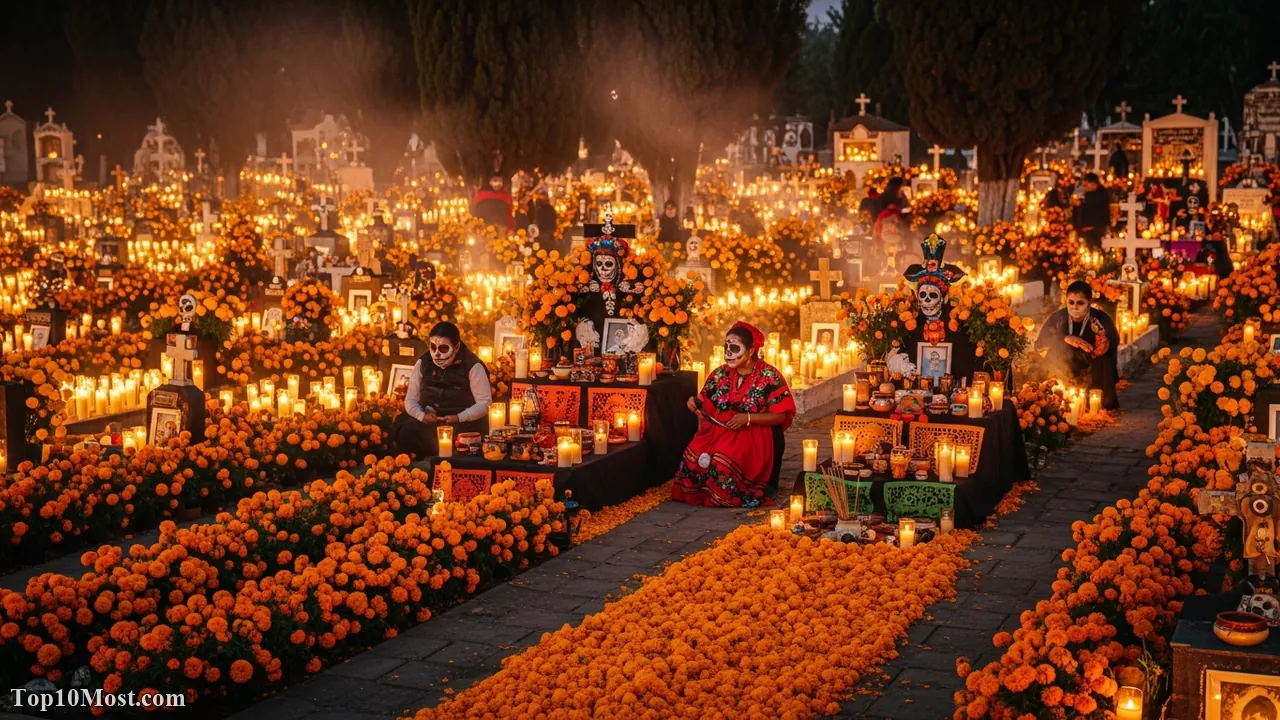
This festival ranks highly due to its profound emotional resonance and visual distinctiveness. Unlike Halloween, which focuses on fear, Dia de los Muertos focuses on love and memory. The parades in Mexico City—now massive events partly inspired by pop culture (like the James Bond film Spectre)—draw millions, but the true heart of the festival remains in the cemeteries of Michoacán and Oaxaca, where families hold vigils throughout the night.
Witnessing Dia de los Muertos is a lesson in how to process grief. It teaches us that death is not a final goodbye, but a stage in a continuous cycle. The sight of thousands of candles flickering in a graveyard, accompanied by music and laughter, shifts your entire perspective on mortality, making it a celebration of legacy rather than a fear of the end.
Key Highlights
- UNESCO Status: Recognized as Intangible Cultural Heritage of Humanity.
- Key Icon: The “La Catrina” skeleton figure is the central visual symbol.
- Dates: November 1st (All Saints’ Day) and November 2nd (All Souls’ Day).
Top 7. Venice Carnival
Stepping into the Venice Carnival is like stepping into a living baroque painting. For the two weeks leading up to Shrove Tuesday, the floating city of Venice is overtaken by mysterious figures in elaborate 18th-century costumes and porcelain masks. It is a festival of anonymity and decadence, reviving the history of the Venetian Republic when masks allowed citizens to hide their social status and indulge in illicit pleasures.
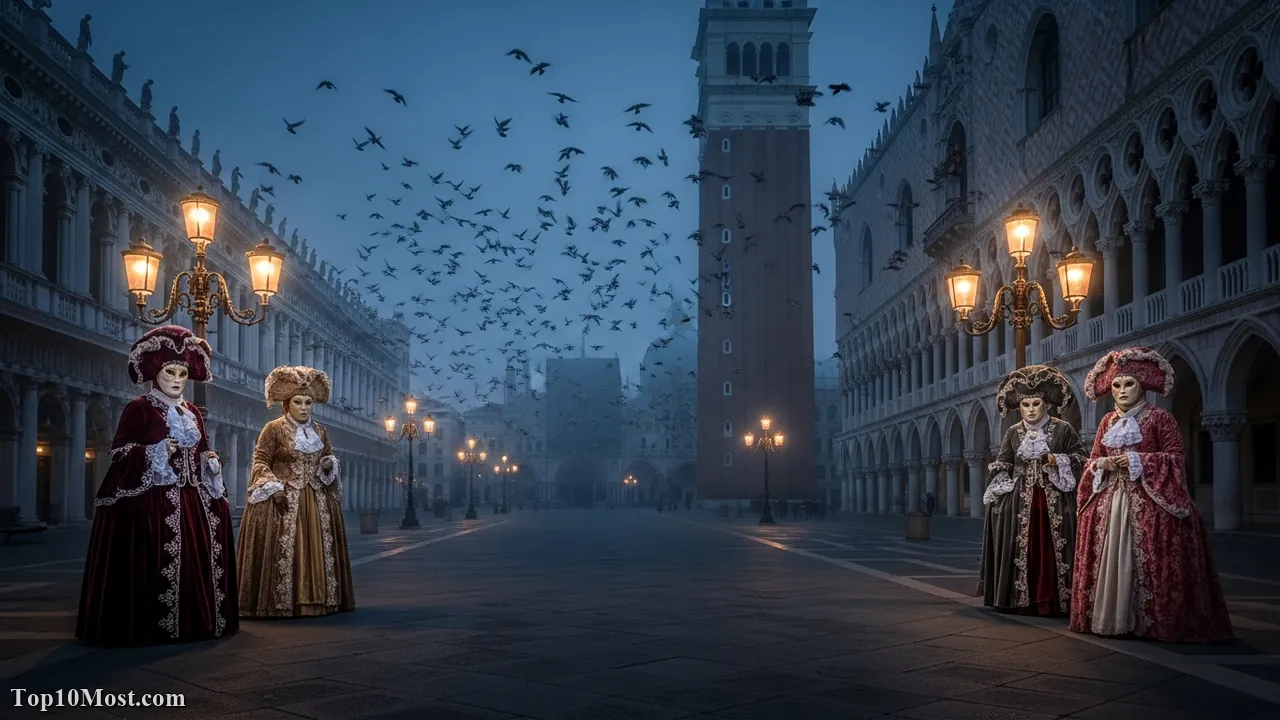
The festival is on this list for its sheer artistic beauty and historical weight. While other festivals are about noise and chaos, Venice is about elegance and mystery. The “Flight of the Angel” in St. Mark’s Square and the exclusive masquerade balls offer a glimpse into a bygone era of European aristocracy. It attracts millions of photographers and romantics who seek the magic of the “Serenissima.”
There is a haunting allure to the Venice Carnival. Behind every mask is a stranger, and for a few days, the rigid rules of modern society are suspended in favor of fantasy. It reminds us of the power of theater and costume—how changing our face can, momentarily, liberate our spirit.
Key Highlights
- History: Dates back to 1162; revived in 1979 to immense global success.
- Signature Event: The “Flight of the Angel” zip-line event at Piazza San Marco.
- Costume Culture: Masks (like the Bauta and Colombina) are central to the experience.
Top 6. Mardi Gras
New Orleans’ Mardi Gras is the undisputed king of American festivals, a riotous final hoorah before the solemnity of Lent. “Fat Tuesday” is the culmination of weeks of parades organized by “Krewes,” social clubs that build massive, intricate floats and toss strings of beads to clamoring crowds. It is a spectacle of jazz, purple-green-and-gold pageantry, and uninhibited hedonism.
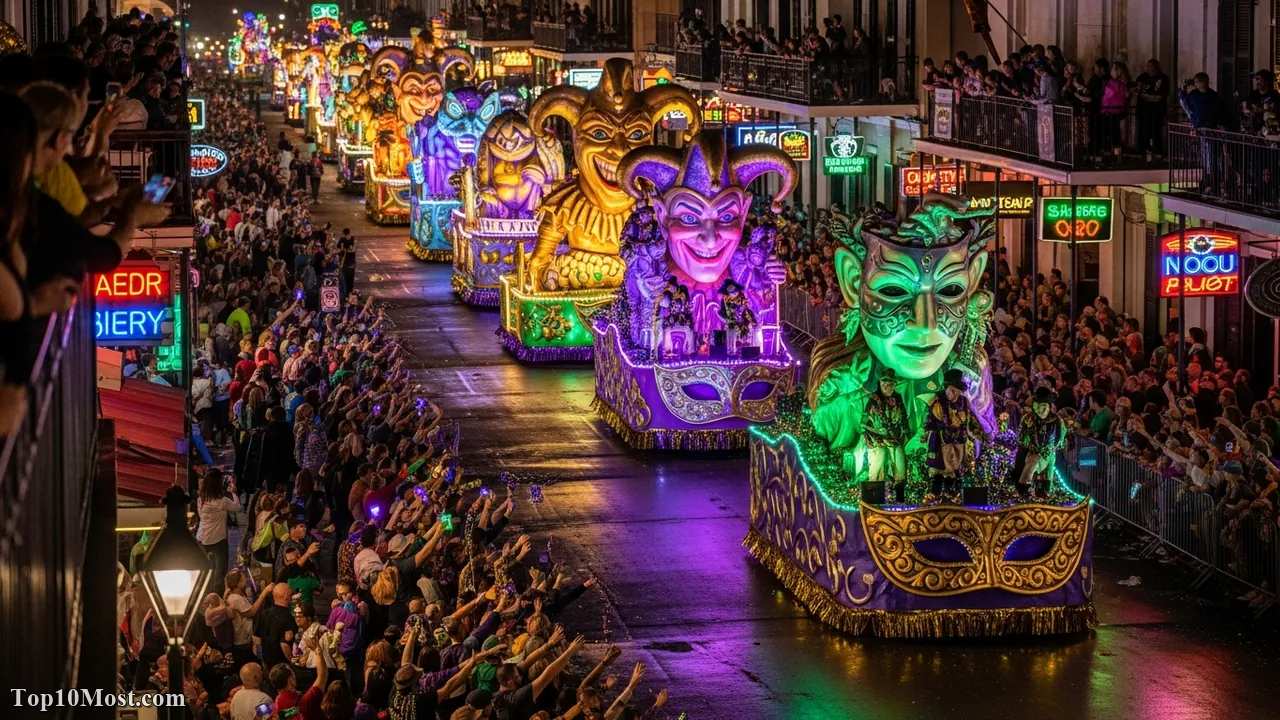
Mardi Gras earns its rank through its cultural tenacity and community structure. It is not just a tourist show; it is the lifeblood of New Orleans. The festival showcases the city’s resilience and its unique blend of French, Spanish, African, and American cultures. The sheer volume of beads, the complexity of the floats, and the infectious rhythm of the marching bands make it a sensory overload that defines the American South.
To understand Mardi Gras, you must understand the concept of “Laissez les bons temps rouler” (Let the good times roll). It is a festival that celebrates the present moment with ferocious intensity. In a city that has seen its share of hardship, Mardi Gras is a defiant, joyous roar of survival and community.
Key Highlights
- Economic Impact: Generates over $1 billion annually for the New Orleans economy.
- Tradition: The throwing of beads and “doubloons” (coins) from floats.
- Colors: Purple (Justice), Green (Faith), and Gold (Power).
Top 5. Holi
Holi, the Festival of Colors, has arguably become India’s most successful cultural export. Celebrating the arrival of spring and the triumph of good over evil (specifically the burning of the demoness Holika), participants douse each other in colored powders (gulal) and water. It is a day when social hierarchies dissolve; rich and poor, men and women, young and old are all covered in the same rainbow of colors.
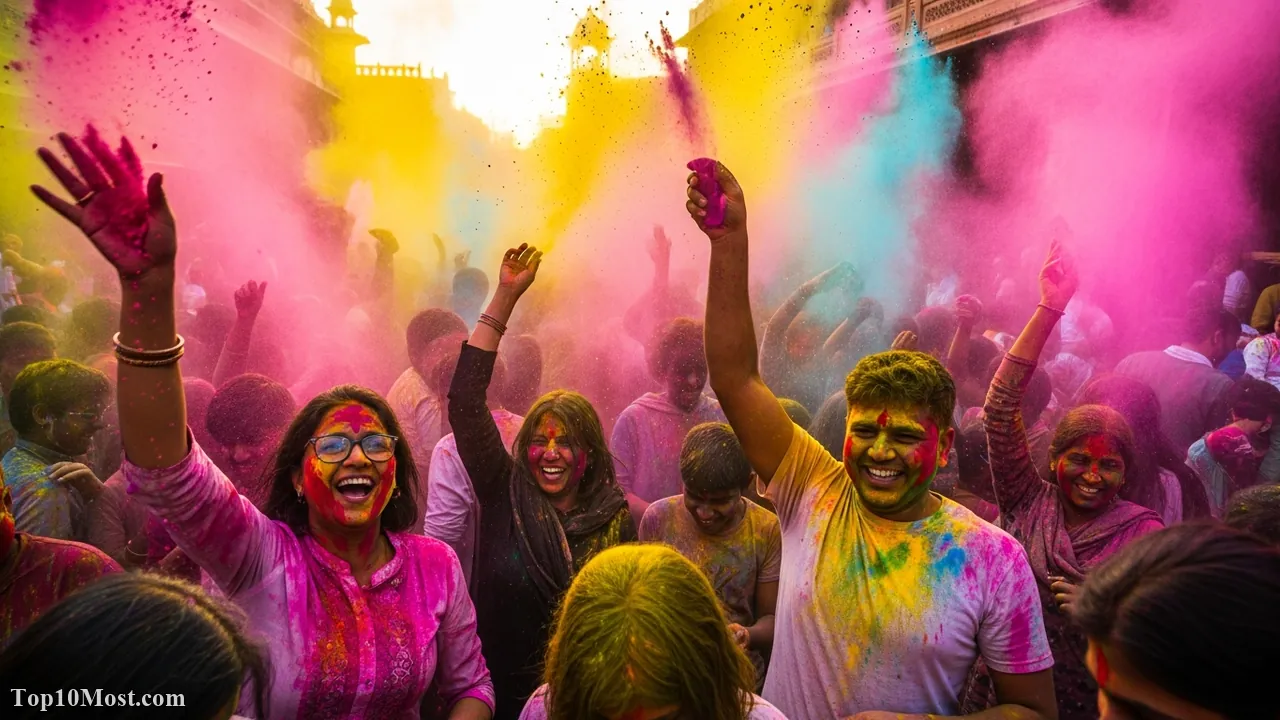
We rank Holi in the top 5 because of its visual power and its rapidly expanding global footprint. While the most authentic celebrations are in the Braj region of India, you can now find massive Holi festivals in Berlin, Utah, and London. It is visually stunning, photogenic, and possesses an infectious energy that breaks down personal barriers faster than any other event.
Holi is messy, chaotic, and incredibly beautiful. It forces you to let your guard down. You cannot maintain a stiff upper lip when someone is smearing bright pink powder on your face. It is a celebration of diversity and unity, turning the world into a vibrant canvas where humanity is the art.
Key Highlights
- Significance: Celebrates the victory of Lord Vishnu and the arrival of Spring.
- Key Ritual: The “Holika Dahan” bonfire on the night before the color play.
- Global Reach: Now celebrated in non-Hindu communities worldwide as a “Festival of Love.”
Top 4. Chinese New Year (Spring Festival)
If we were ranking solely by the number of participants, Chinese New Year would be undisputed at number one. Known as the “largest annual human migration,” hundreds of millions of people travel to reunite with their families. The festival lasts for 15 days, marked by dragon dances, red lanterns, fireworks to scare away the monster “Nian,” and the exchange of red envelopes (hongbao) for good luck.
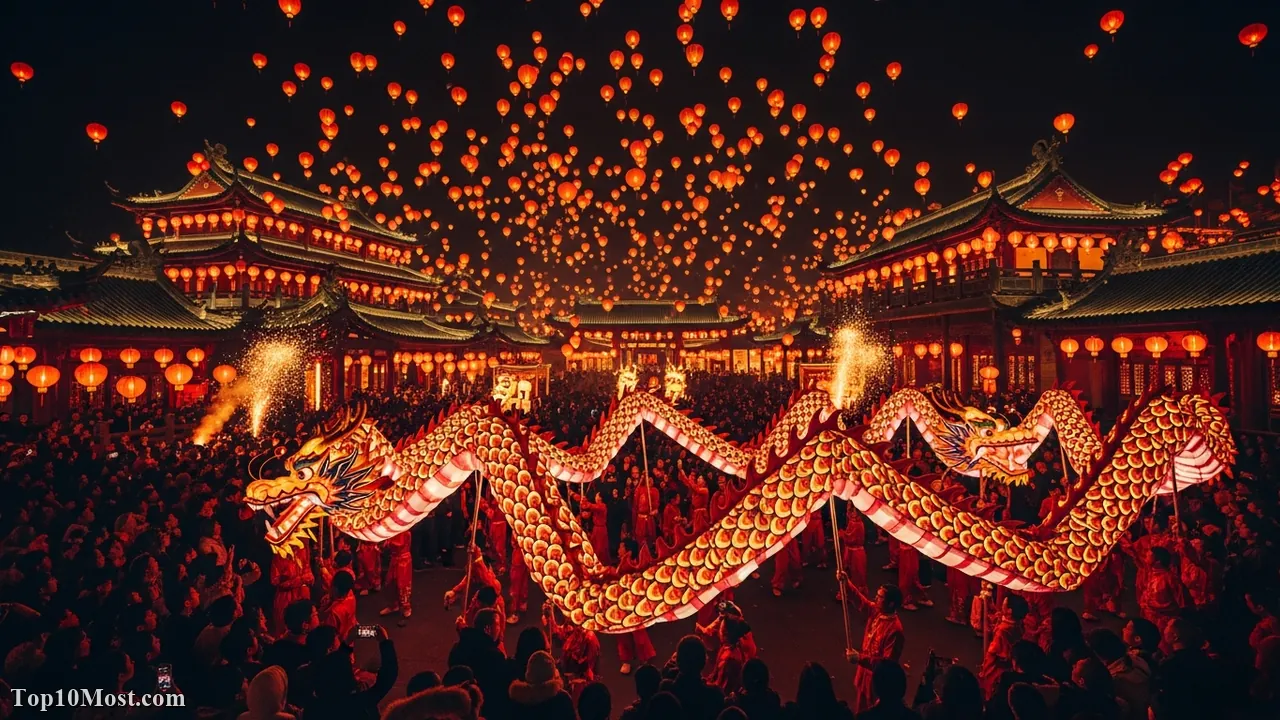
Its position here reflects its staggering scale and deep cultural gravity. It is the heartbeat of the Chinese calendar, influencing global markets and travel patterns. The celebrations in Beijing, Hong Kong, and global Chinatowns are exercises in precision and grandeur, blending thousands of years of mythology with modern pyrotechnics.
The essence of Chinese New Year is family. In a fast-paced world of separated households, the non-negotiable tradition of the reunion dinner is a powerful testament to the endurance of kinship. It is a festival that looks backward to ancestors and forward to prosperity, grounding billions of people in their heritage.
Key Highlights
- Scale: Triggers the “Chunyun” travel rush, with billions of trips taken.
- Duration: 15 days, concluding with the Lantern Festival.
- Symbolism: Each year corresponds to one of the 12 Zodiac animals (e.g., Snake in 2025, Horse in 2026).
Top 3. Diwali
Diwali, the Festival of Lights, is a spiritual spectacle that transcends borders. Celebrated by Hindus, Jains, Sikhs, and Buddhists, it symbolizes the spiritual victory of light over darkness, good over evil, and knowledge over ignorance. Across India and the world, billions of oil lamps (diyas) are lit, turning the darkest night of the lunar month into a glowing tapestry of hope.
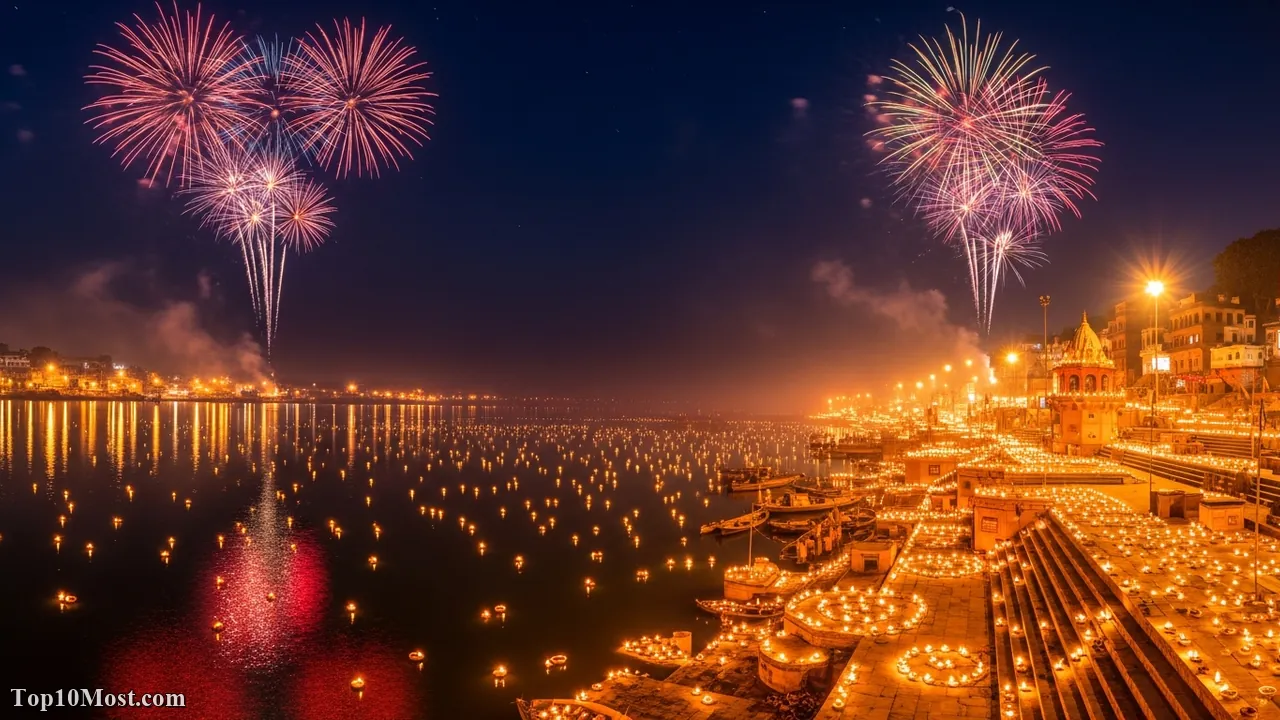
Diwali is in the top 3 because of its profound spiritual weight combined with massive joyous celebration. It is not just a party; it is a renewal of the spirit. The firework displays in cities like Mumbai and Delhi are visible from space, but the true magic lies in the intimate lighting of candles in millions of homes. It is a festival that invites prosperity and peace, making it deeply personal for over a billion people.
There is a quiet power in the flickering flame of a diya. Standing amidst the lights of Diwali, one feels a connection to a tradition that has weathered centuries. It is a reminder that no matter how dark the world gets, the human spirit has the capacity to kindle light. It is aesthetically breathtaking and spiritually replenishing.
Key Highlights
- Attendance: Celebrated by over 1 billion people worldwide.
- Visuals: Characterized by Rangoli art, oil lamps, and massive firework displays.
- Timing: Falls on the new moon between mid-October and mid-November.
Top 2. Oktoberfest
Munich’s Oktoberfest is the heavyweight champion of “volksfests” (people’s festivals). What began as a wedding celebration for Crown Prince Ludwig in 1810 has evolved into a 16-day bavarian behemoth attracting over 6 million visitors annually. It is a celebration of Bavarian culture, featuring traditional Dirndl and Lederhosen, roasted chicken (Hendl), giant pretzels, and, of course, millions of liters of specially brewed Munich beer.
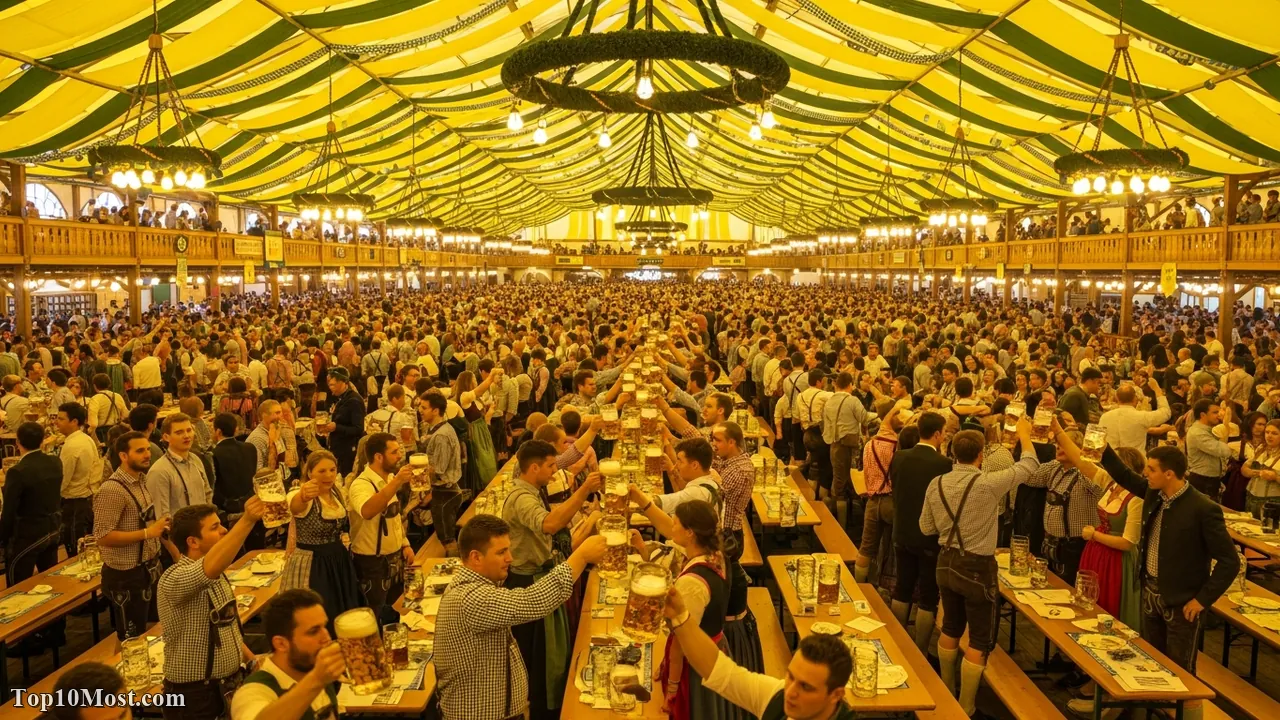
Oktoberfest takes the runner-up spot because of its unparalleled organization and atmosphere. Despite the immense crowds, it runs with German efficiency, creating a safe, joyous environment where the entire world comes to toast Prost! in massive beer tents. It is the ultimate bucket-list event for travelers, generating a camaraderie that sees strangers becoming best friends over a one-liter Maß.
The genius of Oktoberfest is that it preserves tradition on a massive scale. It refuses to modernize its core values—the beer must still adhere to the 500-year-old Purity Law, and the music is still brass bands playing “Ein Prosit.” It is a testament to the enduring appeal of simple pleasures: good food, good drink, and good company.
Key Highlights
- Consumption: Over 7 million liters of beer are consumed during the festival.
- Venue: Held at the Theresienwiese, a massive open space in Munich.
- Entry: Entrance to the festival grounds and tents is free; you pay for what you consume.
Top 1. Rio Carnival
At the very pinnacle of global celebrations sits the Rio Carnival. It is the “Greatest Show on Earth”—a week-long explosion of samba, sweat, sequins, and rhythm that paralyzes Brazil and captivates the world. While street parties (blocos) happen all over the city, the centerpiece is the Sambadrome parade, where elite Samba Schools compete with floats and costumes of unimaginable complexity.
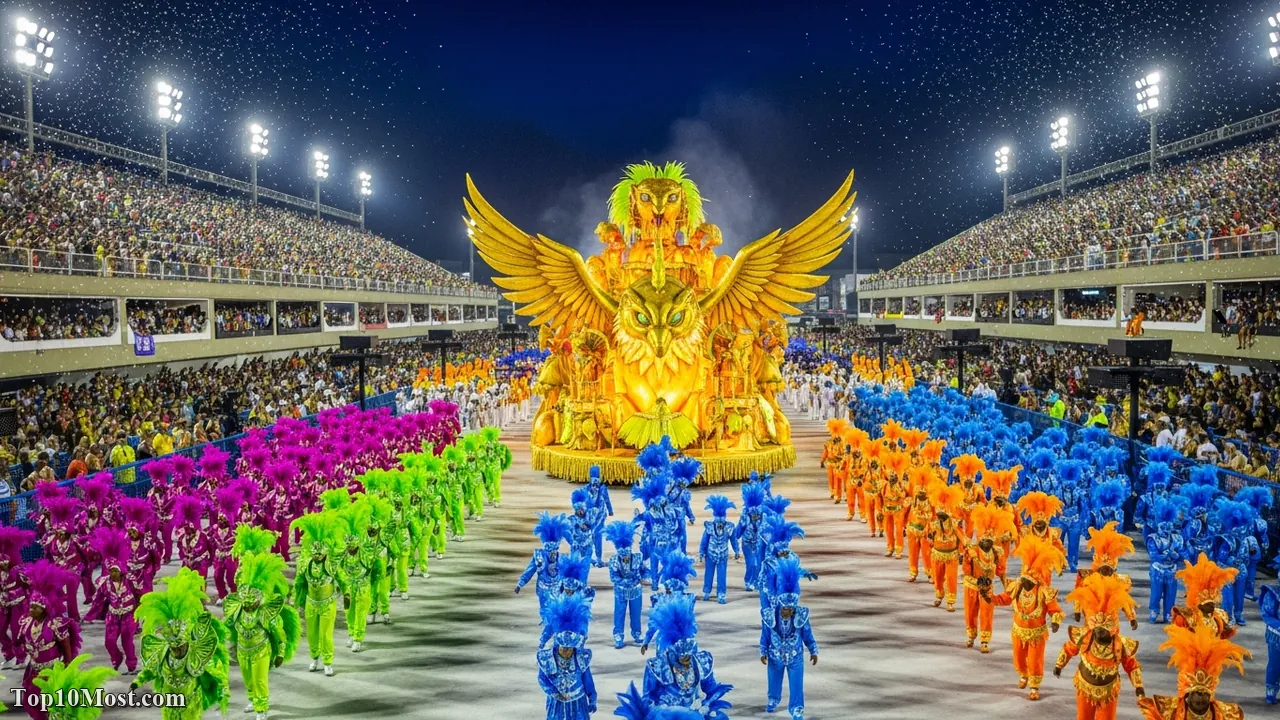
Rio Carnival is Number 1 because it represents the absolute maximum of human festive energy. No other event combines such high artistic stakes with such raw, primal joy. It is a multi-million dollar industry, a fierce competition, and a massive street party rolled into one. The sheer dedication of the communities who spend all year building the floats demonstrates that this is not just a hobby; it is the soul of the carioca culture.
To experience Rio Carnival is to feel the pulse of humanity race. The drumming is not just heard; it is felt in the chest. It is a celebration of life in its most vibrant, unadulterated form, proving that despite political or economic hardships, the human capacity for joy is infinite. It is the gold standard by which all other festivals are measured.
Key Highlights
- Attendance: Draws roughly 2 million people per day to the streets of Rio.
- The Sambadrome: A purpose-built stadium designed by Oscar Niemeyer specifically for the parade.
- Cultural Roots: Deeply connected to Afro-Brazilian heritage and Candomblé rhythms.
Conclusion
These top 10 festivals offer more than just a break from the routine; they provide a window into the diverse ways humanity defines happiness. From the disciplined tradition of the Japanese tea ceremonies (not listed, but spirit-adjacent) to the chaotic tomato wars of Spain, we see a common thread: the need to connect.
As we move through 2025 and look toward 2026, the resurgence of these massive gatherings signals a global recovery of spirit. Whether you are drawn to the spiritual lights of Diwali or the thumping drums of Rio, attending any one of these festivals is a life-affirming decision. They remind us that we are part of something much larger than ourselves—a global community that, despite everything, still knows how to dance.