The history of art is not merely a record of aesthetic evolution; it is a chronicle of human emotion, revolution, and the relentless pursuit of seeing the world differently. Determining the “most famous” painters involves more than counting museum visitors—it requires an analysis of cultural ubiquity, critical acclaim, and the enduring power of their visual language to transcend centuries.
The data in this article is compiled and analyzed based on information updated as of December 2025. While artistic fame is inherently subjective, the following ranking represents a reasoned consensus of historical weight, current market value, and global recognition. These artists did not just paint canvases; they altered the trajectory of visual culture, leaving behind images that remain instantly recognizable to billions of people today.
At Top 10 Most, we believe that true greatness lies in the ability to communicate across time. From the Renaissance masters to the disruptors of Modernism, this list explores the creative geniuses who defined their eras. We don’t just rank them; we explain the meaning behind their greatness and why their work continues to resonate in our current digital age.
Table of the Top 10 Most Famous Painters of All Time
| Rank | Name | Nationality | Primary Style | Most Famous Work |
|---|---|---|---|---|
| 1 | Leonardo da Vinci | Italian | High Renaissance | Mona Lisa |
| 2 | Vincent van Gogh | Dutch | Post-Impressionism | The Starry Night |
| 3 | Pablo Picasso | Spanish | Cubism / Modernism | Guernica |
| 4 | Michelangelo | Italian | High Renaissance | Sistine Chapel Ceiling |
| 5 | Rembrandt | Dutch | Baroque / Dutch Golden Age | The Night Watch |
| 6 | Claude Monet | French | Impressionism | Water Lilies (Series) |
| 7 | Salvador Dalí | Spanish | Surrealism | The Persistence of Memory |
| 8 | Frida Kahlo | Mexican | Naïve Art / Surrealism | The Two Fridas |
| 9 | Johannes Vermeer | Dutch | Baroque / Dutch Golden Age | Girl with a Pearl Earring |
| 10 | Edvard Munch | Norwegian | Expressionism | The Scream |
Top 10. Edvard Munch
“The Scream” of Modern Anxiety
Edvard Munch is the tortured father of Expressionism, a movement that prioritized raw emotional experience over realistic depiction. Born in Norway in 1863, Munch’s life was shadowed by illness and death, themes that permeated his canvas. His most iconic work, The Scream (1893), has become a universal emoji of modern angst, instantly recognizable by its undulating sky and the skeletal figure clasping its face in horror.
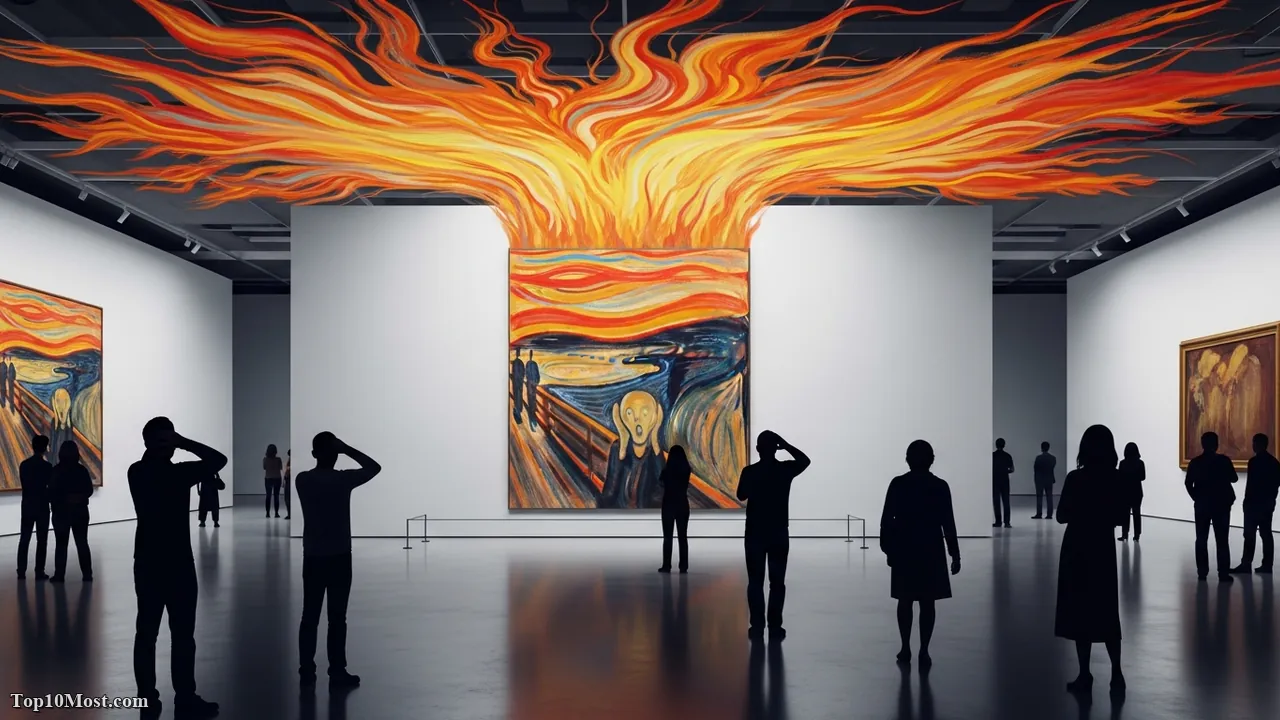
We rank Munch in the top 10 because he fundamentally shifted art from the “seen” to the “felt.” Before Munch, European art was largely concerned with external reality; Munch turned the gaze inward, painting psychological states of jealousy, despair, and isolation. His radical use of non-naturalistic color and swirling lines didn’t just depict a sunset—it depicted a panic attack. This ability to visualize the invisible struggles of the human psyche makes him arguably the most relatable artist to the modern, anxiety-ridden world.
Reflecting on Munch’s legacy, one is struck by the raw vulnerability of his process. He didn’t paint to please; he painted to survive. On a version of The Scream, he famously scribbled a tiny, barely visible inscription in the corner: “Can only have been painted by a madman.” It wasn’t an insult from a critic, but a confession from the artist himself—a haunting reminder that his genius was inextricably linked to his fragility.
Key Highlights
- Lifespan: 1863–1944
- Signature Style: Swirling lines, jarring colors, and psychological themes.
- Fact: There are actually four versions of The Scream created in various media (paint, pastel, and lithograph).
- Legacy: The direct precursor to Expressionism and a major influence on psychological horror in visual media.
Top 9. Johannes Vermeer
The Master of Light and Silence
Johannes Vermeer, the Sphinx of Delft, stands as a unique figure in art history—a painter who achieved immortality through a remarkably small body of work. Active during the Dutch Golden Age, Vermeer produced fewer than 40 authenticated paintings. Yet, works like Girl with a Pearl Earring and The Milkmaid are global icons. His subjects were not kings or gods, but domestic scenes: a maid pouring milk, a woman reading a letter, or a girl turning to glance at the viewer.

Vermeer earns his place here due to his unparalleled technical mastery of light. He didn’t just paint objects; he painted the way light caressed them. His use of the camera obscura technique allowed him to capture “circles of confusion”—soft, out-of-focus highlights that gave his paintings a photographic quality centuries before photography existed. In a world of noise and chaos, Vermeer’s art offers a rare, suspended silence that captivates the modern viewer’s desire for stillness.
There is something deeply mysterious about Vermeer. He fell into obscurity for two centuries after his death, only to be rediscovered in the 19th century. Today, the “Pearl Earring” is often called the “Mona Lisa of the North,” yet we know almost nothing about the model. This void of information invites us to project our own stories onto her enigmatic gaze, making the connection between the 17th-century canvas and the 21st-century viewer startlingly intimate.
Key Highlights
- Lifespan: 1632–1675
- Signature Style: Photo-realistic use of light, domestic interiors, and the expensive ultramarine blue pigment.
- Fact: He died in debt and obscurity, leaving his family destitute; his fame is entirely a modern phenomenon.
- Masterpiece: Girl with a Pearl Earring (c. 1665).
Top 8. Frida Kahlo
The Unapologetic Icon of Pain and Identity
Frida Kahlo is more than a painter; she is a global brand, a feminist symbol, and a cult figure. Born in Mexico City, her life was defined by physical suffering—polio as a child and a horrific bus accident at 18 that shattered her spine. Bedridden for months, she began painting self-portraits using a mirror above her bed. Her style blended Mexican folk art with Surrealism, though she famously rejected the label, saying, “I never painted dreams. I painted my own reality.”
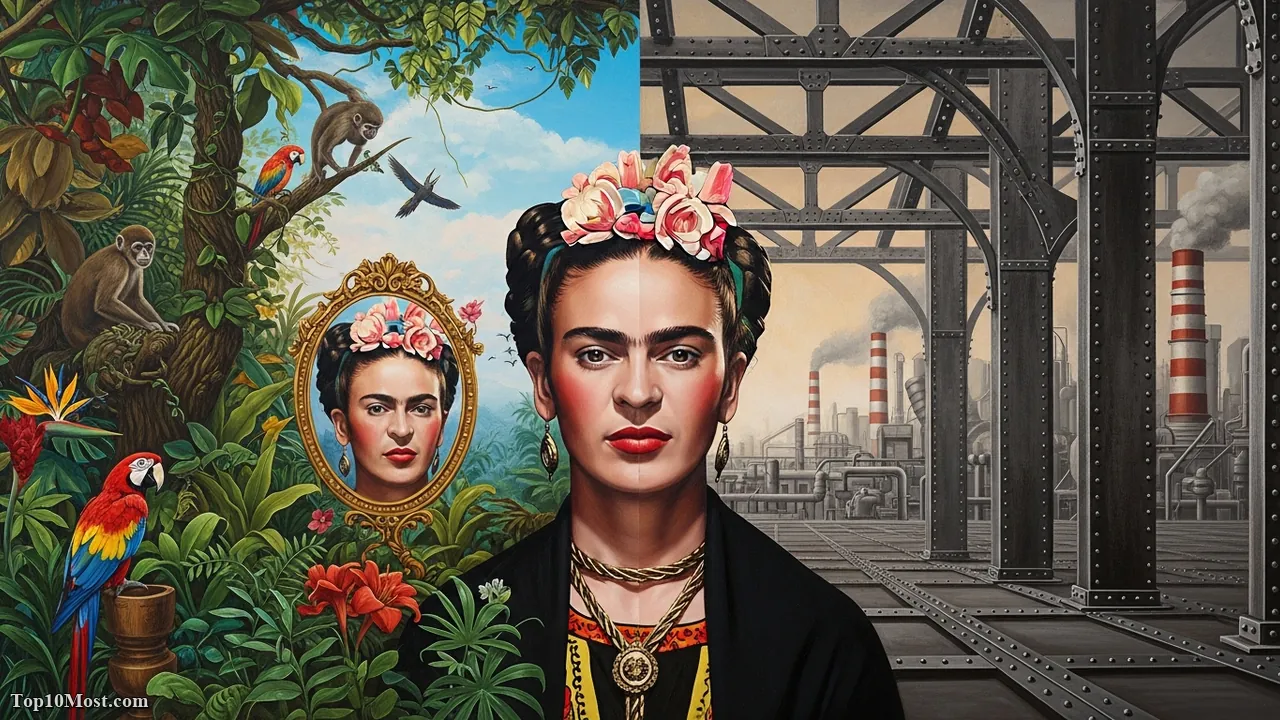
Kahlo’s ranking is secured by her fierce, uncompromising exploration of identity. While her husband, Diego Rivera, painted grand political murals, Frida painted the intimate and the taboo: miscarriage, chronic pain, facial hair, and heartbreak. She turned her physical cast and her “unibrow” into symbols of defiance. In the age of the “selfie” and identity politics, Frida’s raw, autobiographical self-documentation feels decades ahead of its time.
What makes Frida truly memorable is her resilience. She didn’t just endure her pain; she decorated it. She famously attended her first solo exhibition in Mexico in her four-poster bed, arriving by ambulance because her doctors forbade her from rising. She drank, swore, and loved with an intensity that frightened her contemporaries. Her art serves as a testament that one’s brokenness can be the very source of one’s power.
Key Highlights
- Lifespan: 1907–1954
- Signature Style: Naïve folk style, heavy symbolism, and unflinching self-portraiture.
- Famous Quote: “I paint myself because I am so often alone and because I am the subject I know best.”
- Influence: A major icon for Feminism, the LGBTQ+ community, and Mexican culture.
Top 7. Salvador Dalí
The Showman of the Subconscious
With his waxed mustache and melting clocks, Salvador Dalí is the face of Surrealism. A Spanish eccentric with a flair for the theatrical, Dalí sought to overthrow the rational mind. His work, heavily influenced by Freud’s psychoanalysis, aimed to systematize confusion—a method he called “paranoiac-critical.” His masterpiece, The Persistence of Memory (1931), challenged the rigidity of time itself, presenting it as soft, limp cheese melting in the sun.
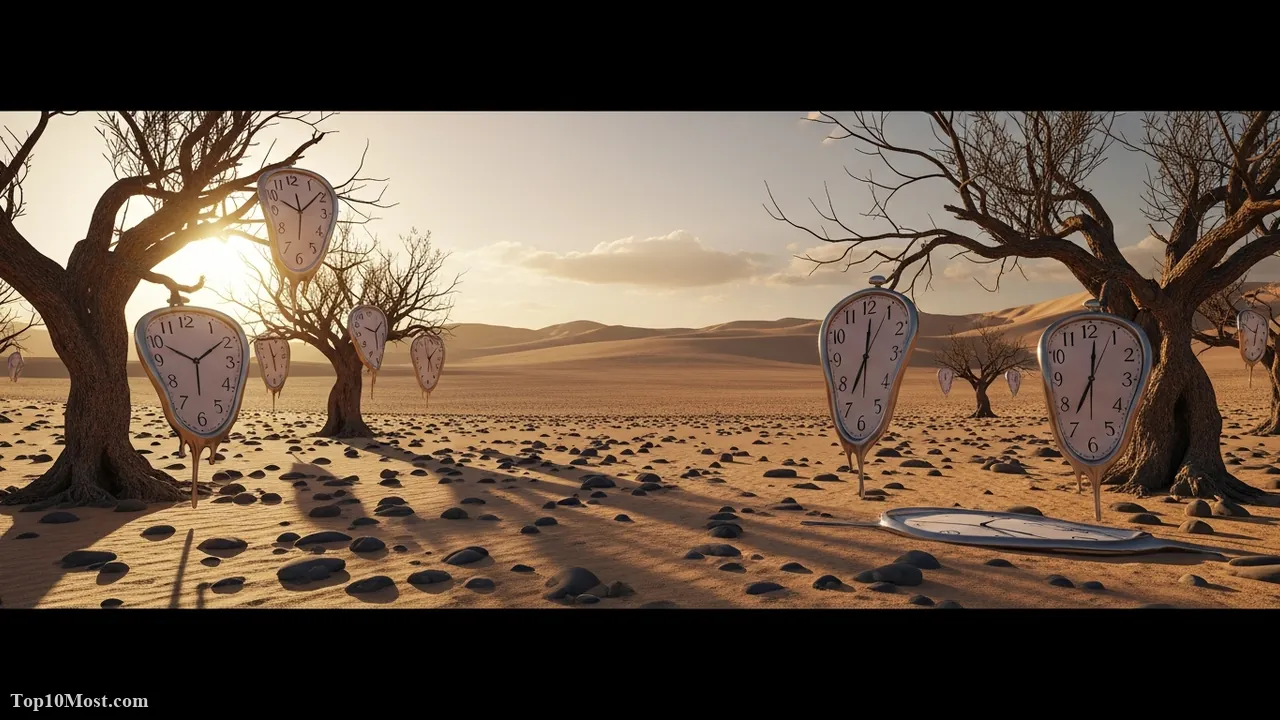
Dalí ranks highly because he was the first modern “artist-celebrity.” He understood branding better than perhaps any artist before Andy Warhol. His fame transcended the canvas; he designed logos (Chupa Chups), collaborated with Disney and Hitchcock, and turned his own life into a performance. He brought the bizarre world of the subconscious into the mainstream living room, forcing the public to question reality.
Behind the antics—walking an anteater on a leash or arriving at a lecture in a diving suit—was a technician of the highest order. Dalí could paint with the precision of a Renaissance master, only to use that skill to depict impossible dreamscapes. He famously declared, “The only difference between me and a madman is that I am not mad.” It was this controlled chaos, this lucid dreaming, that made him a genius rather than a jester.
Key Highlights
- Lifespan: 1904–1989
- Signature Style: Hyper-realistic rendering of bizarre, dream-like subjects (Surrealism).
- Fact: He was expelled from the Surrealist group for his apolitical stance and commercialism, leading to the anagram nickname “Avida Dollars” (Hungry for Dollars).
- Masterpiece: The Persistence of Memory (1931).
Top 6. Claude Monet
The Visionary Who Captured the Fleeting Moment
Claude Monet is the father of Impressionism, the movement that paved the way for modern art. In 1874, his painting Impression, Sunrise was mocked by critics as unfinished, giving the movement its name. Undeterred, Monet spent his life obsessed with capturing the ephemeral quality of light and atmosphere. He didn’t paint objects; he painted the air between him and the object.
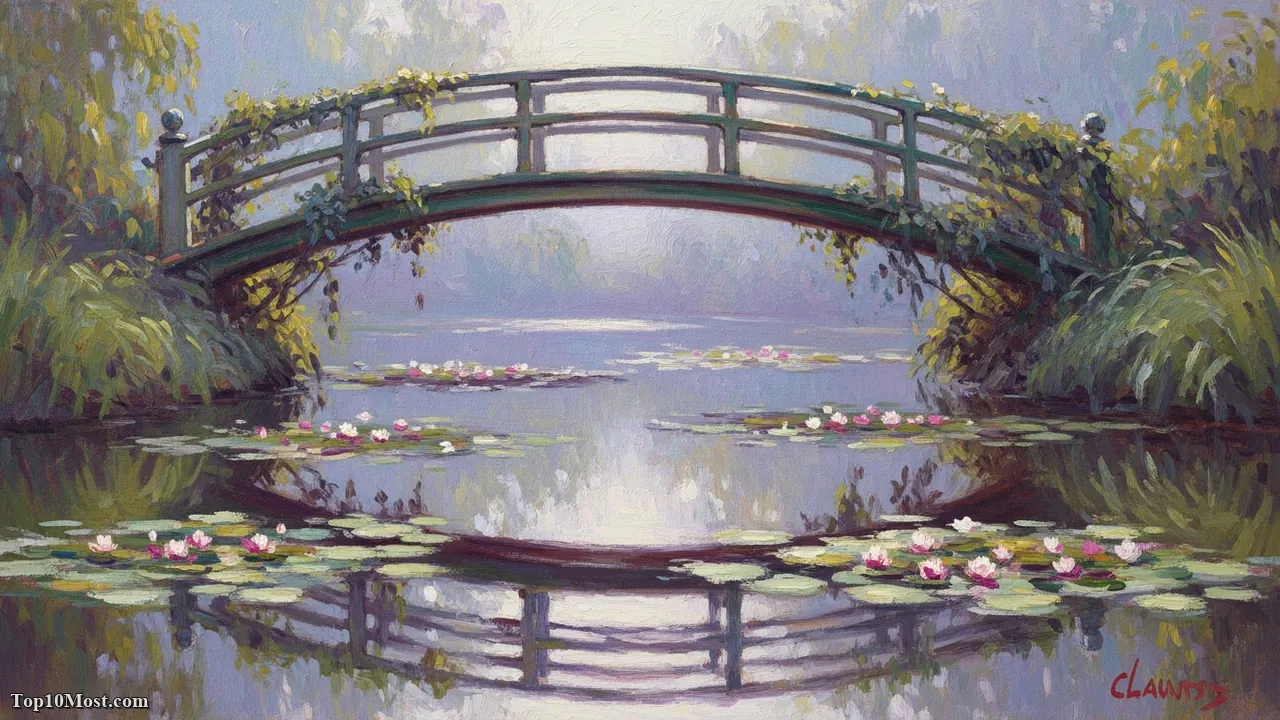
Monet’s influence is foundational. He liberated painting from the studio, insisting on working en plein air (outdoors) to capture nature’s shifting moods. His series paintings—Haystacks, Rouen Cathedral, and Water Lilies—demonstrated that a subject is never the same twice; it changes with the time of day and the season. This was a radical shift in perception that moved art toward abstraction, as form dissolved into pure color and brushstrokes.
The tragedy and triumph of Monet’s later years lie in his eyesight. As he developed cataracts, his ability to see cool colors faded, and his world became washed in blue and violet blurs. Rather than stop, he painted what he saw. The massive, immersive Water Lilies panels in the Orangerie Museum in Paris are not just paintings of a garden; they are the enveloping, blurry vision of a man losing his sight but refusing to lose his art.
Key Highlights
- Lifespan: 1840–1926
- Signature Style: Loose brushstrokes, focus on light/atmosphere, and outdoor subjects.
- Fact: He diverted a river to create his famous water garden in Giverny so he could paint it.
- Legacy: His late work is considered a precursor to Abstract Expressionism.
Top 5. Rembrandt
The Psychologist of the Canvas
Rembrandt van Rijn is the giant of the Dutch Golden Age and arguably the greatest storyteller in the history of paint. While his contemporaries smoothed over flaws to flatter their subjects, Rembrandt painted the truth. His portraits are maps of the human soul, etched with wrinkles, worry, and profound dignity. His mastery of chiaroscuro—the dramatic contrast between light and dark—gave his figures a cinematic presence that seems to emerge from the shadows.
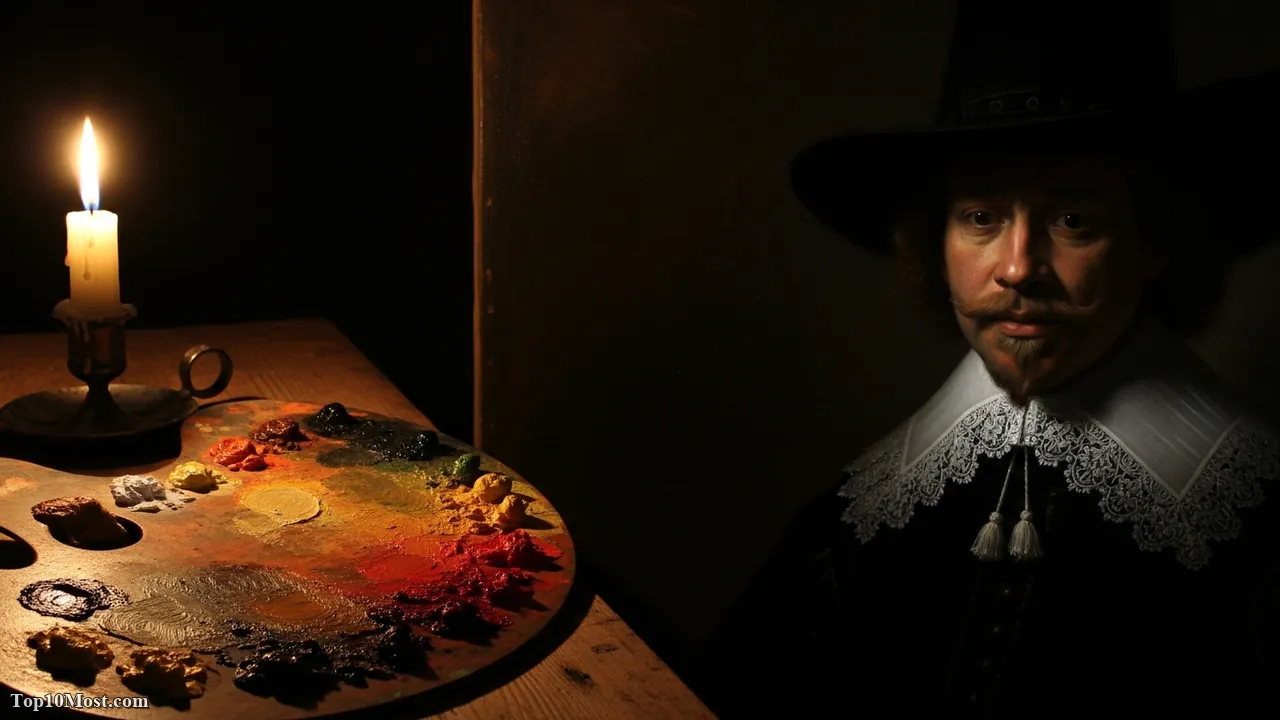
He ranks in the top 5 because of his unrivaled empathy. Whether painting a beggar or a merchant, Rembrandt endowed them with the same gravity. His group portrait, The Night Watch, revolutionized the genre by depicting a militia in chaotic motion rather than a static lineup. It was so complex that it was misunderstood; in 1715, the massive canvas was actually trimmed on all four sides to fit between two doors at the Amsterdam Town Hall—a mutilation that modern AI has only recently helped us virtually reconstruct.
Rembrandt’s life was a lesson in the volatility of fame. He achieved massive wealth and celebrity in his youth, only to die a poor man, buried in an unmarked grave. Yet, his late self-portraits are his most powerful. They show a man who has lost everything but his wisdom, staring back at the viewer with an acceptance that is heartbreakingly human. He documented his own aging without vanity, leaving behind a visual diary of a life fully lived.
Key Highlights
- Lifespan: 1606–1669
- Signature Style: Chiaroscuro (dramatic lighting), thick impasto paint, and deep psychological realism.
- Masterpiece: The Night Watch (1642).
- Fact: He created nearly 100 self-portraits, creating the most comprehensive autobiography in art history.
Top 4. Michelangelo
The Divine Sculptor Who Reluctantly Painted
Michelangelo Buonarroti was the archetype of the “Renaissance Man”—a sculptor, painter, architect, and poet. He famously viewed himself as a sculptor first, arguing that painting was a lesser art. Yet, ironically, he is ranked here as one of the greatest painters of all time because of a single, Herculean feat: the ceiling of the Sistine Chapel.
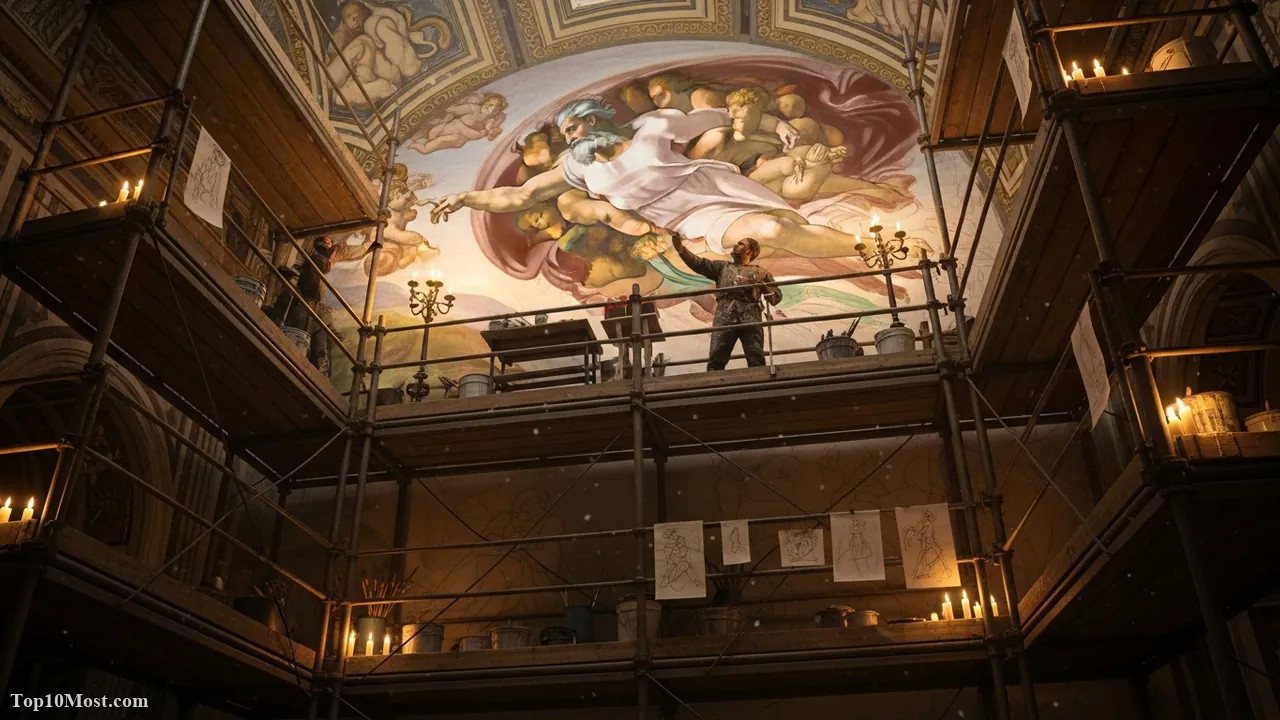
Michelangelo is essential to this list because he redefined the depiction of the human body. His figures are muscular, dynamic, and twisting—a style that birthed Mannerism. The Creation of Adam, with the near-touching fingers of God and Man, is one of the most replicated images in human history. He didn’t just paint a ceiling; he painted the entire scope of biblical history, alone, on his back (or standing with his head craned back), for four agonizing years.
There is a humorous bitterness to Michelangelo’s painting career. He wrote a poem while painting the Sistine Chapel complaining about his goiter and his “brush dripping onto his face,” describing the work as torture. He even painted his own face into The Last Judgment as a flayed skin held by St. Bartholomew—a grim joke about how he felt “skinned alive” by the demands of the Pope. It is this torturous passion that imbues his work with such terrifying power.
Key Highlights
- Lifespan: 1475–1564
- Signature Style: Monumental, sculptural figures, twisting poses (contrapposto), and fresco.
- Masterpiece: The Sistine Chapel Ceiling (1508–1512).
- Fact: He was nicknamed Il Divino (“The Divine One”) during his lifetime.
Top 3. Pablo Picasso
The Breaker of Forms
Pablo Picasso is the colossus of 20th-century art. No other artist was as prolific, as mutable, or as destructive to the status quo. Along with Georges Braque, he invented Cubism, shattering the single-point perspective that had ruled art since the Renaissance. He showed us that reality could be viewed from multiple angles simultaneously.

Picasso’s ranking is undisputed because of his sheer dominance over modern visual culture. He didn’t stick to one style; he moved through his Blue Period, Rose Period, African-influenced period, and Cubism with voracious energy. His painting Guernica (1937), a monochromatic depiction of the bombing of a Basque town, remains the world’s most powerful anti-war statement. It stripped war of its glory and left only the screaming chaos of jagged shapes.
What fascinates us about Picasso is his boundless, almost frightening creative output. He is estimated to have produced 50,000 artworks in his lifetime. He famously said, “It took me four years to paint like Raphael, but a lifetime to paint like a child.” He spent his entire life unlearning the rules of academic art to recover the raw, direct expression of youth, changing the definition of “skill” forever.
Key Highlights
- Lifespan: 1881–1973
- Signature Style: Cubism, fragmentation, and constant stylistic reinvention.
- Masterpiece: Les Demoiselles d’Avignon (1907) and Guernica (1937).
- Fact: His full baptismal name consists of 23 words.
Top 2. Vincent van Gogh
The Starry Night of a Tortured Soul
Vincent van Gogh is the world’s most beloved tragic hero. His swirling brushstrokes and vibrant, contrasting colors (yellows and blues) vibrate with an energy that feels electric. A Post-Impressionist who worked with furious speed, Van Gogh produced his most famous works, including The Starry Night and Sunflowers, in the final two years of his life while battling severe mental illness.
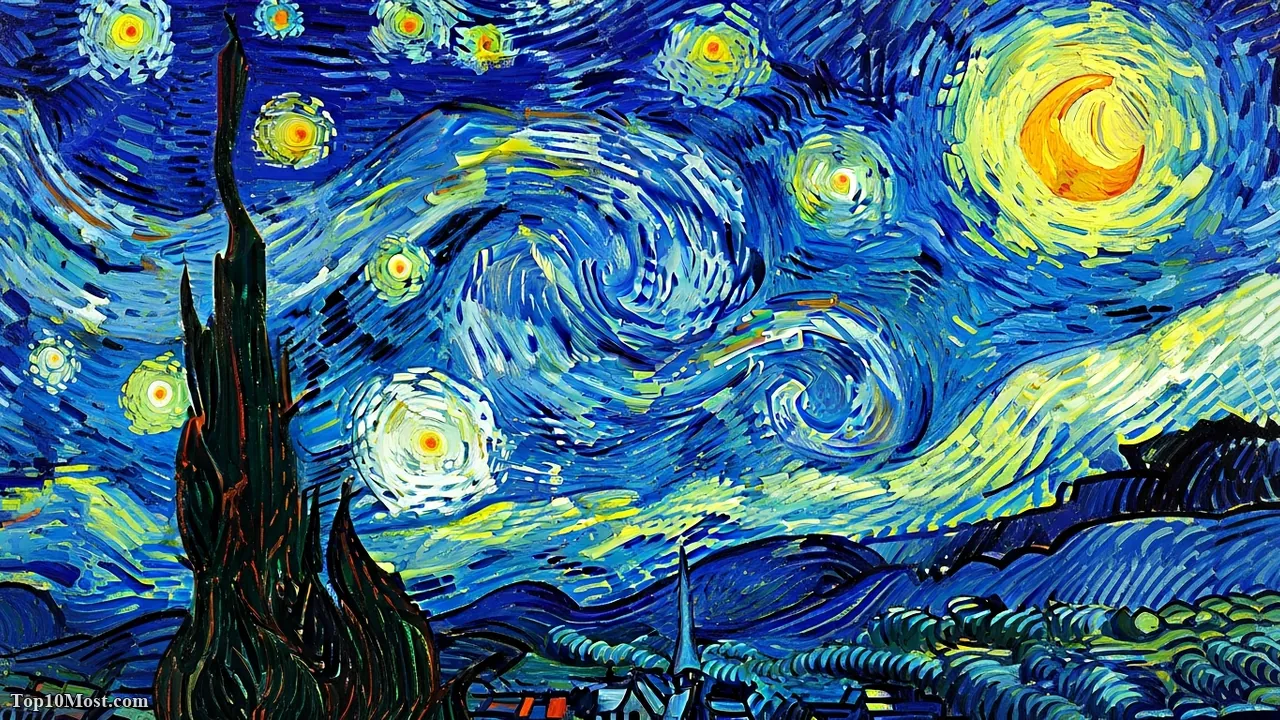
Van Gogh is ranked #2 not just for his art, but for the intense emotional connection people feel toward him. He is the ultimate outsider—the genius rejected by his time. He poured his pain onto the canvas, using thick impasto paint to give his work a tactile, living quality. The Starry Night is not a realistic view of the night sky; it is a view of the cosmos through the eyes of a man seeking solace in the infinite.
The tragedy of Van Gogh’s life is the contrast between his current value and his lived reality. Today, his paintings sell for over $100 million, yet in his lifetime, he sold only one confirmed painting (The Red Vineyard for 400 francs). He died believing he was a failure. His story reminds us that success is often a lagging indicator of genius, and that art can be a lifeline for the maker even when the world isn’t watching.
Key Highlights
- Lifespan: 1853–1890
- Signature Style: Thick, expressive brushstrokes (impasto), bold colors, and emotional intensity.
- Masterpiece: The Starry Night (1889).
- Fact: He created over 2,100 artworks in just over a decade of activity.
Top 1. Leonardo da Vinci
The Universal Genius
At the summit of our list sits Leonardo da Vinci, the man whose name is synonymous with “genius.” He is the painter of the most famous painting in the world, the Mona Lisa, and the most famous religious mural, The Last Supper. But Leonardo was not just a painter; he was a scientist, anatomist, engineer, and inventor who happened to paint.

Leonardo takes the #1 spot because his influence extends beyond art into the very fabric of intellectual history. He pioneered sfumato (the smoky blending of colors) to create depth and mystery, a technique that breathed life into the Mona Lisa’s smile. His notebooks, filled with mirror writing, contain sketches of helicopters, tanks, and accurate anatomical studies centuries ahead of their time. He represents the ultimate potential of the human mind—the perfect synthesis of art and science.
A defining anecdote of his character comes from the 16th-century biographer Vasari, who noted that Leonardo was a vegetarian who loved animals so deeply that he would buy caged birds at the market just to set them free. It paints a picture of a man who saw the interconnectedness of all life—a “King of Beasts” who chose not to eat his subjects. He left behind fewer than 20 finished paintings, yet that was enough to make him the undisputed greatest of all time.
Key Highlights
- Lifespan: 1452–1519
- Signature Style: Sfumato (soft blending), scientific precision, and psychological depth.
- Masterpiece: Mona Lisa (c. 1503–1506).
- Legacy: The archetype of the “Renaissance Man” and the creator of the world’s most recognizable image.
Conclusion
These ten painters did more than apply pigment to a surface; they taught us how to see. From the mathematical perfection of Leonardo to the emotional turbulence of Munch, each artist on this list expanded the boundaries of human expression. They remind us that art is not a luxury, but a vital tool for understanding our reality, our history, and ourselves.
Whether through the quiet light of a Vermeer or the fractured chaos of a Picasso, these masters have left an imprint on the collective consciousness that time cannot erase. Their fame is not just a measure of popularity, but of the profound necessity of their vision. At Top 10 Most, we celebrate these visionaries who dared to show us the world not as it is, but as it could be.