Art history is a continuous conversation, where certain masterpieces rise above the noise to become universal symbols of human achievement. At Top 10 Most, we explore, compare, and explain what truly stands above the rest. Every ranking represents our reasoned analytical perspective, validated by facts, not an absolute truth. This selection represents the works that have achieved the highest level of cultural resonance and historical significance.
For an artwork to earn a place on this list, it must possess a unique, traceable historical impact that continues to be felt today, inspiring countless interpretations and reproductions. We explore the profound meaning behind the greatness, moving beyond mere fame to understand the artistic, political, or emotional revolution each piece represents. This compilation is based on an analytical perspective of critical acclaim, historical documentation, and global cultural footprint.
The data in this article is compiled and analyzed based on information updated as of December 2025, ensuring our ranking reflects the current, enduring legacy and scholarly consensus surrounding these timeless monuments of human creativity. Every entry is a testament to the power of a single creator’s vision to shape the collective imagination of the world.
Table of the Top 10 Most Iconic Artworks in History
| Rank | Artwork Title | Artist | Year(s) Created | Current Location |
|---|---|---|---|---|
| 1 | Mona Lisa | Leonardo da Vinci | c. 1503–1519 | Louvre Museum, Paris, France |
| 2 | The Last Supper | Leonardo da Vinci | c. 1495–1498 | Santa Maria delle Grazie, Milan, Italy |
| 3 | The Creation of Adam | Michelangelo | c. 1508–1512 | Sistine Chapel, Vatican City |
| 4 | The Starry Night | Vincent van Gogh | 1889 | Museum of Modern Art (MoMA), New York, USA |
| 5 | Guernica | Pablo Picasso | 1937 | Museo Reina Sofía, Madrid, Spain |
| 6 | The Scream | Edvard Munch | 1893 | National Gallery & Munch Museum, Oslo, Norway (Multiple Versions) |
| 7 | The Birth of Venus | Sandro Botticelli | c. 1484–1486 | Uffizi Gallery, Florence, Italy |
| 8 | Girl with a Pearl Earring | Johannes Vermeer | c. 1665 | Mauritshuis, The Hague, Netherlands |
| 9 | The Persistence of Memory | Salvador Dalí | 1931 | Museum of Modern Art (MoMA), New York, USA |
| 10 | Les Demoiselles d’Avignon | Pablo Picasso | 1907 | Museum of Modern Art (MoMA), New York, USA |
Top 10. Les Demoiselles d’Avignon
This foundational work by Pablo Picasso, marking a decisive break from pictorial tradition, stands as a brutal, revolutionary manifesto that heralded the arrival of Modern Art in the early 20th century. The sheer shock of its composition—five female nudes rendered in fractured, angular planes with African mask-inspired faces—challenged every established notion of beauty, perspective, and representation. The artwork’s initial reception was one of controversy and incomprehension, yet it immediately became a pivotal point, forcing artists and critics to confront the radical deconstruction of form that would eventually evolve into Cubism.
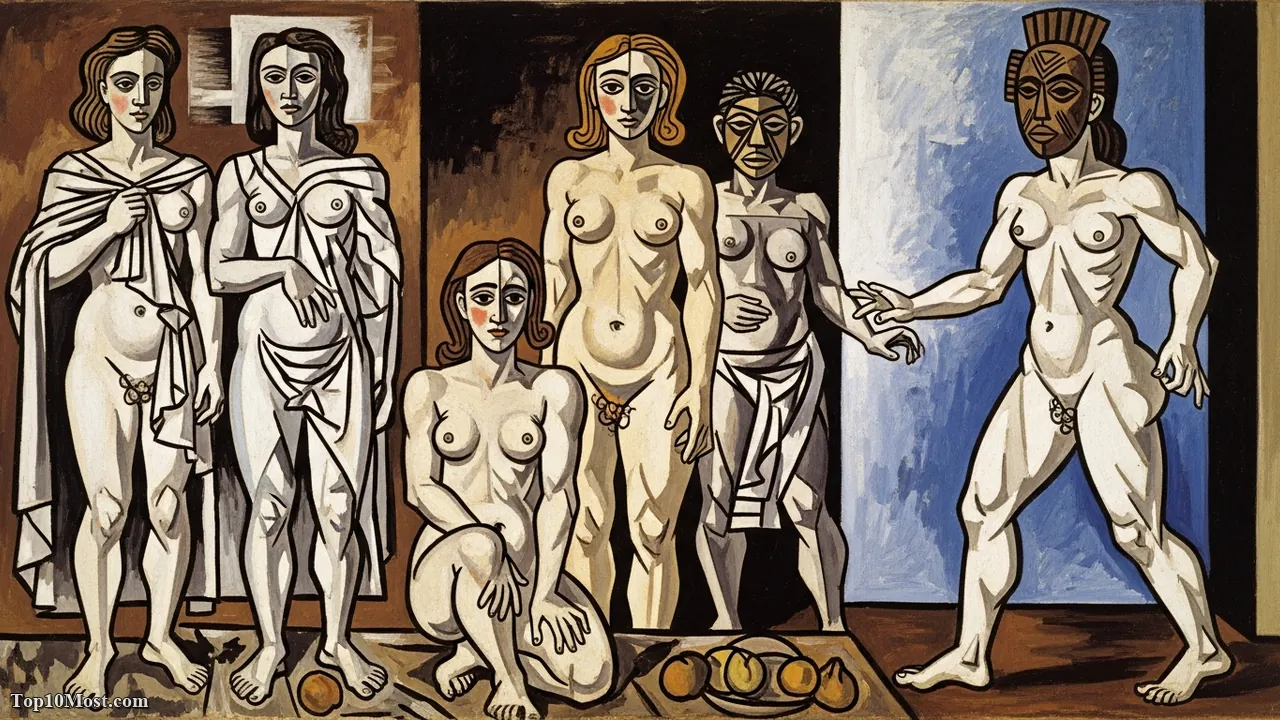
The true significance of Les Demoiselles d’Avignon lies in its aggressive abstraction and its unblinking incorporation of non-Western aesthetic influences, effectively ripping open the academic canvas to integrate global art forms. By sacrificing the smooth illusion of realism for a flattened, fragmented surface, Picasso introduced a conceptual shift where the painting was not a window to the world, but an object in itself, redefining the purpose of painting for the next century. It remains a watershed moment, showing that the greatest acts of creation often require the deliberate act of artistic destruction.
Looking at the work today, one can still feel the seismic energy of its making; it is less a finished product and more a recorded event, a flashpoint that fundamentally severed the lineage of painting stretching back to the Renaissance. The confrontation in the eyes of the figures is not just with the viewer, but with the entire history of art, making it an essential, if uncomfortable, starting point for understanding the art of the current time. Its permanent place at MoMA confirms its stature as the genesis point for the modern era.
Key Highlights
- Movement Genesis: Considered the single work that initiated the Cubist movement.
- Cultural Fusion: Integrates Iberian sculpture and African masks, fundamentally altering Western art’s perspective.
- Size and Impact: Large-scale oil painting (8 ft x 7 ft 8 in) that commands physical and historical space.
- Institutional Icon: One of the most important pieces in the Museum of Modern Art’s permanent collection.
Top 9. The Persistence of Memory
Salvador Dalí’s small, yet monumentally influential, 1931 canvas is the definitive visual metaphor for Surrealism, instantly translating the subconscious landscape of dreams onto the physical canvas. Featuring the now-iconic melting clocks draped over a barren, desolate beachscape, the work brilliantly externalizes the psychological concept of the “softness” of time and the decay of objective reality. The work’s genius is in its unsettling combination of meticulous, hyper-realistic rendering with utterly fantastical, impossible subject matter, compelling the viewer to seek logic in an illogical world.
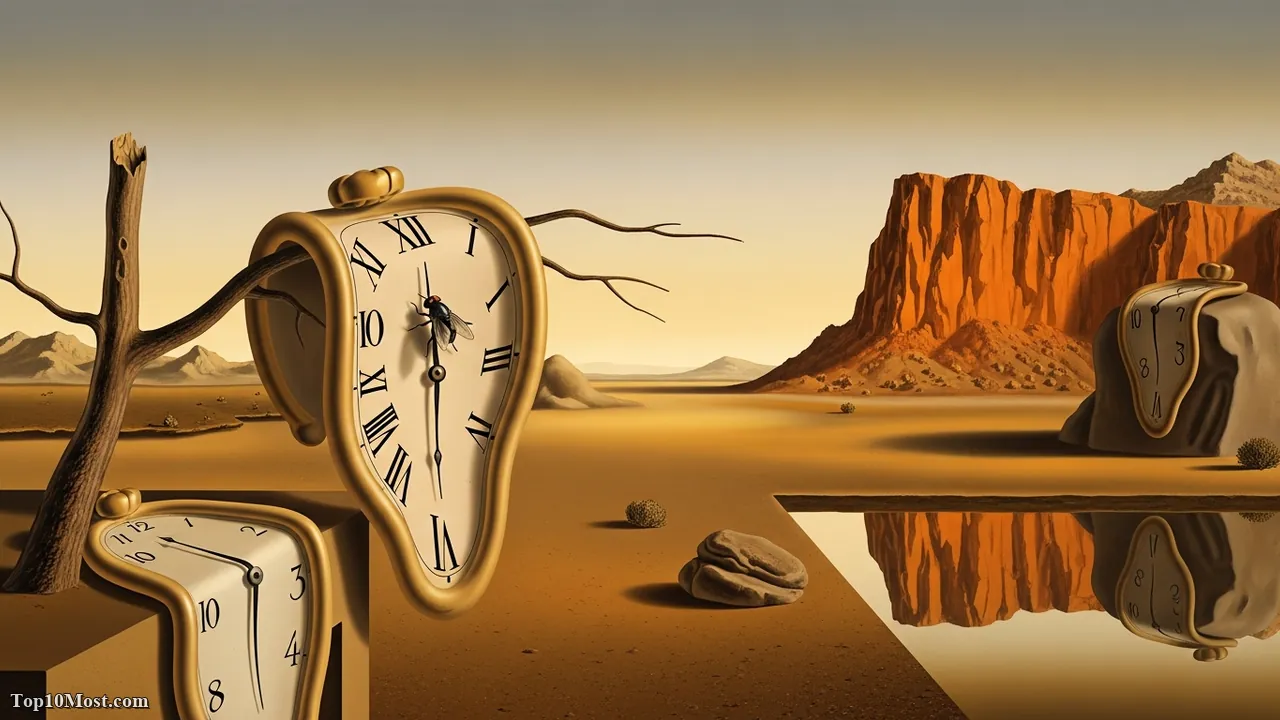
The artwork’s enduring fame stems from its perfectly captured theme: the profound philosophical challenge to the rigid, linear nature of time. Dalí created a visual symbol for Albert Einstein’s relativity theory translated through the lens of psychoanalysis, suggesting that time is a malleable, personal construct rather than an unyielding constant. This instantly recognizable imagery became a shorthand for the entire Surrealist movement, far exceeding the fame of its contemporaries.
To stand before this canvas is to confront the fragility of one’s own memory and the subjective nature of existence. Its compact size belies its vastness of concept, inviting a personal, dream-like contemplation that few other works can match. The Persistence of Memory cemented Dalí’s place not just as a painter, but as a visual philosopher who unlocked the public’s imagination to the mysterious possibilities of the subconscious mind.
Key Highlights
- Surrealist Icon: The single most famous image representing the Surrealist movement worldwide.
- Philosophical Theme: Directly challenges the concept of linear, objective time.
- Technical Mastery: Utilizes hyper-realistic classical painting techniques for an illusionistic effect.
- Inspiration Source: Dalí claimed the melting clocks were inspired by a slice of Camembert cheese.
Top 8. Girl with a Pearl Earring
Johannes Vermeer’s masterpiece, often referred to as the “Mona Lisa of the North,” is less a portrait and more a captivating, intimate study of light, texture, and enigma from the Dutch Golden Age. Painted around c. 1665, the subject—a young woman in an exotic turban, turning to gaze directly over her shoulder at the viewer—is rendered with a startling, almost photographic immediacy. The work’s iconicity is built upon its incredible technical skill, particularly the masterful use of *chiaroscuro* to make the subject emerge from a dark void, with only a single, luminous pearl catching the light.
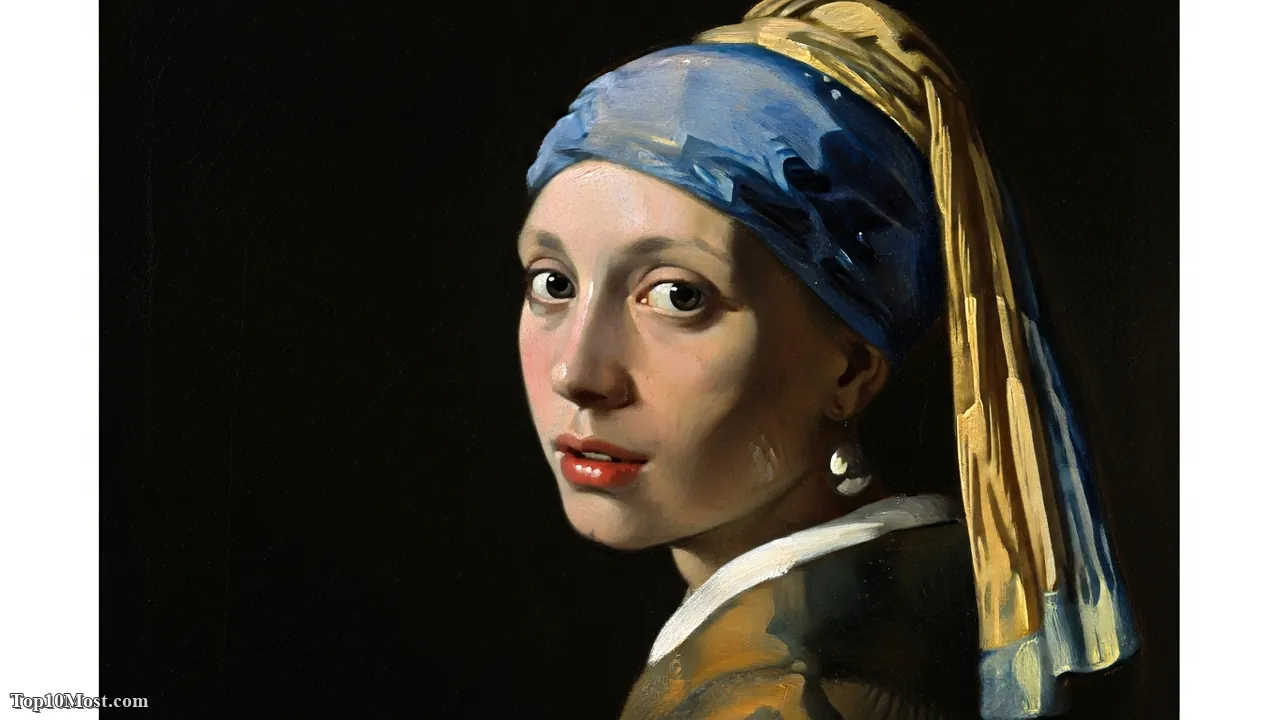
The reason for its high ranking is the pure mystery and emotional connection it fosters. Unlike the Mona Lisa, we know virtually nothing about the subject, transforming her into a timeless vessel for projecting our own curiosity and emotion. Her moist lips, the slight blush on her cheeks, and the hypnotic gleam of the pearl are all achieved through Vermeer’s subtle layering of paint, demonstrating an unparalleled mastery of his medium that elevated genre painting to high art.
Girl with a Pearl Earring does more than capture a face; it captures a moment of fleeting human contact across centuries. It has inspired novels, films, and endless cultural reproduction, proving that simplicity, when rendered with such luminous perfection, can achieve the status of a global cultural icon. This work is a quiet yet profound meditation on the power of a single, shared gaze.
Key Highlights
- “Mona Lisa of the North”: Renowned for the subject’s enigmatic expression and direct gaze.
- Technical Focus: Celebrated for the masterful use of light (the pearl and the subject’s eyes).
- Artistic Period: A pivotal example of the Dutch Golden Age and the *tronie* (character study) genre.
- Cultural Reach: The subject of a bestselling novel and a major motion picture adaptation.
Top 7. The Birth of Venus
Sandro Botticelli’s c. 1484-1486 tempera painting is a foundational icon of the Early Renaissance, representing the rebirth of classical mythology and humanism after the medieval period. The monumental canvas depicts the Roman goddess Venus emerging from the sea on a scallop shell, heralded by the wind god Zephyr and awaited by a nymph. It was one of the first near life-size depictions of a nude female body in non-religious art since antiquity, making it an act of cultural rebellion and intellectual pursuit.
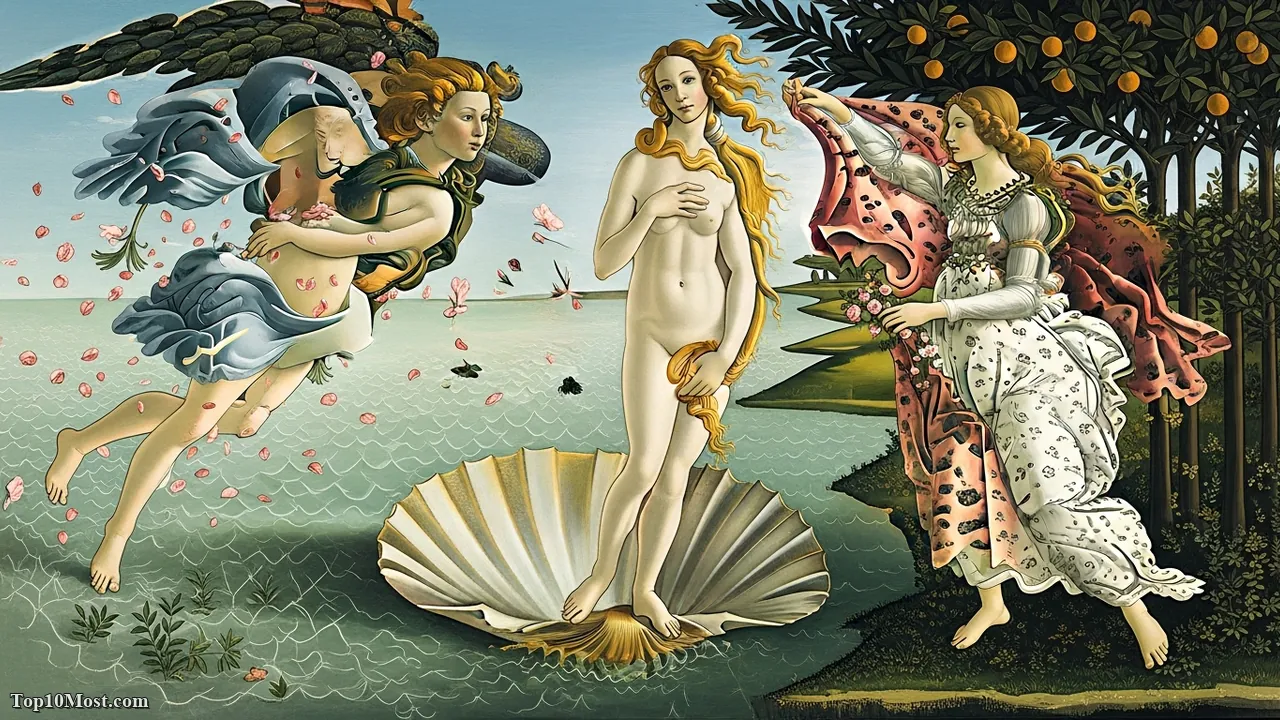
The painting’s lasting power lies in its celebration of idealized human beauty and its deep intellectual ties to Neo-Platonism, suggesting that the earthly Venus is a means to achieve spiritual love. Botticelli’s signature style—characterized by graceful, lyrical lines and a weightless quality—created an enduring image of perfect, almost fragile beauty that has been endlessly reproduced. It is a work that perfectly encapsulated the intellectual and artistic spirit of the Florentine Renaissance, signaling a cultural shift back toward classical ideals.
When we view The Birth of Venus, we are connecting directly to the radical intellectual curiosity of the 15th century. The work is not simply beautiful; it is an epochal statement that prioritized human intellect and classical learning over solely religious doctrine. Its influence permeates fashion, design, and popular culture, solidifying its place as the definitive image of Renaissance grace and mythological revival.
Key Highlights
- Renaissance Milestone: The first large-scale canvas of a nude goddess since the classical era.
- Style Defining: Exemplifies Botticelli’s distinctive lyrical line and elegant, weightless figures.
- Mythological Subject: Depicts the Roman goddess Venus (Aphrodite) arriving on the shore.
- Cultural Location: A centerpiece of the Uffizi Gallery in Florence, the heart of the Renaissance.
Top 6. The Scream
Edvard Munch’s 1893 work is perhaps the most famous visual representation of modern anxiety and existential dread, transcending its origins in Expressionism to become a universal symbol of the troubled human condition. The iconic figure, clutching its head on a bridge against a blood-red, swirling sky, is not *screaming* but rather *hearing* the infinite scream of nature itself—a chilling externalization of the artist’s own profound angst. It captures an emotional state rather than a physical event, making it the ultimate icon of psychological expression.
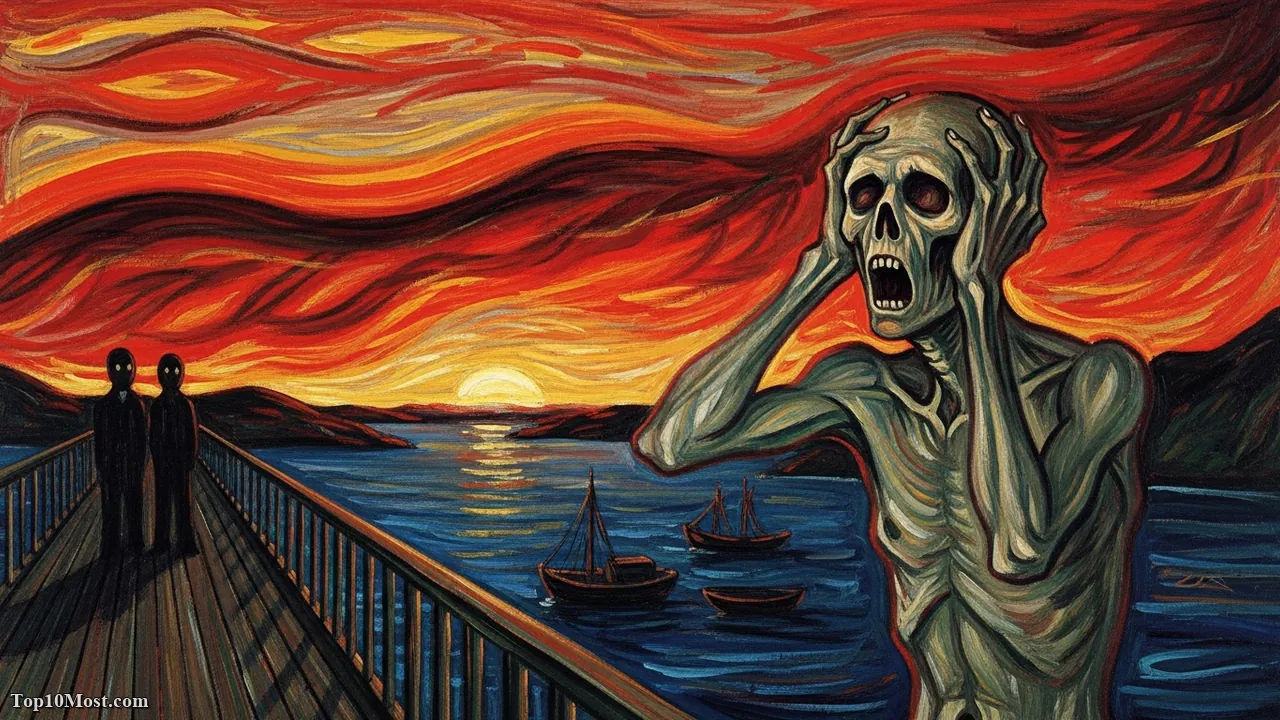
Its power is found in its profound simplicity and emotional directness. Munch used bold, wavy lines and non-naturalistic color to create a distorted, chaotic visual rhythm that perfectly matches the inner turmoil of the figure. The artwork’s influence extended far beyond painting, becoming a psychological touchstone for 20th-century culture, from literature to film. It is one of the few pieces that instantly communicates a complex internal state without requiring any knowledge of art history.
To encounter The Scream is to be instantly confronted by a feeling of cosmic isolation that resonates deeply in our often-chaotic current time. The figure is isolated, separated from the two indifferent walkers in the background, making it a timeless portrait of alienation. Its multiple versions—including one that set an auction record—only attest to the powerful, enduring public fascination with its haunting, universal cry.
Key Highlights
- Universal Symbol: Recognized globally as the quintessential image of existential anxiety and emotional pain.
- Expressionist Pioneer: A defining work of the Expressionist movement, prioritizing emotion over objective reality.
- Visual Technique: Utilizes swirling, non-naturalistic lines and color to convey sound and emotion.
- Multiple Versions: Munch created four different primary versions of the work (two paintings, two pastels).
Top 5. Guernica
Pablo Picasso’s monumental 1937 work is not merely a painting, but a towering political indictment and one of the most powerful anti-war statements in art history. Created in response to the devastating bombing of the Basque town of Guernica during the Spanish Civil War, the massive canvas (over 11 feet tall and 25 feet wide) channels the collective suffering of innocent civilians into a raw, fragmented expression of chaos and pain. Its unique use of stark black, white, and grey heightens the sense of a horrific news photograph or a tragedy stripped of all color and hope.
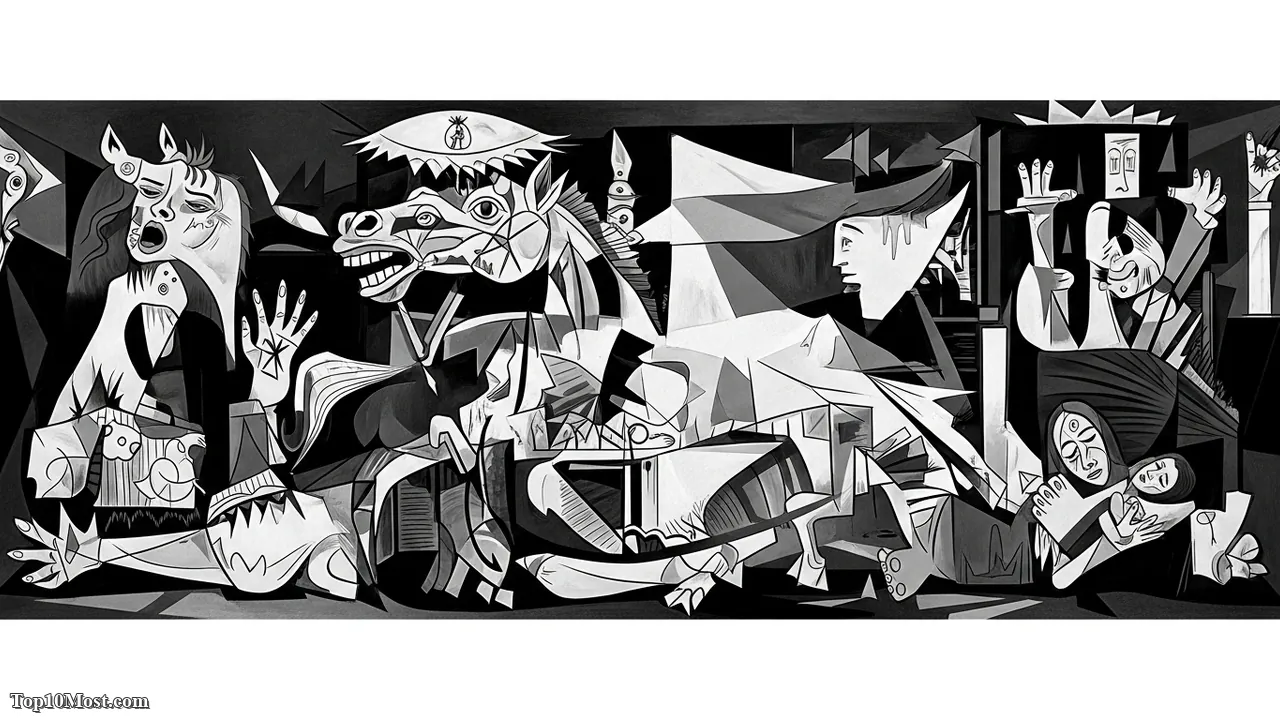
The work’s iconic status stems from its fusion of art and immediate political action. Picasso leveraged his Cubist language—distorted figures, fragmented forms, and simultaneous perspectives—to communicate the non-linear, dizzying horror of modern warfare. It became a traveling ambassador, a visual weapon against fascism, raising global awareness of the Spanish conflict and the sheer inhumanity of bombing civilian targets. Few artworks have ever been so globally instrumental in a political cause.
Guernica stands as a perpetual moral compass, its suffering figures—the screaming woman, the dismembered soldier, the tormented horse—serving as an eternal warning against violence. Its relocation and subsequent status in Spain symbolize national resilience and memory. The painting’s impact proves that a work of art, even in its abstraction, can carry the concrete weight of history and serve as a monument to human suffering.
Key Highlights
- Anti-War Icon: The most famous and influential political protest painting in Western history.
- Scale and Impact: Massive canvas (11 ft x 25.6 ft) designed for public and political impact.
- Style and Mood: Cubist/Surrealist style rendered in stark black, white, and grey to convey devastation.
- Historical Context: Created in direct response to the Nazi bombing of the Spanish town of Guernica in 1937.
Top 4. The Starry Night
Vincent van Gogh’s 1889 canvas is the ultimate symbol of the Post-Impressionist movement and the romanticized image of the tortured artistic genius. Painted during his stay at the Saint-Paul-de-Mausole asylum in Saint-Rémy-de-Provence, the work transforms a familiar nocturnal view into a swirling, deeply emotional, and vibrant spectacle. The cypress tree, the pulsing, luminous stars, and the turbulent, expressive sky are rendered with the thick, impasto brushwork that defined his style, making the atmosphere a visible, energetic force.
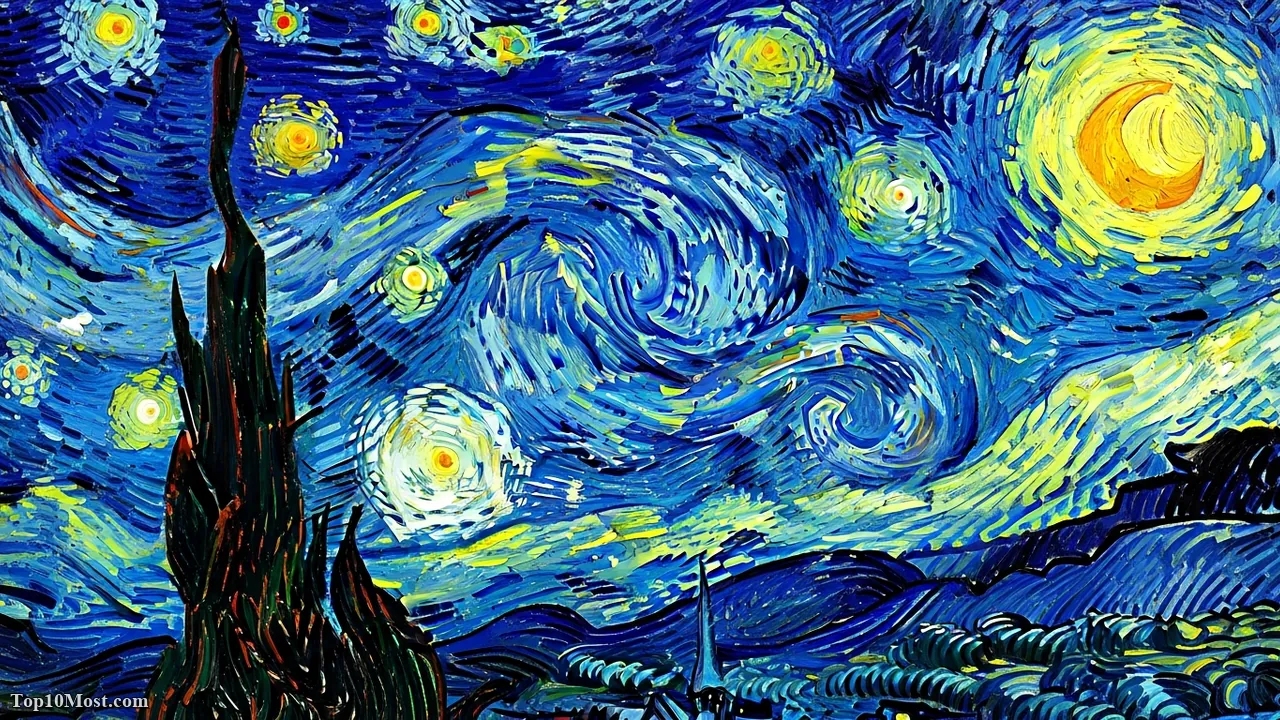
The Starry Night is iconic because it represents a decisive shift from objective visual observation to subjective emotional truth. Van Gogh did not paint what he saw, but what he *felt*, using color and movement as an extension of his own intense psychological state. This radical honesty and the emotional depth embedded in the visible brushstrokes—each a ripple of the artist’s feeling—have made it one of the most beloved and instantly recognizable images in the current time.
When viewing this masterpiece at MoMA, one is drawn into the canvas’s extraordinary internal energy. It’s a vision of chaos and serenity coexisting—the peaceful village dwarfed by the magnificent, swirling cosmos—offering a powerful, beautiful meditation on nature, God, and the human struggle. The painting is an enduring testament to the idea that true artistic greatness often comes from transforming profound personal struggle into universal, expressive beauty.
Key Highlights
- Post-Impressionist Peak: The definitive work of Post-Impressionism, prioritizing emotion and symbolism.
- Technique: Defined by its thick impasto and dramatic, swirling brushstrokes that create motion.
- Emotional Context: Painted from the artist’s asylum room, fusing inner turmoil with an external view.
- Global Recognition: One of the most reproduced and commercially iconic artworks in the world.
Top 3. The Creation of Adam
Michelangelo’s fresco, a central panel on the ceiling of the Sistine Chapel (c. 1508–1512), is arguably the most famous single image in all of Western religious and classical art. It depicts the pivotal Biblical moment from the Book of Genesis where God breathes life into Adam, the first man. The simple, perfect composition—focused entirely on the near-touching hands of God and man—is a masterpiece of humanist thought, theological depth, and anatomical brilliance.
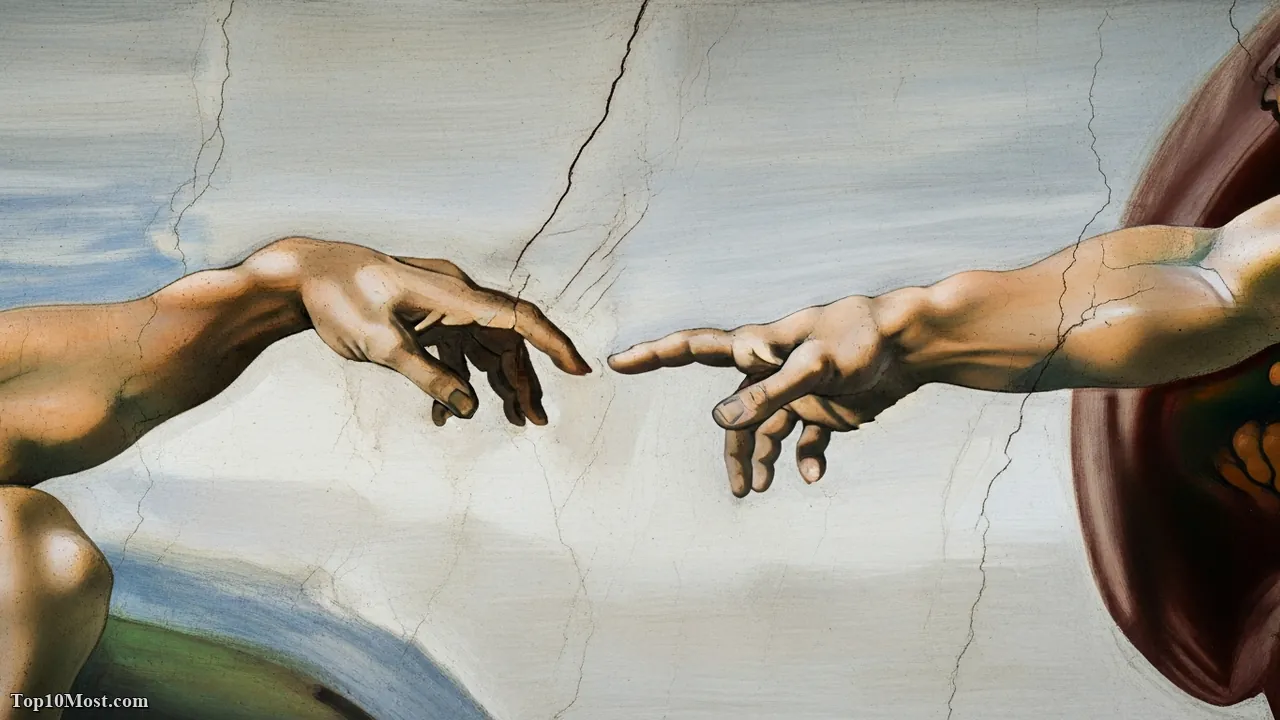
The iconic power of this image lies in the sheer dynamism and psychological tension between the two central figures. The electric space between their fingertips has been analyzed, parodied, and referenced endlessly across every conceivable medium. Moreover, art historians have noted the probable anatomical accuracy of the red shroud surrounding God and the cherubs, suggesting it may represent a perfectly rendered cross-section of the human brain, subtly weaving human intellect and science into the divine act of creation.
To look up at The Creation of Adam is to witness the Renaissance’s ultimate fusion of spiritual and physical perfection. It is a moment of profound recognition—the spark of life being transmitted—that resonates with every person regardless of their belief system. Michelangelo’s vision of a muscular, vibrant God and a languid, yet perfect Adam defined the High Renaissance ideal and remains the definitive visual representation of life’s beginning.
Key Highlights
- Iconic Motif: The nearly touching hands of God and Adam is one of the most recognized gestures in history.
- High Renaissance Peak: A foundational piece defining the genius and anatomical perfection of the era.
- Location: Part of the massive fresco cycle on the ceiling of the Sistine Chapel in the Vatican.
- Hidden Meaning: The grouping around God has been interpreted by many scholars as an anatomically correct human brain.
Top 2. The Last Supper
Leonardo da Vinci’s mural (c. 1495–1498) is the single most influential and studied religious painting in history, not just for its subject, but for its revolutionary composition and profound psychological drama. Located in the refectory of the Santa Maria delle Grazie in Milan, the work captures the exact moment Jesus announces that one of his twelve apostles will betray him. Da Vinci masterfully groups the disciples in tense, agitated clusters of three, their reactions ranging from shock to denial, each expression a distinct psychological portrait.

The artwork’s enduring iconicity is due to its groundbreaking use of one-point linear perspective, which not only places Jesus at the absolute vanishing point but also integrates the painted scene directly into the room’s architecture. This technical genius created an immersive, dramatic reality that was entirely new for its time, turning the passive act of viewing into an active participation in a sacred narrative. It set the standard for narrative painting for centuries to follow.
Despite its fragility—painted on dry plaster using an experimental technique that began decaying almost immediately—The Last Supper continues to draw millions who come to witness the psychological storm captured on the wall. It is a work of immense spiritual and human complexity, revealing the spectrum of human emotion under pressure. It is a profound meditation on faith, loyalty, and betrayal, solidified by Da Vinci’s peerless genius for dramatic staging.
Key Highlights
- Psychological Drama: Masterfully depicts the individual emotional reactions of the apostles to Jesus’s announcement of betrayal.
- Technical Innovation: Pioneered the use of one-point linear perspective to integrate the scene with its physical space.
- Medium: A massive mural painted on the wall of a monastery’s dining hall in Milan.
- State of Being: Highly vulnerable due to Da Vinci’s experimental use of tempera and oil on dry plaster.
Top 1. Mona Lisa
At the undisputed peak of iconicity sits Leonardo da Vinci’s Mona Lisa (c. 1503–1519). It is, without question, the most famous, most visited, and most scrutinized painting in the entire world. The small oil portrait of Lisa Gherardini, wife of a Florentine merchant, transcends art to become a global cultural phenomenon, instantly recognized by billions. Her fame is the result of a perfect storm of artistic genius, technical innovation, and an unparalleled history of myth-making, including its famous 1911 theft.
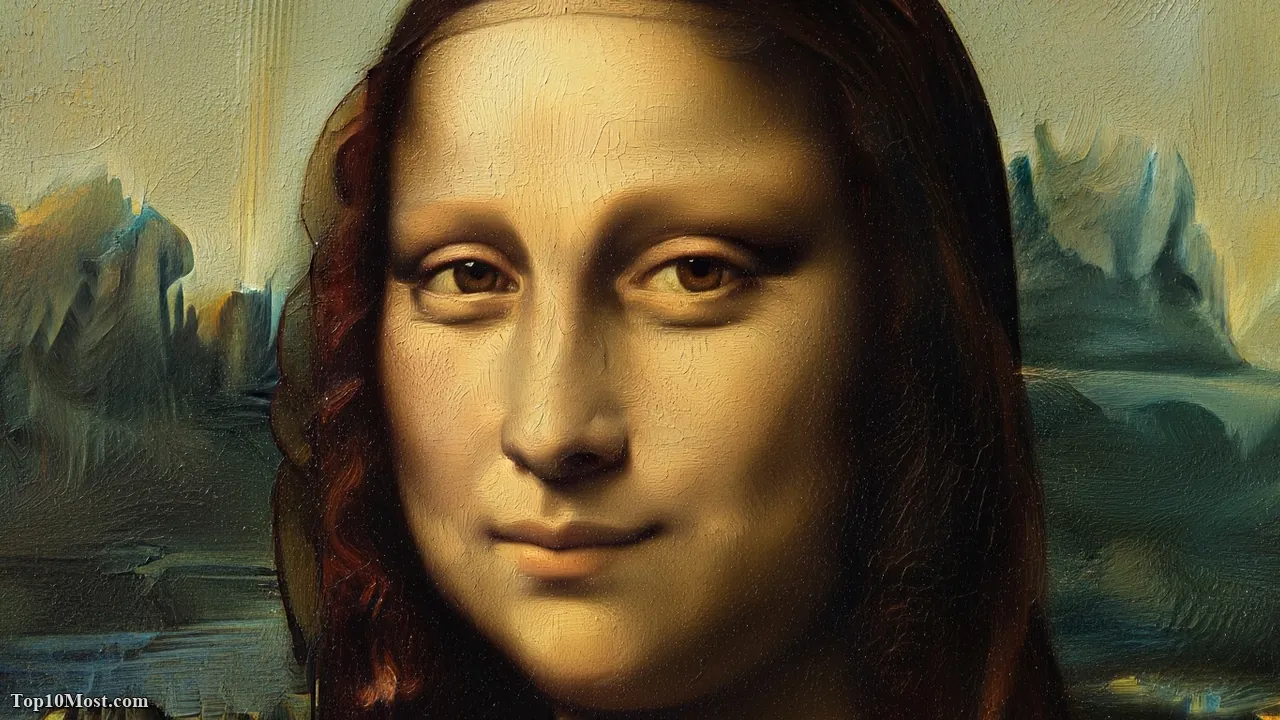
The painting’s supreme rank is cemented by Da Vinci’s technical innovations that create its legendary ambiguity. The enigmatic smile is a masterpiece of *sfumato*—the subtle blending of tones and colors, allowing details to melt into shadow—applied around the eyes and lips. This technique ensures that the expression appears to shift, changing slightly depending on where the viewer focuses, inviting an unending, personal interpretation that has captivated the world for over 500 years. It is an image that is never fully resolved.
To see the Mona Lisa in the Louvre is a pilgrimage to the nexus of art and culture. It represents the height of the Renaissance: the human being rendered with ultimate intellectual, psychological, and physical precision. It is an image that has survived theft, vandalism, and centuries of debate, remaining the standard against which all other portraits and, arguably, all other artworks are judged. She is the definitive icon of art history in the current time and forever.
Key Highlights
- Global Recognition: The single most famous and most visited painting in the world.
- Technical Innovation: Famous for the use of *sfumato*, creating the signature “enigmatic smile.”
- Historical Event: Its 1911 theft and recovery turned the work into a true global media sensation.
- Insurance Value: Historically holds the highest insurance valuation for any painting in history (currently estimated near $1 billion).
Conclusion
The artworks on this Top 10 Most list are not merely old paintings; they are documented episodes in the history of human consciousness. From the geometric shock of Picasso’s pre-Cubism to the quiet psychological depth of Vermeer, and the cosmic angst of Munch, each masterpiece represents a pivot point where an artist forced the world to see, think, or feel in a radically new way. The greatest art endures because it speaks to universal, timeless truths about our humanity, our faith, our conflicts, and our endless capacity for creation.
Our reasoned analytical perspective confirms that the Mona Lisa and Da Vinci’s other works remain at the apex, not through sheer luck, but because they combine an unsurpassed technical mastery with a groundbreaking philosophical insight that continues to engage scholars and the public in the current time. We don’t just admire these works; we inherit them, using them as the foundation for the next generation of artistic expression. The legacy of these iconic pieces is eternal, reminding us that true genius is a conversation that never truly ends.