The ocean is not just a vast expanse of water; it is a complex theater of the mind where evolution has crafted some of the most sophisticated cognitive engines on Earth. While humans often look to the stars for intelligent life, the depths of our own oceans harbor creatures with problem-solving abilities, social cultures, and self-awareness that rival the great apes.
The data in this article is compiled and analyzed based on information updated as of late 2024, reflecting the most current scientific consensus. From the famous self-awareness of dolphins to the surprising “marshmallow test” success of cuttlefish, we are redefining what it means to be “smart” underwater. This list ranks these incredible beings not just by brain size, but by their demonstrated ability to learn, adapt, and understand their world.
Table of the Top 10 Most Intelligent Marine Animals
| Rank | Animal | Key Intelligence Trait | Notable Achievement |
|---|---|---|---|
| 1 | Bottlenose Dolphin | High Encephalization Quotient (EQ) | Uses specific “names” (signature whistles) for individuals |
| 2 | Orca (Killer Whale) | Complex Culture & Dialects | Teaches specialized hunting tactics across generations |
| 3 | Giant Pacific Octopus | Distributed Intelligence (9 Brains) | Can solve complex puzzles and navigate mazes |
| 4 | Sperm Whale | Largest Brain on Earth | Complex social structures and “clans” with distinct dialects |
| 5 | Manta Ray | Self-Awareness | Passes the Mirror Self-Recognition (MSR) test |
| 6 | Sea Otter | Tool Use & Storage | Uses rocks as hammers; stores tools in skin “pockets” |
| 7 | Cuttlefish | Delayed Gratification | Passes the “Marshmallow Test” (waiting for better food) |
| 8 | California Sea Lion | Logical Reasoning | Understands transitivity (If A=B and B=C, then A=C) |
| 9 | Humpback Whale | Social Learning & Song | Transmits complex songs across thousands of miles |
| 10 | Cleaner Wrasse | Self-Recognition (Fish) | Passes the mirror test; checks reflections for marks |
Top 10. Cleaner Wrasse
Often dismissed due to its size, the tiny Cleaner Wrasse has shattered the scientific ceiling for fish intelligence. In a groundbreaking study that challenged the biological community, these fish became the first of their kind to pass the “Mirror Self-Recognition” test. When researchers placed a colored mark on their throats—visible only in a mirror—the fish attempted to scrape it off, proving they understood the reflection was themselves, not another fish.
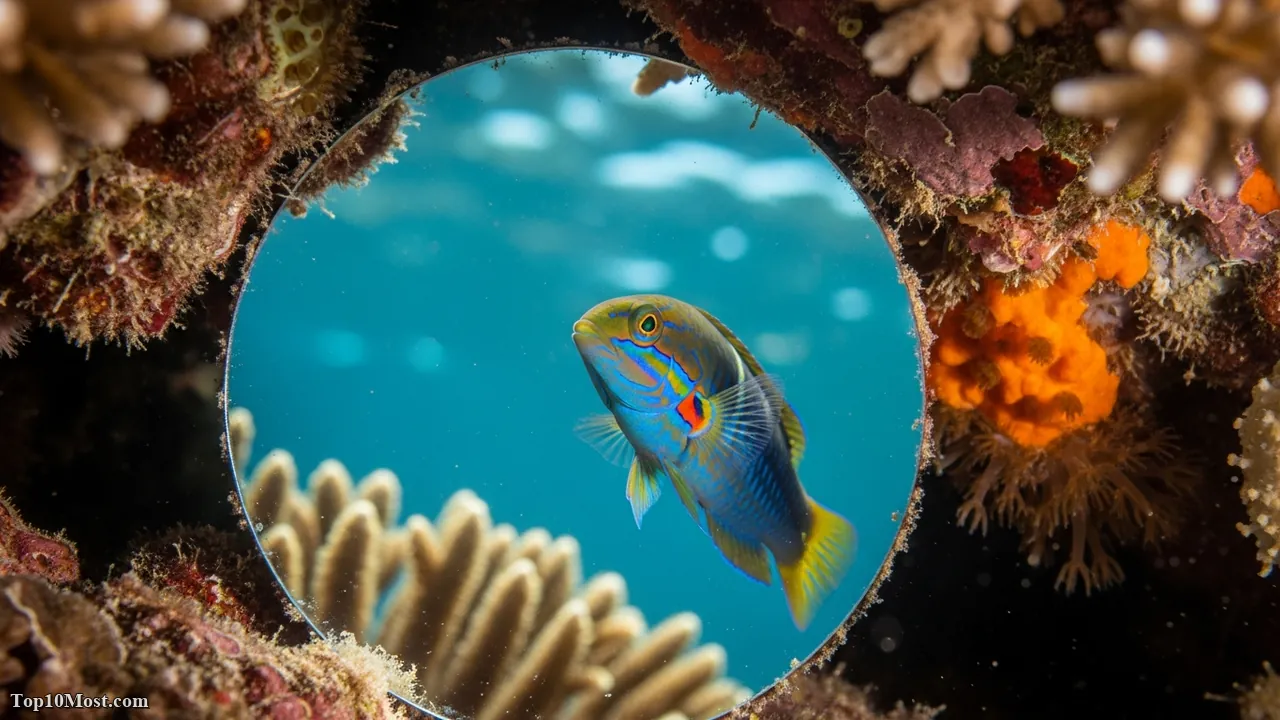
The reason for this ranking lies in the implications of their self-awareness. While they lack the raw brain mass of a whale, their ability to conceptualize “self” places them in an elite cognitive club alongside humans, chimps, and dolphins. This suggests that high-level cognitive processing does not strictly require a mammalian cortex, redefining our understanding of how brains evolve to handle social complexity.
It is truly humbling to realize that a fish no larger than a finger possesses a sense of “I.” Watching a Cleaner Wrasse deliberately check its reflection to groom itself forces us to abandon the old “three-second memory” myth and recognize that even the smallest reef inhabitants possess a form of consciousness we are only just beginning to understand.
Key Highlights
- Scientific Breakthrough: Validated as passing the Mirror Self-Recognition (MSR) test in 2019/2022 studies.
- Strategic Memory: They remember hundreds of individual “client” fish and their specific service preferences.
- Social Manipulation: They can tactilely “apologize” to clients if they accidentally bite them, restoring trust.
Top 9. Humpback Whale
The Humpback Whale is the poet laureate of the ocean, renowned for its complex, haunting songs that can last for hours. These are not random noises; they are grammatically structured compositions that evolve over time. Researchers have observed “cultural revolutions” where a catchy new song from one population travels across the ocean, being picked up and remixed by other whales thousands of miles away, much like a global hit single.
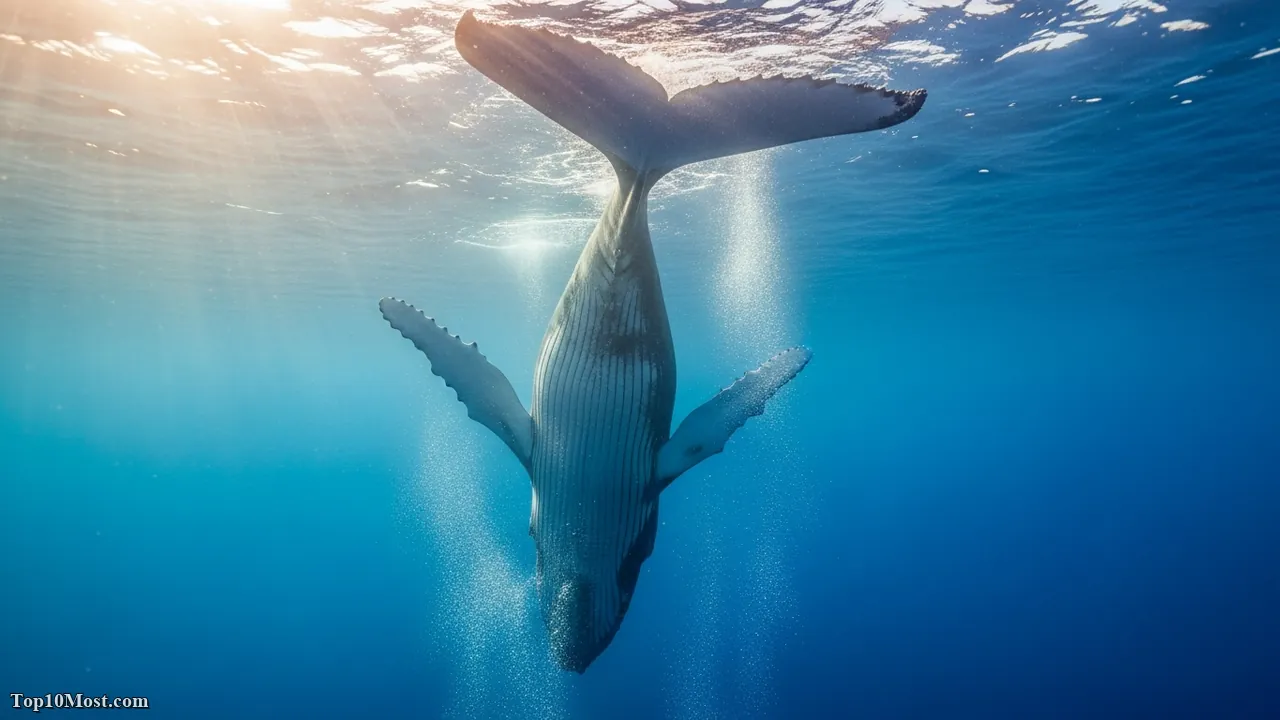
We rank them here for their extraordinary capacity for social transmission of information. Beyond singing, Humpbacks display altruism—there are documented cases of them intervening to save seals and other species from Orca attacks. This suggests a level of emotional intelligence and empathy that goes beyond simple survival instincts, hinting at a complex moral compass.
Hearing a Humpback song reverberate through the hull of a boat is a spiritual experience, but knowing that the song is a shared cultural artifact learned from peers makes it profound. It reminds us that culture is not a uniquely human invention; it is a mechanism for connection that spans the vastness of the deep blue.
Key Highlights
- Cultural Transmission: Songs evolve and spread across populations in specific patterns.
- Altruism: Documented incidents of protecting other species from predators.
- Cooperative Feeding: They use “bubble net” feeding, a learned group behavior requiring precise coordination.
Top 8. California Sea Lion
Sea Lions are often the stars of marine parks, but their tricks mask a rigorous logical mind. They are the only non-human animals known to grasp the concept of equivalence classes—the ability to understand that if A is related to B, and B is related to C, then A must be related to C (transitivity). This is a logic puzzle that human children often struggle with until they reach school age.
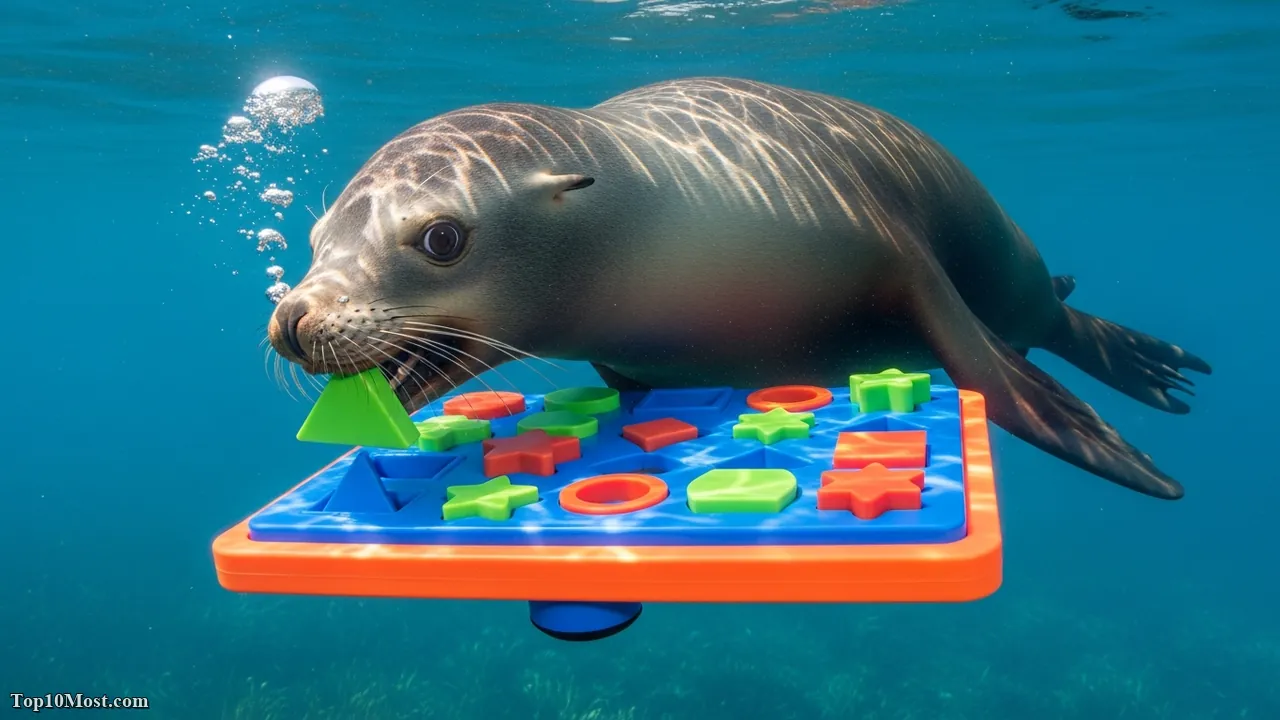
Their ranking is secured by their impressive long-term memory and trainability. In tests, a sea lion named Rio remembered a complex problem-solving concept she hadn’t seen in ten years, performing it perfectly on the first try. This durability of memory combined with abstract logical reasoning makes them one of the most intellectually robust marine mammals.
There is something deeply relatable about the Sea Lion’s intelligence; it feels “eager.” Unlike the mysterious aloofness of a cat or the alien intelligence of an octopus, a Sea Lion’s problem-solving feels like a dog trying to please you, but with the logical deduction skills of a toddler solving a math problem. They are thinkers who engage with the world playfully.
Key Highlights
- Logic Masters: Capable of understanding transitive logic (A=B, B=C, therefore A=C).
- Long-Term Memory: Proven ability to remember specific concepts for over a decade.
- Pattern Recognition: Can categorize objects by shape, size, and color simultaneously.
Top 7. Cuttlefish
The Cuttlefish is a master of disguise, but its brain is even more impressive than its color-changing skin. In 2021, these cephalopods stunned scientists by passing a version of the famous “Stanford Marshmallow Test.” They proved they could delay gratification—waiting up to 130 seconds to receive a high-quality live shrimp rather than eating a less desirable piece of crab immediately.
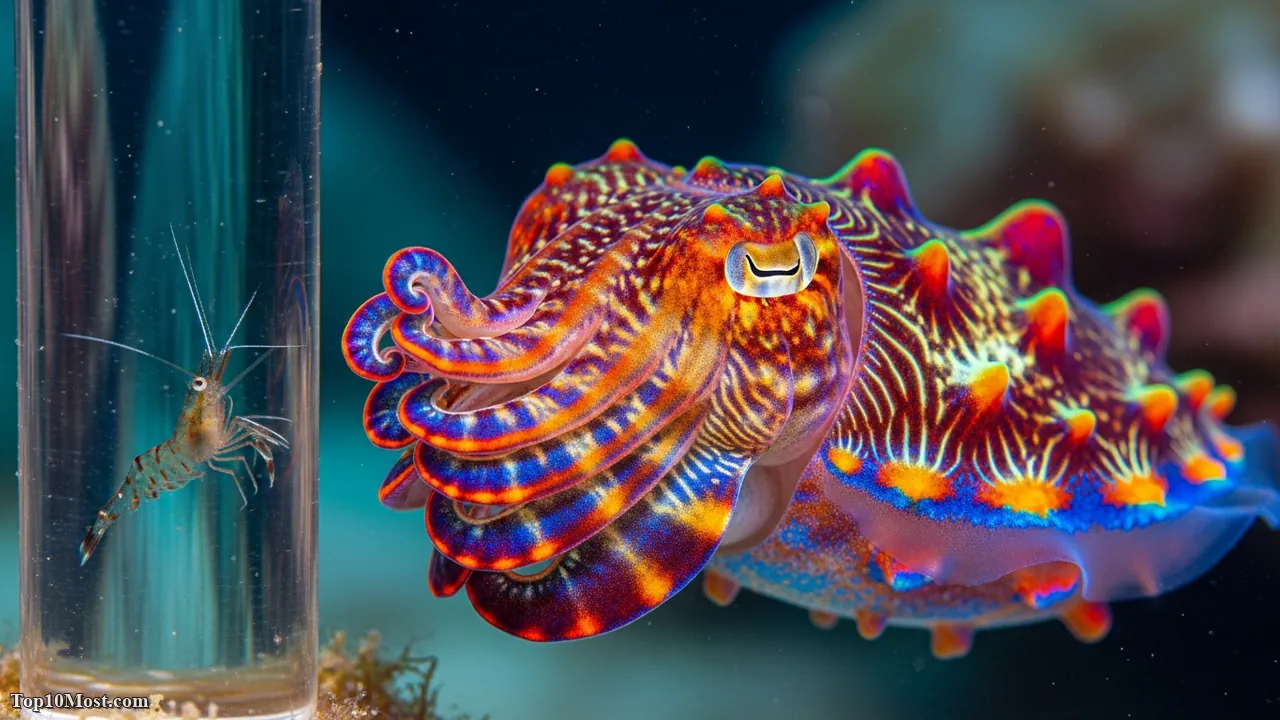
This ability to exert self-control is a hallmark of advanced intelligence, previously thought to be the domain of primates and birds. It requires the animal to plan for the future and inhibit a natural instinct. For an invertebrate with a short lifespan, this level of executive function is evolutionary wizardry, likely developed to help them stay camouflaged and wait for the perfect moment to strike prey.
Watching a Cuttlefish think is like watching an alien supercomputer process data. They don’t just react; they calculate. To see a creature that looks like a floating disco ball pause, assess, and choose to wait for a better outcome is a striking reminder that patience is a sign of a high-functioning mind.
Key Highlights
- Delayed Gratification: Passed the “Marshmallow Test” by waiting for better food rewards.
- Dynamic Camouflage: Can mimic the texture and color of their environment in milliseconds.
- Counting Ability: Studies show they can distinguish between different quantities of prey.
Top 6. Sea Otter
Sea Otters are the ocean’s premier tool users. While many animals use objects, otters carry their favorite rocks with them in loose folds of skin under their arms—essentially a built-in tool belt. They use these rocks as anvils to crack open hard-shelled prey like clams and urchins, a skill that is not entirely instinctual but taught by mothers to their pups.
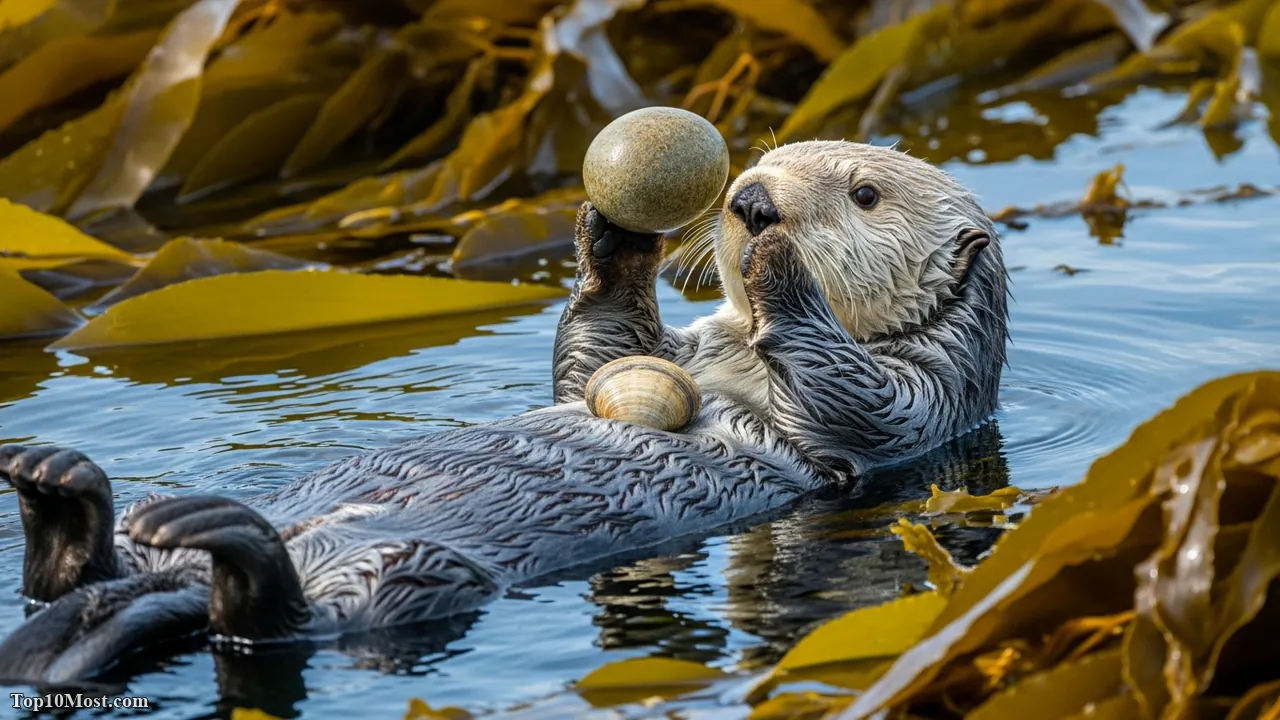
They rank highly because their tool use is habitual and sophisticated. They don’t just grab any rock; they select specific stones based on shape and weight, and they will keep a particularly good tool for multiple dives. This foresight and “possession” of tools indicate a cognitive understanding of cause and effect that goes beyond simple foraging.
Beyond their cleverness, the sight of a Sea Otter floating on its back, tapping away at a clam, is undeniably charismatic. But beneath that cute exterior is a sharp survivalist mind. They have turned their environment into a workshop, mastering the physics of “smashing things” to access food sources that are impenetrable to others.
Key Highlights
- Tool Storage: They possess “pockets” (loose skin) to store tools and food while diving.
- Generational Teaching: Pups learn specific hunting and cracking techniques from their mothers.
- Problem Solving: Can solve puzzles to extract food from man-made containers in captivity.
Top 5. Manta Ray
The Manta Ray is the gentle giant of the list, possessing the largest brain of any fish species. Unlike most fish, which rely heavily on instinct, Mantas have a highly developed brain with areas associated with learning, problem-solving, and communication. Most famously, they are the only fish species (alongside the cleaner wrasse) to pass the mirror self-recognition test, checking their reflections in a way that indicates self-awareness.
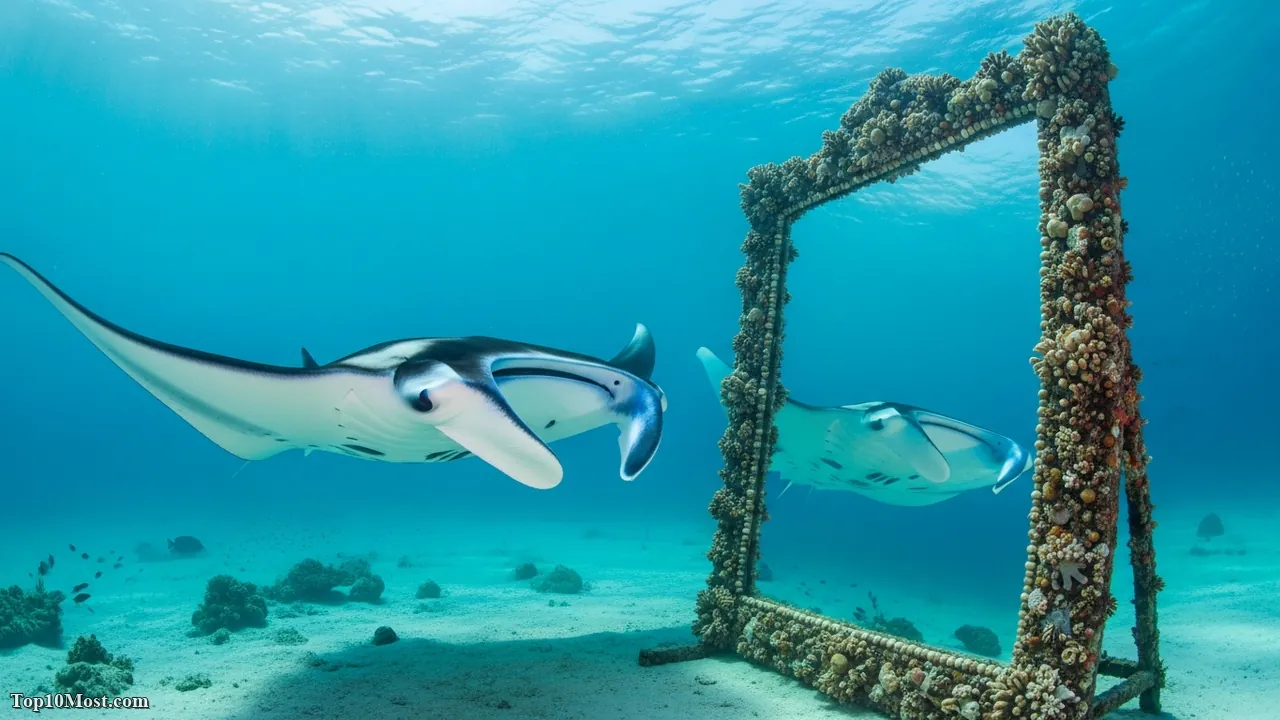
We include them in the top 5 because of this rare capacity for self-recognition combined with their immense brain-to-body ratio. In experiments, Mantas didn’t attack the mirror (thinking it was a rival) or try to socialize with it; they performed repetitive movements to test whether the reflection moved with them—a classic sign of “checking oneself out.”
Swimming with a Manta Ray is often described as a meeting of minds. They don’t flee like prey; they observe you. There is a palpable curiosity in their behavior, a sense that they are processing your presence not just as a threat or obstacle, but as another entity. It is a silent, graceful intelligence that commands respect.
Key Highlights
- Largest Fish Brain: High Encephalization Quotient (EQ) among fish.
- Mirror Test: Demonstrated behavioral evidence of self-recognition.
- Curiosity: Known to actively approach and investigate divers without aggression.
Top 4. Sperm Whale
The Sperm Whale holds the record for the largest brain to have ever existed on Earth—weighing in at nearly 18 pounds. But it’s not just about size; it’s about complexity. These deep divers live in highly structured matriarchal societies and communicate using distinct patterns of clicks called “codas.” Different clans of Sperm Whales have different dialects, and they generally do not interact with clans that “speak” a different language.
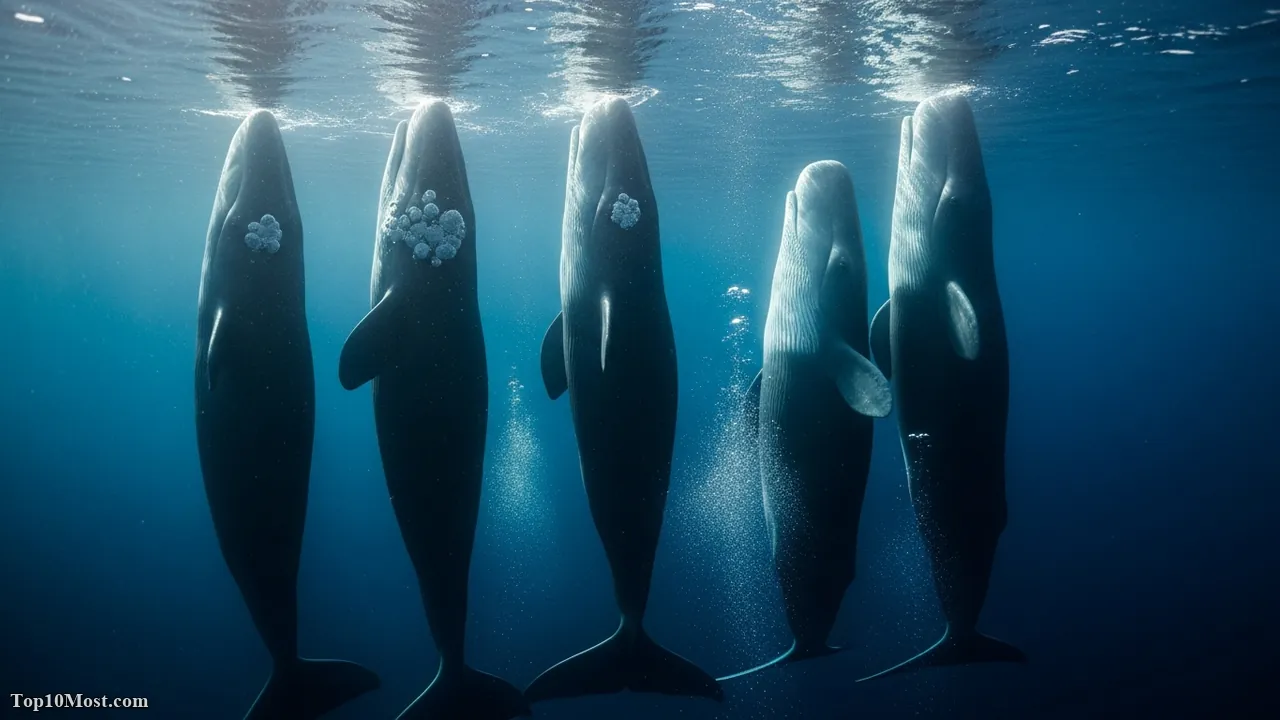
Their intelligence is ranked so high due to this profound social complexity and culture. They have been observed babysitting each other’s calves, coordinating deep-sea hunts, and maintaining lifelong family bonds. Their neocortex contains spindle neurons—cells linked to compassion, love, and emotional suffering in humans—suggesting they feel deeply.
The idea of a “Leviathan” usually conjures images of a monster, but the reality is a sensitive, highly social being. To think that in the pitch-black depths of the ocean, there are families of whales conversing in their own dialect, sharing the burden of childcare, is a testament to the emotional depth of marine intelligence.
Key Highlights
- Biological Supercomputer: Possesses the largest brain of any animal in history.
- Cultural Clans: Distinct groups with unique vocal dialects and social rules.
- Emotional Depth: Brain structure suggests high capacity for empathy and social bonding.
Top 3. Giant Pacific Octopus
The Octopus is the closest thing we have to alien intelligence. They are undeniably the smartest invertebrates, with a nervous system that is fundamentally different from ours—two-thirds of their neurons are in their arms. This means their arms can “think” and solve problems independently of their central brain. They are famous escape artists, capable of unscrewing jars from the inside, navigating complex mazes, and even recognizing individual human faces.
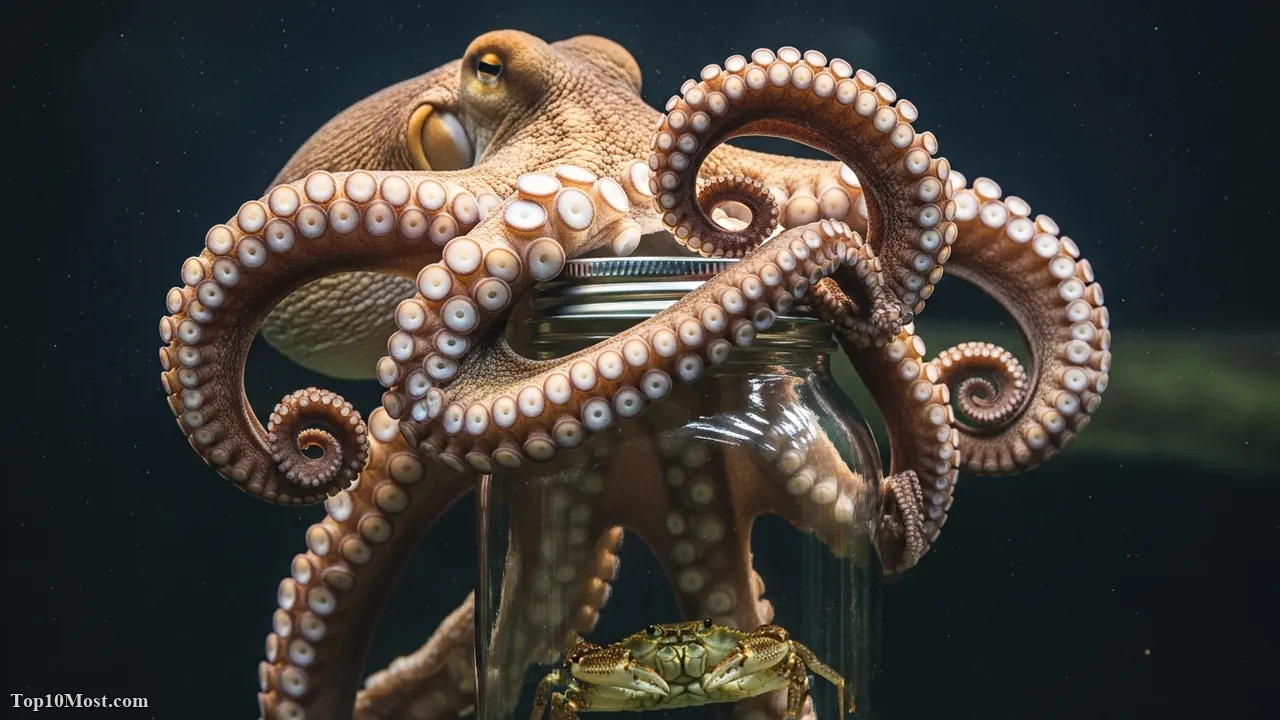
They take the bronze medal because their intelligence is purely self-taught. Unlike whales or humans, octopuses are orphans; they have no parents to teach them. Every bit of their puzzle-solving genius is learned through trial and error in a short 3-5 year lifespan. They also edit their own RNA to adapt their nervous system to temperature changes, a biological hack that screams “intelligence.”
There is a mischievousness to the Octopus that is legendary. Aquarium stories abound of them sneaking out of tanks to eat fish in neighboring displays and then returning to cover their tracks. They are not just smart; they are crafty, inventive, and seemingly bored by routine—traits that feel startlingly human.
Key Highlights
- Distributed Brain: 9 brains (one central, eight in the arms) allowing multitasking.
- Tool Use: Known to use coconut shells as mobile armor.
- RNA Editing: Can recode their own genetics on the fly to adapt to cold water.
Top 2. Orca (Killer Whale)
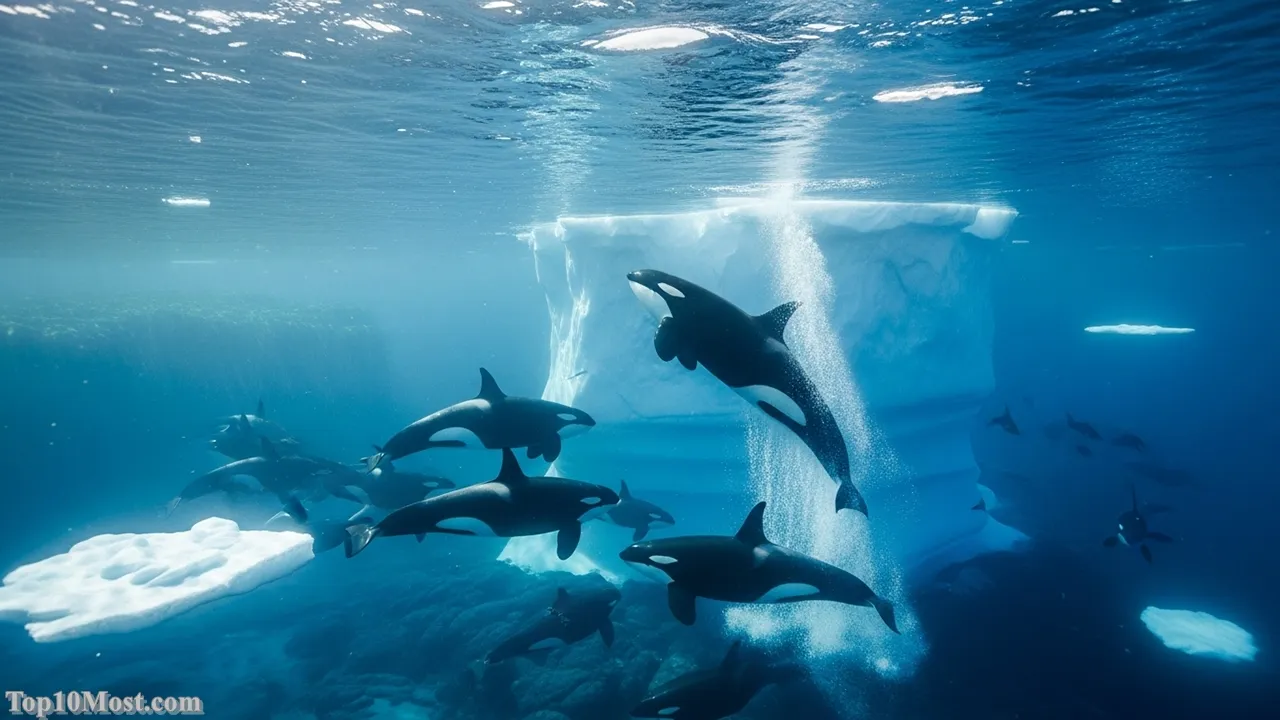
Orcas are the apex of social intelligence. They are not just wolves of the sea; they are cultural architects. Different Orca pods have entirely different diets, hunting strategies, and vocal dialects that are taught, not inherited. Some hunt sharks, others hunt seals by washing them off ice floes, and these distinct cultures are strictly adhered to, passed down from grandmother to mother to daughter.
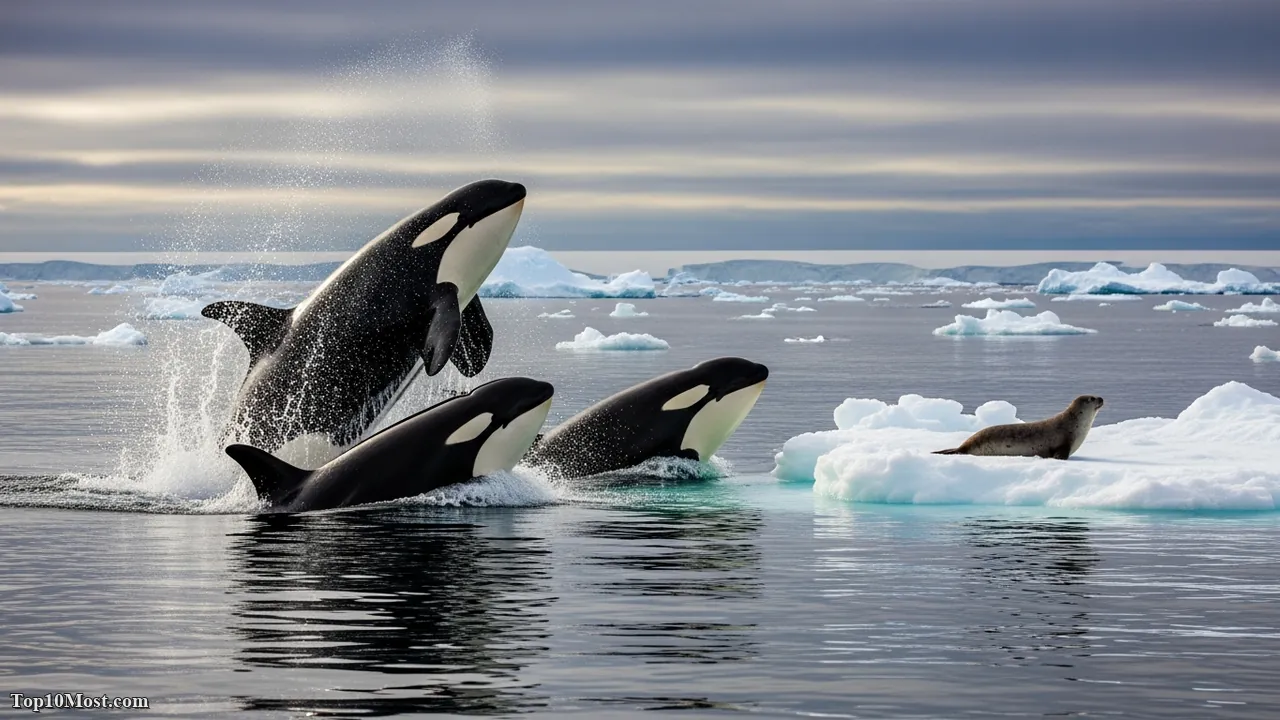
Their position at number 2 is justified by their terrifyingly effective teamwork and emotional complexity. MRI scans of Orca brains reveal a highly developed paralimbic system, which processes emotions. This structure is even more elaborate than in humans, suggesting their social bonds and grief may be deeper and more intense than we can comprehend.
The Orca represents the perfect marriage of brawn and brain. They don’t just overpower their environment; they outsmart it. Watching a pod coordinate a wave to knock a seal into the water demonstrates a level of physics understanding and cooperative planning that is unmatched in the animal kingdom.
Key Highlights
- Complex Culture: Specific hunting tactics and diets are socially transmitted, not genetic.
- Linguistic Dialects: Pods have unique “accents” that identify their family group.
- Emotional Intelligence: Highly developed brain centers for empathy and social bonding.
Top 1. Bottlenose Dolphin
The Bottlenose Dolphin sits on the throne of marine intelligence. They are the “complete package”: high Encephalization Quotient, advanced tool use (using sponges to protect their snouts), self-awareness, and a communication system so complex it approaches language. They are one of the few species that assign themselves unique “signature whistles”—essentially names—which they use to identify themselves and call to others.
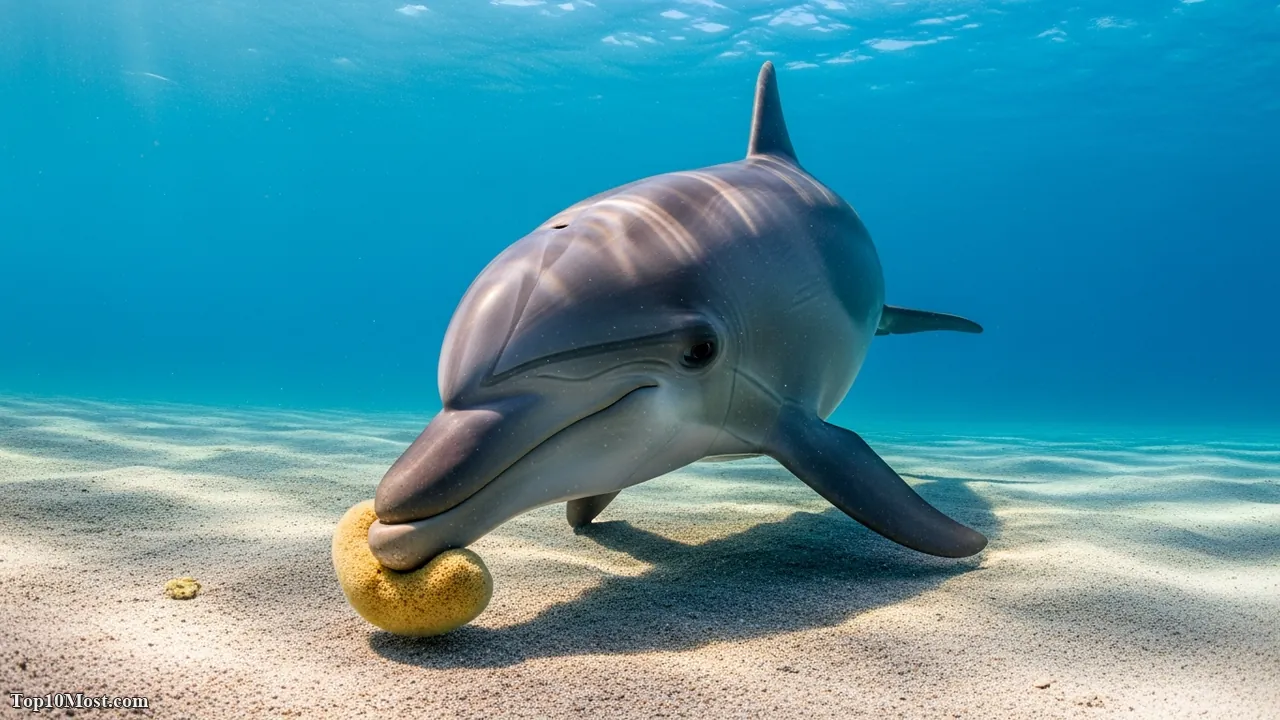
Why number 1? Because their cognitive flexibility is unrivaled. They can learn artificial languages, understand abstract concepts like “zero” or “absence,” and cooperate with other species (including humans) to hunt. Their brain-to-body mass ratio is second only to humans, and they consistently demonstrate the ability to innovate new behaviors in the wild.
The Dolphin is the mirror in the ocean. When we look at them, we see the closest reflection of our own curiosity, playfulness, and social complexity. They don’t just survive in the ocean; they thrive by analyzing it, naming it, and playing with it. In the world of water, they are the undisputed intellectuals.
Key Highlights
- Signature Whistles: They use and recognize individual names for one another.
- Advanced Tool Use: “Sponging” behavior is a cultural tool-use tradition passed down lines.
- Self-Awareness: They pass the mirror test earlier and more consistently than great apes.
Conclusion
The ocean is far more than a resource; it is a repository of diverse intelligences. From the Cleaner Wrasse proving that size doesn’t dictate self-awareness, to the Orca demonstrating that culture is not unique to humans, these animals challenge our ego-centric view of the world. Intelligence is not a single ladder with humans at the top; it is a branching tree, and the marine branch is blooming with brilliance.
As we continue to study these creatures in late 2024 and beyond, we are likely to find that the gap between “us” and “them” is even smaller than we think. Protecting these oceans is not just about saving biomass; it is about preserving these unique, irreplaceable minds.