The situational comedy, or sitcom, is arguably the most resilient and influential genre in television history. From the early days of black-and-white broadcasting to the current streaming wars, sitcoms have not just entertained; they have defined cultural eras, launched global franchises, and shaped how we talk about family, friendship, and the workplace. A true “popular” sitcom must transcend initial ratings, achieving a cultural resonance that makes it instantly recognizable to multiple generations.
Determining the Top 10 Most popular involves a blend of historical context, peak traditional viewership (Nielsen Ratings), and modern digital longevity (streaming demand/syndication success). We weigh shows that broke ground for their time against those that dominate the rewatch culture of today. This list is a testament to the power of laughter to create shared experiences on a massive, global scale.
The data in this article is compiled and analyzed based on information updated as of December 2025, factoring in decades of original viewership alongside the immense impact of current streaming platforms to set the appropriate context.
Table of the Top 10 Most Popular Sitcoms Ever Created (By Combined Impact Score)
| Rank | Sitcom | Original Run | Key Metric of Popularity |
|---|---|---|---|
| 1. | Friends | 1994–2004 | Dominant Streaming/Syndication Demand & Global Reach |
| 2. | Seinfeld | 1989–1998 | Highest Peak Nielsen Rating & Influence on Modern Comedy |
| 3. | I Love Lucy | 1951–1957 | Groundbreaking Format & Peak 1950s Viewership |
| 4. | MAS*H | 1972–1983 | Record-Breaking Finale Viewership (105M U.S.) |
| 5. | The Simpsons | 1989–Present | Unmatched Longevity & Global Satirical Influence |
| 6. | The Office (US) | 2005–2013 | Defining Workplace Comedy of the Streaming Era |
| 7. | The Big Bang Theory | 2007–2019 | Major Modern Ratings Juggernaut & Syndication Power |
| 8. | Cheers | 1982–1993 | Top-Rated for Five Seasons & Defining Ensemble Comedy |
| 9. | All in the Family | 1971–1979 | Cultural Game-Changer & Top-Rated for Five Seasons |
| 10. | Modern Family | 2009–2020 | Consistent Critical Acclaim & Multi-Camera Revival |
#10. Modern Family
Modern Family’s Lasting Legacy of Heart and Humor
Securing the #10 spot, Modern Family successfully modernized the sitcom landscape for the 21st century, utilizing the mockumentary format with a warmth often reserved for traditional multi-cam shows. Its 11-season run (2009–2020) was critically lauded, winning five consecutive Primetime Emmy Awards for Outstanding Comedy Series, a feat that speaks volumes about its consistent quality and broad appeal. By presenting a blended, multi-generational, and diverse family unit, the show acted as a comforting mirror to the evolving American household, keeping it relevant long after its initial air date.

Its reason for ranking lies in its unique ability to be both groundbreaking and universally accessible. Unlike its edgier peers, Modern Family wrapped its contemporary social commentary in a message of unconditional familial love, ensuring high replay value in the syndication and streaming market. The clever use of the documentary interview style allowed characters to directly address the audience, creating an immediate, personal connection that amplified the humor and emotional stakes of everyday life.
What resonates most is the show’s underlying heart. Despite all the squabbles and misunderstandings between the Pritchett-Dunphy-Delgado clan, every episode concluded with a thoughtful, reflective voice-over that reminded viewers of the simple, enduring joy of belonging. It made complex family dynamics feel utterly relatable and left us feeling a little warmer about our own messy lives.
Key Highlights:
- Won five consecutive Primetime Emmy Awards for Outstanding Comedy Series (2010–2014).
- Ran for 11 seasons and 250 episodes on ABC.
- Defined the multi-generational, blended family sitcom for the 21st century.
#9. All in the Family
The Cultural Earthquake of All in the Family
Premiering in 1971, All in the Family immediately became a cultural phenomenon, using the traditional domestic sitcom format to tackle controversial issues like racism, class, and the generation gap head-on. It was a revolutionary show for its time, achieving the status of the most-watched show in America for five consecutive seasons, a dominance that signaled television’s shift toward relevance and realism. The fiery, yet often misunderstood, patriarch Archie Bunker became an unforgettable, albeit problematic, figure in television history, forcing the audience to confront their own biases.
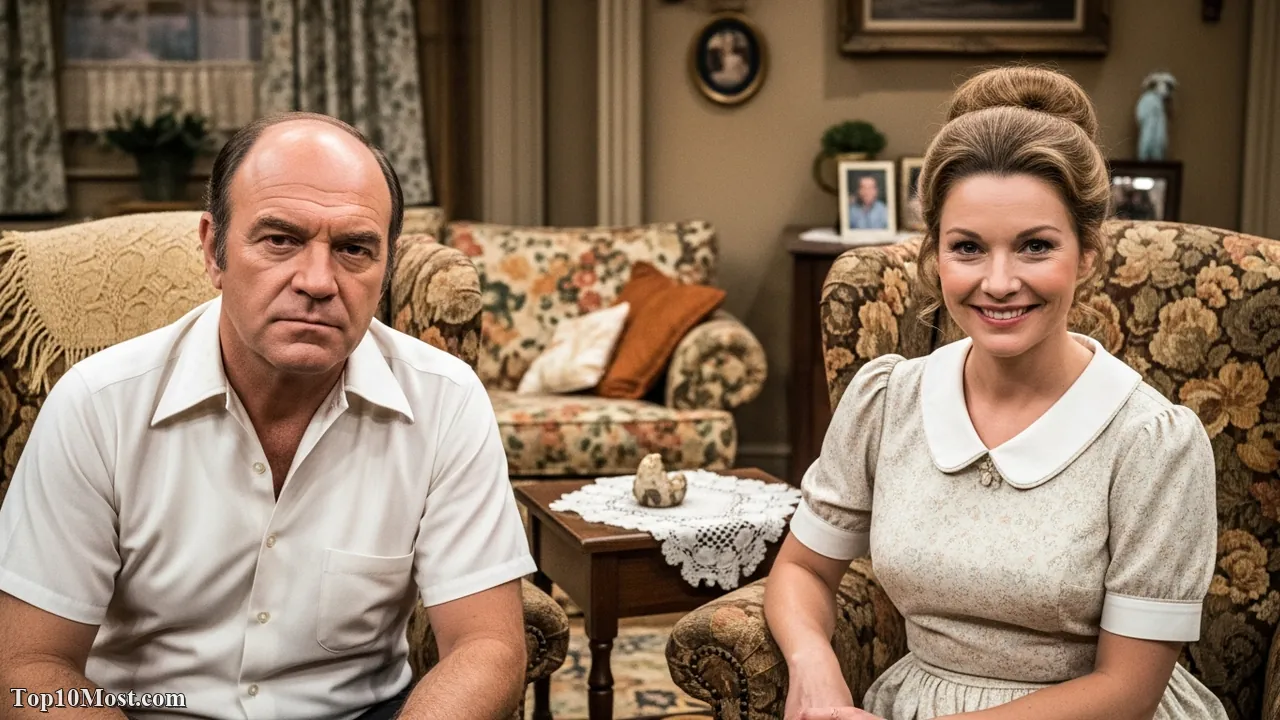
The show ranks highly due to its unparalleled significance in television history; it proved that a comedy could be deeply serious, provocative, and immensely popular all at once. Creator Norman Lear’s genius was in presenting complex debates within the safety of a family living room, providing a crucial national conversation starter. Its success spawned classic spin-offs like Maude and The Jeffersons, cementing its foundational role in the development of the modern social-issue sitcom.
More than just a comedy, All in the Family was a snapshot of a nation in transition. The tension between Archie and his liberal son-in-law, Michael “Meathead” Stivic, perfectly embodied the ideological divide of the era. To watch it now is to witness not just a hilarious comedy, but a vital piece of American history—a reminder that sometimes the most important work is done right in front of the television set.
Key Highlights:
- Was the #1 rated show in the U.S. for five consecutive seasons (1971–1976).
- Pioneered the use of comedy to address serious, contemporary social issues.
- The success directly led to legendary spin-offs, establishing a television universe.
#8. Cheers
Cheers: Where Everybody Knew Its Name and Loved Its Humor
Set entirely within a cozy Boston bar, Cheers (1982–1993) perfected the ensemble comedy, using the static setting to create a dynamic, evolving family of regulars and oddballs. Despite a famously poor debut, the show quickly grew into a behemoth, becoming one of the highest-rated shows of the late 80s and early 90s and ultimately spending five seasons as the top show on television. Its sharp writing and unforgettable characters, from Sam Malone to the neurotic Diane Chambers, set the benchmark for character-driven comedy.
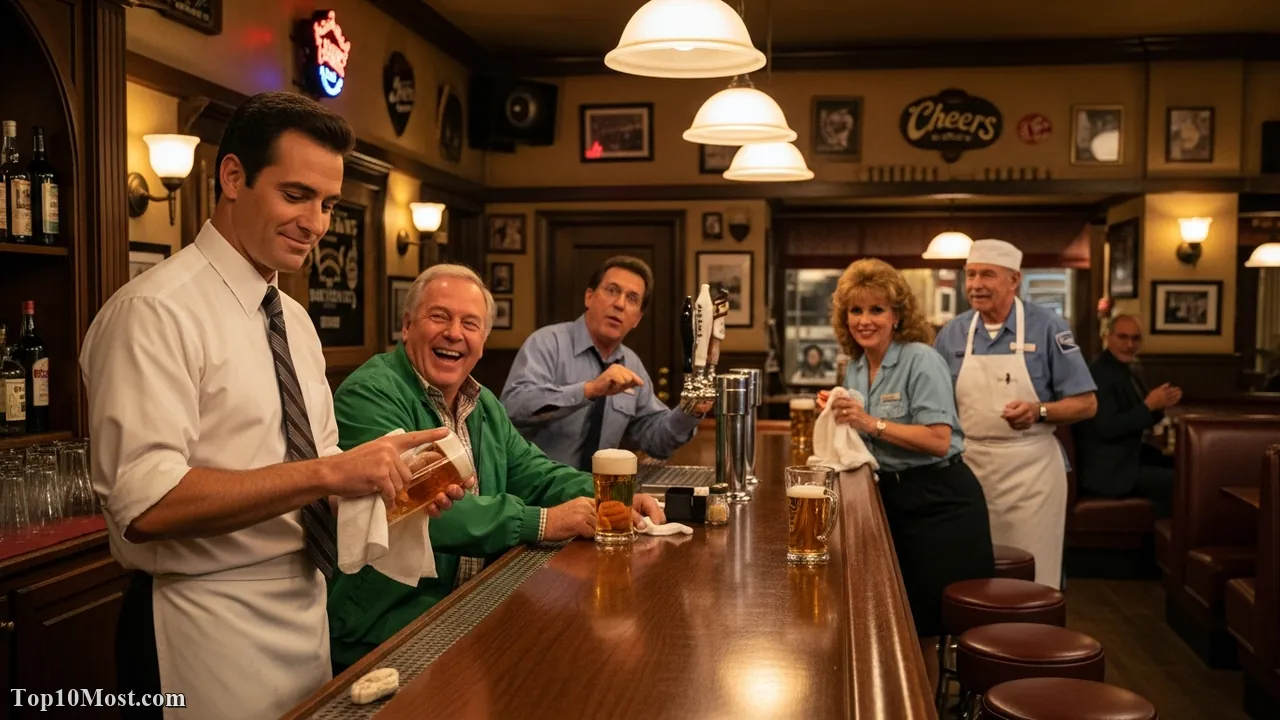
The core of its popularity rests on its extraordinary character chemistry and its ability to seamlessly blend wit with genuine emotion. The “will they/won’t they” romance between Sam and Diane became a template for television relationships that persists today, demonstrating the show’s mastery of the long-term payoff. Its longevity in syndication speaks to its timeless format—a place where people meet to talk, joke, and grapple with life.
There’s an undeniable comfort in the environment of Cheers. It created a place we genuinely wanted to belong to, fostering an almost tactile sense of community that is rare in television. The show proved that deep character work and a consistent, well-defined world can make even the simplest premise—hanging out in a bar—a source of lasting, beloved popular culture.
Key Highlights:
- Named the #1 show in the U.S. during five of its 11 seasons.
- Won 28 Primetime Emmy Awards out of 117 nominations, reflecting critical and popular success.
- Defined the high-concept ensemble workplace comedy format.
#7. The Big Bang Theory
The Ratings Juggernaut that Made Geek Culture Mainstream
The Big Bang Theory (2007–2019) was a ratings phenomenon for a modern audience, achieving staggering live viewership numbers that were considered impossible in the fragmented media landscape of the 21st century. Centering on a group of Caltech scientists and their neighbor Penny, the show rode a massive wave of popularity for 12 seasons, consistently ranking as one of the most-watched scripted series on television. Its success was not just domestic; it became a global syndication powerhouse almost instantly.

Its high ranking is a direct result of its enormous, sustained commercial success. While not always a critical darling, its simple premise—the juxtaposition of intellectual genius with social awkwardness—hit a cultural sweet spot, making “nerd culture” palatable and popular for the masses. Its traditional multi-camera setup and laugh track delivered a familiar comfort that audiences craved, culminating in a series that generated billions in revenue and inspired the successful spin-off Young Sheldon.
The lasting impact of The Big Bang Theory lies in its ability to celebrate intelligence and fandom without irony. While the jokes could be broad, the core group’s genuine, if sometimes clumsy, affection for one another ultimately anchored the show. It demonstrated that in a hyper-connected world, audiences still value the simple comfort of watching friends grow up together, one awkward scientific reference at a time.
Key Highlights:
- Consistently ranked as the highest-rated comedy series on broadcast television for nearly a decade.
- Finale attracted 18 million live viewers, a rare feat in the streaming era.
- Generated billions in syndication revenue, cementing its commercial power.
#6. The Office (US)
The Office: Defining Workplace Dysfunction in the Streaming Age
The American version of The Office (2005–2013) is a prime example of a show whose popularity has exploded exponentially since its original broadcast, making it a cornerstone of the modern streaming landscape. Initially a modest success on NBC, its jump to streaming platforms turned it into a cultural juggernaut, constantly topping rewatch charts and serving as the defining workplace comedy for a new generation. Its mockumentary style, deadpan humor, and deeply relatable cringe moments have solidified its place in television history.

This show’s unique ranking factor is its incredible rewatchability and streaming demand. It set the standard for the single-camera, no-laugh-track style, blending comedy with surprisingly earnest emotional arcs. The central romance and the sheer quotability of characters like Michael Scott, Dwight Schrute, and Jim Halpert have given it a perpetual life online, driving billions of viewing hours and sustaining its presence as a current time cultural fixture.
What the audience truly connects with is the delicate balance between the absurd and the profound. Every laugh-out-loud moment of awkwardness is balanced by a moment of genuine human connection, making the mundane setting of Dunder Mifflin feel like a second home. It’s a beautifully simple testament to the idea that even in the most tedious job, you can find a family.
Key Highlights:
- Became one of the most-streamed television shows in the U.S. upon its digital release.
- Redefined the American workplace comedy using the single-camera, mockumentary format.
- Launched the careers of multiple A-list comedic actors.
#5. The Simpsons
The Simpsons: The Longest-Running Global Cartoon Satire
Holding the record for the longest-running American animated series and scripted primetime series, The Simpsons (1989–Present) is not just a sitcom; it is a continuously running archive of American and global culture. Its endurance across multiple decades and its ability to predict social and political events, often decades in advance, place it as one of the most culturally significant and popular shows in history. Homer, Marge, Bart, Lisa, and Maggie are universally recognized figures whose influence permeates comedy, fashion, and language.
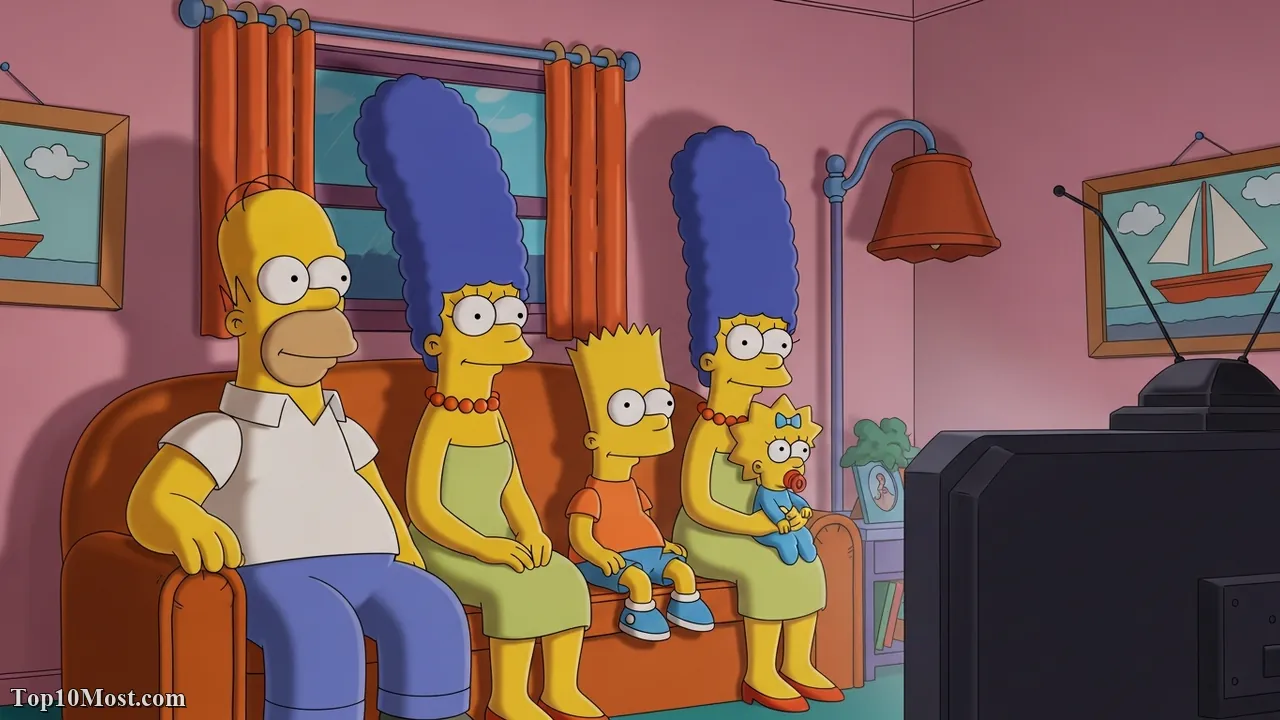
The reason for its #5 spot is its unmatched longevity and cultural omnipresence. Unlike any other show on this list, The Simpsons has maintained a massive, global audience for over thirty-five years, adapting its sharp satire to every new decade while keeping its core family dynamics intact. Its influence is not measured just in ratings, but in its ability to create a deep, shared comedic language—from “D’oh!” to the sheer brilliance of its deep bench of supporting characters.
The reflective element of the series is its commitment to both razor-sharp satire and genuine family bonds. Beneath the yellow skin and cartoon antics is a thoughtful, often emotional portrait of a working-class family trying to make it work. It reminds us that no matter how chaotic the world gets, the simple, relatable struggles of the family unit are a constant source of both comedy and comfort.
Key Highlights:
- Holds the record for the longest-running American animated and scripted primetime series.
- Successfully transcended generational gaps for over three decades of continuous broadcast.
- Created a vast, influential comedic universe with over 700 episodes and countless cultural touchstones.
#4. MASH
MASH: The Sitcom That Ended with a Record-Shattering Goodbye
MAS*H (1972–1983) stands alone on this list for its delicate and successful blend of comedy and intense wartime drama, making it a defining classic of television. Set during the Korean War, the show earned its popularity through critical acclaim, 14 Primetime Emmy Awards, and, most importantly, the most-watched scripted television broadcast in U.S. history. Its finale, “Goodbye, Farewell and Amen,” was viewed by an estimated 105 million people, a record that stood for nearly three decades and remains a stunning benchmark of collective viewership.

The show ranks highly not just for its finale, but because it utilized the sitcom format to explore profound humanistic themes. It mastered the transition from lighthearted hijinks to serious reflection, a tonal shift that captivated audiences and critics alike. The ensemble cast, operating in a high-stakes environment, offered a different kind of “family”—one forged in crisis, which made their small, comedic victories all the more essential to viewers.
The reflection on MASH* is on its enduring relevance. Its humor was a survival mechanism, a way for the characters to cope with the absurdity and tragedy of war. It teaches us a powerful lesson: that even in the darkest of times, the resilience of the human spirit, expressed through witty banter and mutual support, is the true anchor of life.
Key Highlights:
- Series finale was watched by an estimated 105 million U.S. viewers—a record for a scripted show.
- Successfully integrated dark drama and social commentary into the sitcom format.
- Won 14 Primetime Emmy Awards during its 11-season run.
#3. I Love Lucy
I Love Lucy: The Foundational Pillar of Television Comedy
No discussion of popular sitcoms can begin without I Love Lucy (1951–1957). It is not merely a popular show; it is the fundamental blueprint for the modern multi-camera, studio-audience sitcom. As the most-watched show in the U.S. for four of its six seasons, it invented industry standards that continue today, including the use of three cameras for filming and pre-recording the laugh track, techniques that cemented the show’s massive and lasting popularity. Lucille Ball’s groundbreaking physical comedy and business acumen made her an industry legend.
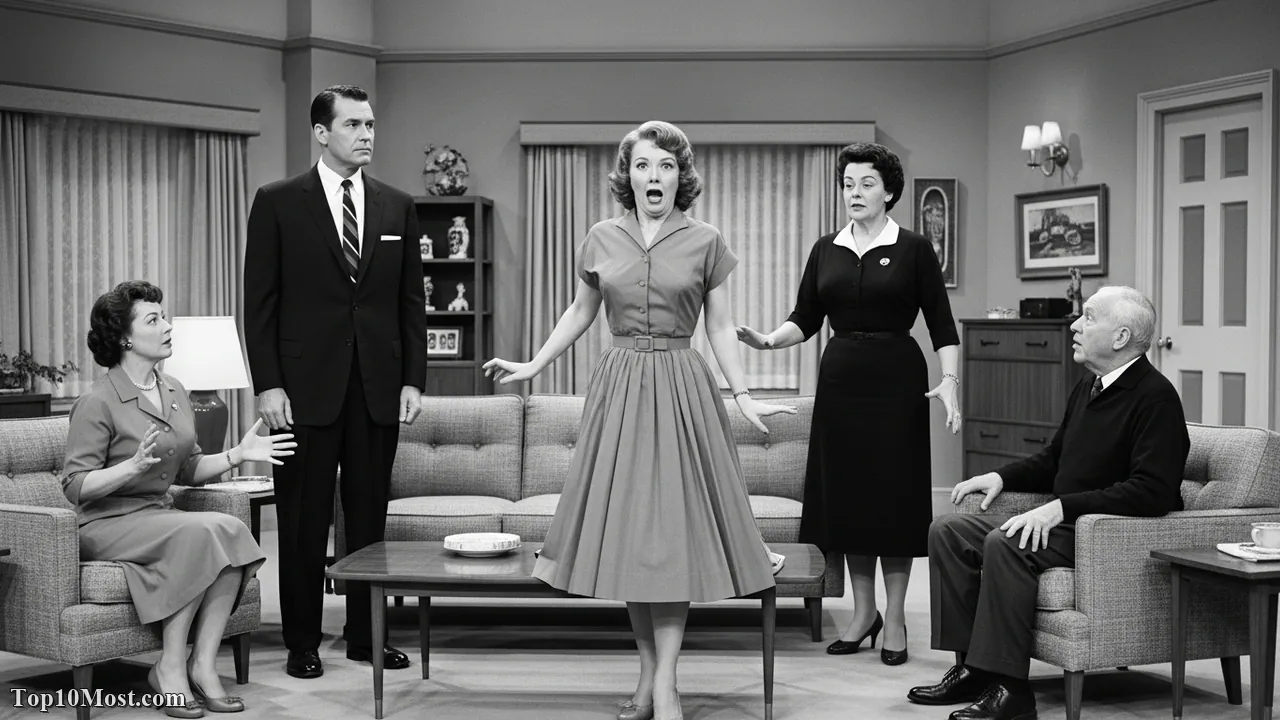
This show is an absolute anchor for the list due to its revolutionary technological and creative influence. It was the first show to be filmed in Hollywood (rather than broadcast live from New York), the first to feature an interracial couple, and the first to show a character’s pregnancy. These innovations allowed for high-quality syndication, ensuring the show remained a profitable and highly-watched staple for decades after its initial run, constantly introducing its humor to new audiences.
The legacy of Lucy is in her perfect, joyful commitment to chaos. Lucille Ball’s fearless performance as the constantly scheming Lucy Ricardo created a universal character—the dreamer who never gives up, no matter how disastrous the result. It reflects an optimistic, pioneering spirit that gave television its first, best reason to gather together and laugh.
Key Highlights:
- Pioneered the three-camera production technique that became the industry standard for sitcoms.
- Was the first show to end its run at the top of the Nielsen ratings.
- Remains one of the most influential and syndicated television programs in history.
#2. Seinfeld
Seinfeld: The Revolutionary “Show About Nothing” That Redefined a Generation
Seinfeld (1989–1998) stands as the defining, high-water mark of critical and ratings success for the 1990s, achieving the highest peak average Nielsen rating (23.5) of any sitcom on this list. Dubbed the “show about nothing,” it revolutionized the comedy genre by rejecting sentimentality, focusing instead on the minutiae, grievances, and social awkwardness of everyday urban life. Its final seasons dominated television, cementing its legacy as one of the most culturally influential series ever made.

Its position at #2 is earned through its phenomenal peak ratings and its profound influence on subsequent comedy. It created the “anti-sitcom” template, introducing a fast-paced, observational, and highly cynical style of humor that broke from traditional narrative structures. The show’s meticulous attention to detail and ability to weave four distinct storylines into one cohesive plot have made it an object of study for comedy writers and a consistent favorite in syndication and streaming, showcasing its timeless writing quality.
The lasting personal reflection on Seinfeld is its unflinching honesty about human nature. It dared to present its characters as deeply flawed, often terrible people who were nevertheless hilarious and, in their own specific way, relatable. It gave us permission to laugh at the small social contracts we all follow, proving that the most popular comedy can be found in the most uncomfortable truths.
Key Highlights:
- Achieved a staggering peak average Nielsen rating of 23.5, one of the highest in TV history.
- Revolutionized the sitcom by adopting a non-sentimental, observational, “no hugging, no learning” style.
- Finale attracted 76.3 million viewers, one of the top U.S. broadcasts ever.
#1. Friends
Friends: The Global Juggernaut of Friendship, Streaming, and Syndication
Sitting comfortably atop our list as the Most Popular Sitcom Ever Created is Friends (1994–2004). This show has achieved a level of sustained, multi-generational global popularity that is unmatched. While Seinfeld had a higher peak rating, Friends maintained a consistently massive audience throughout its ten-season run and has since become the single most dominant comedy property in the streaming and global syndication market. Its ability to generate billions of hours of viewing decades after its finale is the ultimate testament to its enduring power.

The primary driver for its rank is its all-encompassing, worldwide appeal across every metric: high original ratings, immense syndication longevity in over 100 countries, and unmatched demand on streaming platforms in the current time. The six core characters became universal archetypes for the 90s and 2000s, setting the gold standard for ensemble chemistry. The series provided a comforting, aspirational vision of “found family” life that translated across every cultural boundary.
What makes Friends truly great is its simplicity and warmth. It’s a show about the most important transition in life—the period between youth and true adulthood—and the friends who help you get there. Every rewatch is like coming home, a cozy, familiar ritual that offers a perfect mix of laughter and emotional catharsis. It is a timeless narrative about finding your tribe, which is why, twenty years on, it still reigns supreme.
Key Highlights:
- The single most dominant sitcom property in global syndication and streaming demand (billions of viewing hours).
- Finale was the most-watched television episode of the 2000s, with 52.5 million U.S. viewers.
- Defined the aspirational “found family” trope for modern television.
Reflective Conclusion: The Enduring Power of Shared Laughter
The journey through the Top 10 Most Popular Sitcoms Ever Created reveals a profound truth: popularity in comedy is less about simple ratings and more about cultural resonance. From the foundational studio innovations of I Love Lucy to the self-aware cringes of The Office and the global domination of Friends, each entry on this list did more than just make us laugh—it provided a shared cultural moment. These shows serve as comforting anchors, proving that whether a series addresses race relations (All in the Family) or the anxiety of dating (Seinfeld), the best comedy is always rooted in the simple, relatable struggles of being human. At Top 10 Most, we honor these series for not only defining television but for giving us the lasting gift of shared, unforgettable humor.