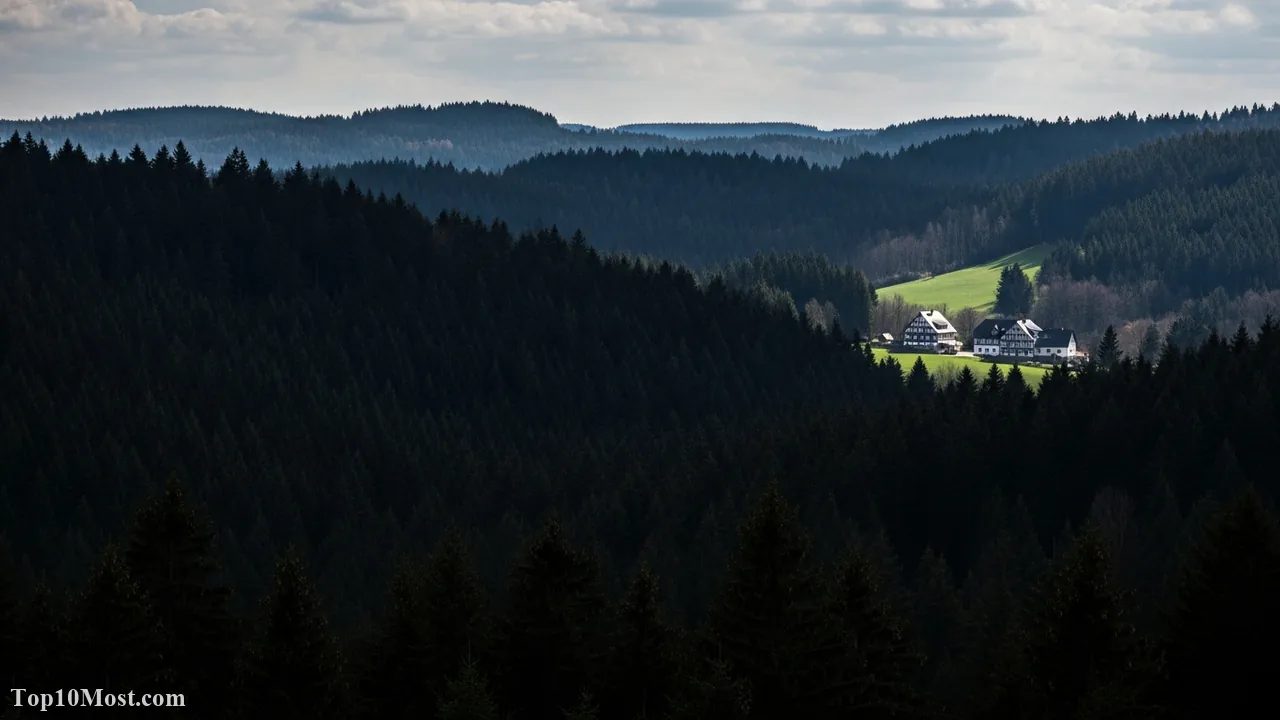
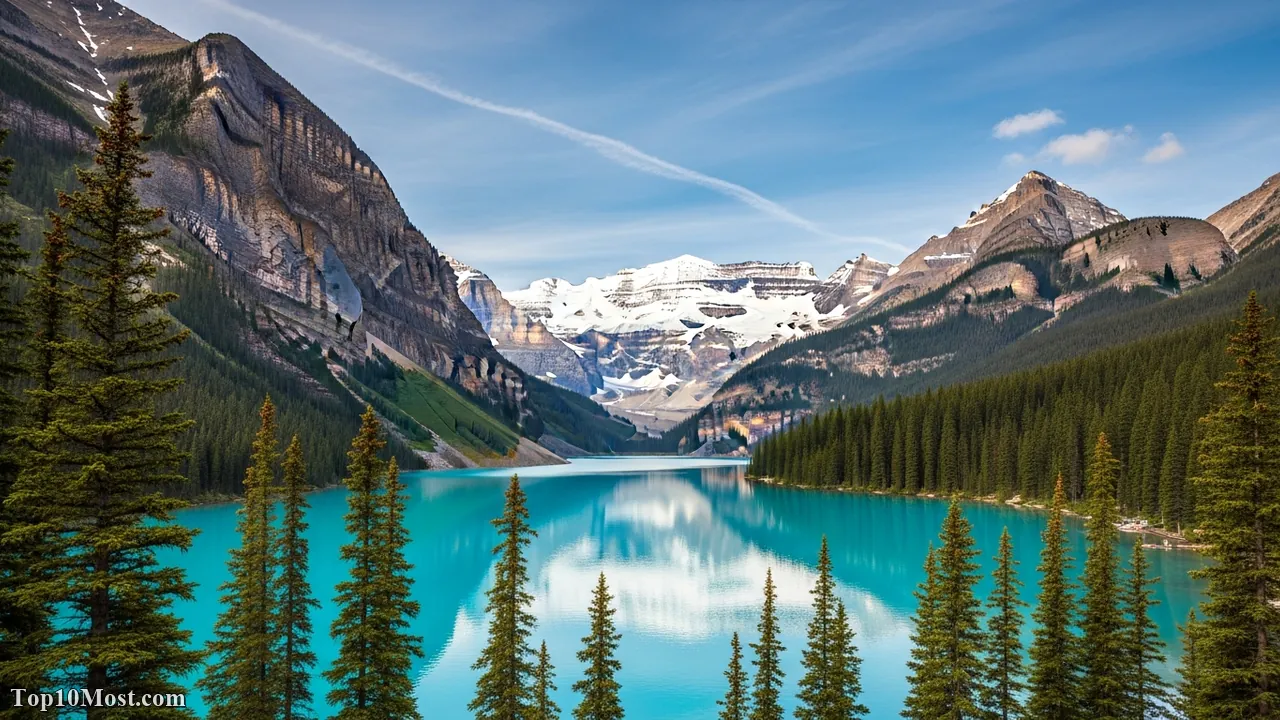
Japan is a nation of profound cultural depth, but its true spirit is often best captured not in its ancient temples, but in the raw, powerful beauty of its natural world. From volcanic peaks to tropical coastlines and ancient cedar forests, the archipelago offers an astonishing diversity of natural scenery that has inspired poets and artists for centuries. This is a land where the changing of seasons is revered—a concept known as shun—and the landscapes transform into entirely new realms of beauty with every passing month.
At Top 10 Most, we explore, compare, and explain what truly stands above the rest. Our ranking of the most scenic landscapes in Japan is not an absolute truth, but a reasoned analytical perspective validated by the consensus of global travel experts and the enduring cultural significance of these sites. The data in this article is compiled and analyzed based on information and travel insights updated as of 2025, reflecting the current context of accessibility, popularity, and preservation status.
We don’t just rank things; we explain the MEANING behind the greatness, SUPPORTED BY CREDIBLE DATA. This list highlights the places where the intersection of geography, history, and human appreciation has created masterpieces of natural art. Prepare to journey through the ultimate expressions of wabi-sabi—a profound aesthetic where beauty is found in imperfection, impermanence, and natural simplicity.
Table of the Top 10 Most Scenic Landscapes in Japan
| Rank | Landscape Name | Primary Location | Type of Scenery | Key Distinction/Status |
|---|---|---|---|---|
| 1 | Mount Fuji (Fujisan) | Shizuoka & Yamanashi Prefectures | Iconic Volcano/Sacred Mountain | UNESCO World Heritage Site (Cultural Site) |
| 2 | Itsukushima (Miyajima) | Hiroshima Prefecture | Coastal Shrine/Islandscape | One of “Japan’s Three Most Scenic Views” |
| 3 | Matsushima Bay | Miyagi Prefecture | Island-Dotted Bay | One of “Japan’s Three Most Scenic Views” |
| 4 | Shiretoko Peninsula | Hokkaido Prefecture | Untouched Coastal Wilderness | UNESCO World Heritage Site (Natural Site) |
| 5 | Yakushima Island | Kagoshima Prefecture | Ancient Cedar Forest/Subtropical Island | UNESCO World Heritage Site (Natural Site) |
| 6 | Kamikōchi | Nagano Prefecture (Northern Japan Alps) | Alpine Valley/River Gorge | Designated Special Place of Scenic Beauty |
| 7 | Takachiho Gorge | Miyazaki Prefecture | Volcanic Basalt Gorge/Waterfall | Deeply rooted in Japanese mythology |
| 8 | Oirase Gorge | Aomori Prefecture | Mountain Stream/Autumn Foliage Site | One of Japan’s most famous river valleys |
| 9 | Amanohashidate | Kyoto Prefecture | Pine-Covered Sandbar | One of “Japan’s Three Most Scenic Views” |
| 10 | Tottori Sand Dunes | Tottori Prefecture | Coastal Sand Dunes | Largest sand dunes in Japan |
#10. Tottori Sand Dunes (Tottori Prefecture)
Kicking off our list is a breathtaking anomaly in a land of mountains and forests: the Tottori Sand Dunes on the coast of the Sea of Japan. Stretching over 16 kilometers (10 miles) and reaching heights of up to 50 meters, this vast, arid landscape feels utterly divorced from the lush, green image of Japan. The immense scale of the dunes, which are constantly shaped and reshaped by the coastal winds, showcases nature’s power to create something unexpected and truly grand. The sight of this great desert meeting the deep blue sea is a powerful testament to geographical diversity.
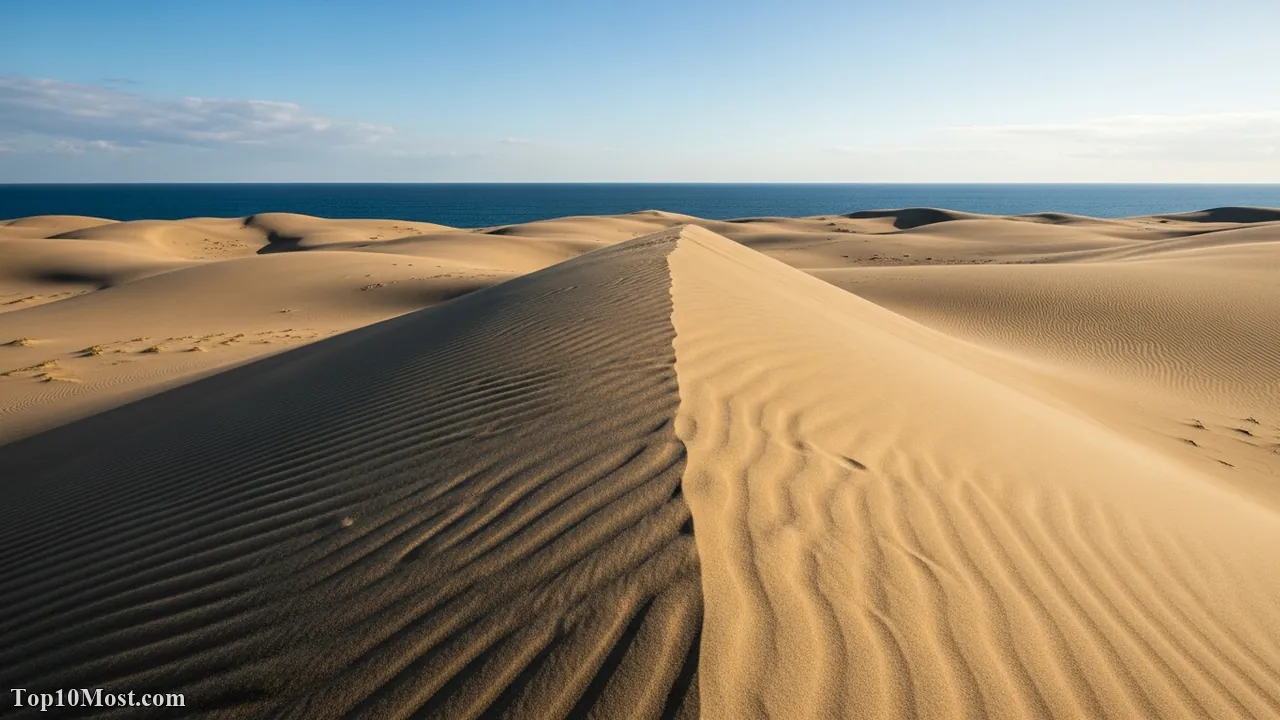
The reason this landscape earns its spot is its sheer singularity and the dramatic visual contrast it offers. Geologically, the dunes formed over thousands of years as sediment from the nearby Sendaigawa River was deposited into the sea and then pushed back onto the coast by the currents and the wind. It represents a living, shifting, and ephemeral work of art, with the famous ‘wind patterns’ or fuumon visible in the sand, changing with the light and time of day. This landscape perfectly encapsulates the concept of geological majesty and impermanence.
Walking barefoot across the slopes, you realize the silence is profound, broken only by the sound of the wind, making it a powerful retreat for reflection. Though it might not possess the spiritual gravity of a sacred mountain, the Tottori Sand Dunes command a deep, silent respect. It reminds us that Japan’s beauty is not uniform; it is a tapestry woven with threads of surprising and sometimes harsh, yet always stunning, natural phenomena.
Key Highlights:
- Largest sand dunes in all of Japan, spanning over 16 kilometers.
- Features the distinct fuumon (wind patterns) and ‘sand columns.’
- Part of the Sanin Kaigan Geopark, protecting its unique formation.
- Offers a dramatic visual contrast between desert-like dunes and the Sea of Japan.
#9. Amanohashidate (Kyoto Prefecture)
Amanohashidate, translating literally to ‘Bridge in Heaven,’ is an elegant, 3.6-kilometer-long sandbar in Miyazu Bay, northern Kyoto Prefecture. This slender strip of land is completely covered by approximately 5,000 mature pine trees, creating a stunning emerald green ribbon that spans the cerulean bay. This natural formation has been revered for centuries and is officially counted as one of the country’s fabled “Three Most Scenic Views” (Nihon Sankei), cementing its historical and cultural importance in any discussion of Japan’s most beautiful places.
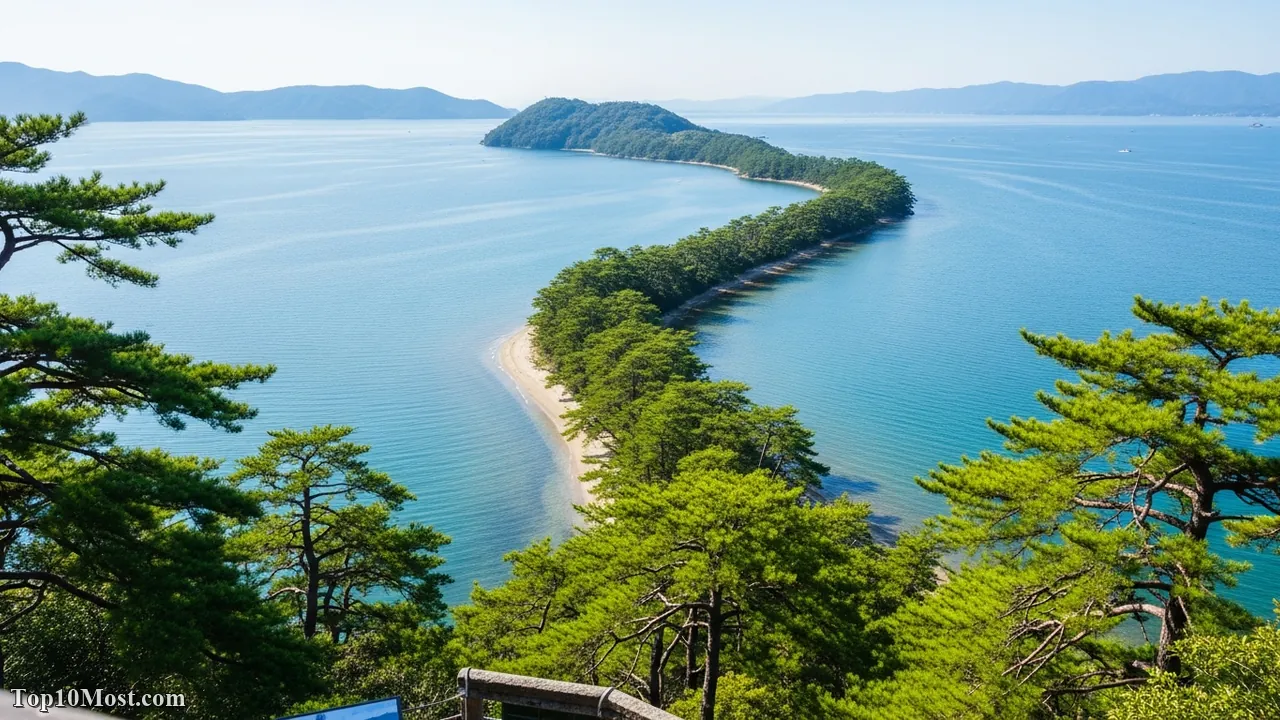
Its historical recognition is the primary reason for its high standing. Legend states that the sandbar is a ladder that fell from heaven, which is a fitting metaphor for the ethereal view experienced when you observe it from the hilltop parks on either end. The traditional way to view the landscape is by standing on an observation deck, bending over, and looking at the sandbar upside down between your legs—a practice called matanozoki. Doing so makes the sandbar appear to float skyward, creating a tangible connection to its mythical name and transforming a mere landscape into an interactive visual spectacle.
The gentle, enduring beauty of Amanohashidate is what resonates most deeply. Unlike the violent energy of a volcano or the wildness of a remote national park, this scene speaks of elegant tranquility, a serene balance of sea, land, and cultivated nature. It is a place where human reverence has protected an already sublime piece of geography, allowing visitors to feel the weight of centuries of appreciation in a single, perfectly framed glance.
Key Highlights:
- One of the officially recognized “Three Most Scenic Views of Japan” (Nihon Sankei).
- 3.6 km long sandbar covered by approximately 5,000 pine trees.
- Its unique visual appeal is enhanced by the traditional matanozoki viewing method.
- Located in Miyazu Bay in the Kyoto Prefecture.
#8. Oirase Gorge (Aomori Prefecture)
Deep in Aomori Prefecture, the Oirase Gorge presents a different kind of beauty: a lush, verdant sanctuary carved by the clear waters of the Oirase Stream, the only outflow from scenic Lake Towada. Over a 14-kilometer stretch, the stream tumbles through the moss-covered forest, creating dozens of waterfalls and rapid pools with names like “Cloudy Stream” and “Ashura Flow.” This landscape is most famous during the autumn, when the entire river valley explodes into a kaleidoscope of red, orange, and gold, making it a perennial pilgrimage site for seekers of fall foliage (koyo).
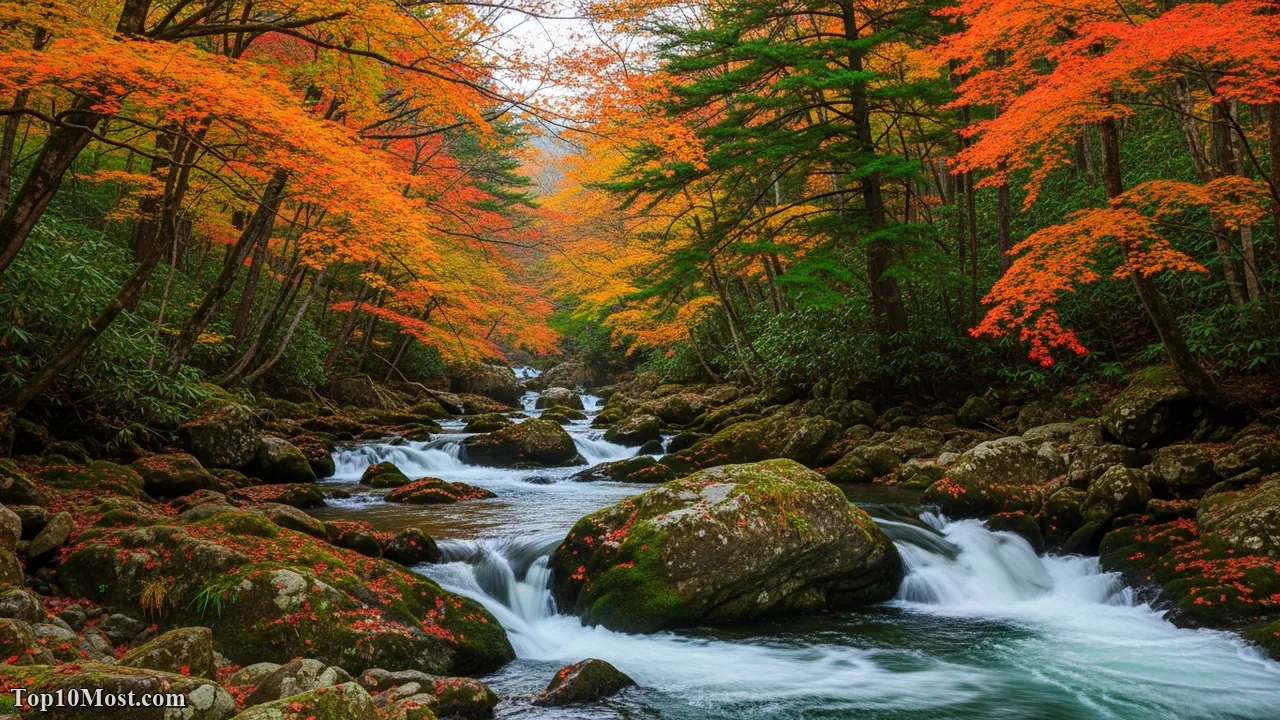
The ranking is justified by the gorge’s accessibility and its immersive, dynamic beauty. A well-maintained trail runs directly alongside the stream, allowing hikers to walk in close proximity to the powerful, clear water and under the towering canopy of beech and maple trees. This proximity offers a multi-sensory experience—the sound of rushing water, the scent of damp earth and moss, and the stunning visual of nature’s raw energy—that is rare even in Japan’s numerous mountain parks. It’s a complete immersion into a vibrant, untouched ecosystem.
To walk the Oirase Gorge is to feel cleansed; it is an experience of pure, liquid energy and profound natural quietude. The path encourages contemplation, slowing the pace of life down to the speed of the flowing water. It represents the quintessential Japanese riverine beauty, a place where nature has been left to its own devices, yet the result is a scene of perfect, effortless artistic composition. This gorge is a powerful reminder that sometimes, the most stunning sights are found at ground level.
Key Highlights:
- A 14-kilometer mountain stream flowing from Lake Towada.
- Famed for dozens of unique waterfalls, including the popular Chōshi Ōtaki.
- Considered one of the premier locations in Japan for viewing spectacular autumn foliage (koyo).
- An easy-to-access trail runs the entire length for an immersive hiking experience.
#7. Takachiho Gorge (Miyazaki Prefecture)
The dramatic Takachiho Gorge in Kyushu is less a scenic spot and more a canyon forged in myth. It is a narrow, V-shaped chasm carved by the Gokase River, whose vertical cliffs of volcanic basalt rise up to 100 meters (330 ft) high. The most iconic feature is the 17-meter-high Manai Waterfall, which cascades directly into the river and is perfectly framed by the columnar jointing of the rock face. This place is steeped in the mythology of Japan, believed to be the spot where the Sun Goddess Amaterasu hid, bringing darkness to the world and leading to the creation of the Shinto faith.
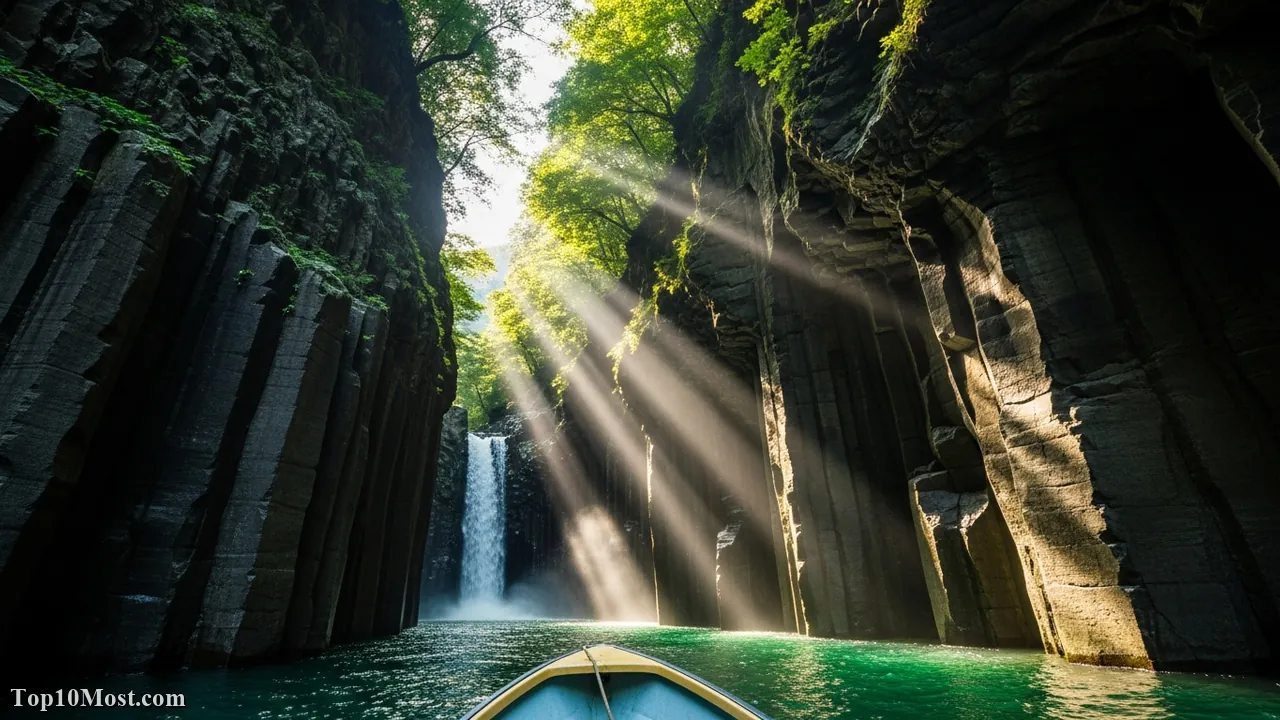
Its high ranking is due to the potent combination of geological wonder and cultural significance. The columnar jointing—a formation of geometric, pillar-like rocks caused by the rapid cooling of ancient lava flows—is visually stunning and unique on this scale. Crucially, the best way to experience the gorge is by rowing a rented boat directly through the heart of the chasm, right up to the base of the Manai Waterfall. This hands-on, deeply intimate perspective elevates the experience beyond simple observation.
There is a tangible sense of ancient history and spirituality here. The air feels heavier, carrying the weight of the myths that define Japanese identity. When you look up from the small boat, dwarfed by the towering rock walls and the waterfall’s spray, you feel you are not just seeing a beautiful landscape, but entering a sacred space. Takachiho Gorge is a masterful blend of nature’s explosive power and Japan’s enduring spiritual narrative.
Key Highlights:
- Dramatic, V-shaped chasm with vertical cliffs of columnar basalt.
- Home to the 17-meter Manai Waterfall, the most famous site.
- A sacred site rooted in the ancient Shinto mythology of Amaterasu.
- Visitors can rent boats to paddle directly through the gorge’s river.
#6. Kamikōchi (Nagano Prefecture)
Kamikōchi is often referred to as the “Japanese Alps’ Jewel,” a pristine, high-altitude valley nestled in the heart of the Chūbu-Sangaku National Park. Situated at about 1,500 meters (4,900 ft) above sea level, this former caldera is defined by the crystalline Azusa River, the iconic wooden Kappa Bridge, and the towering, snow-capped peaks of the Hotaka mountain range. Because it is closed during the deep winter, it is a seasonal paradise for hikers, climbers, and nature photographers, offering views that rival the European Alps for sheer, rugged grandeur.
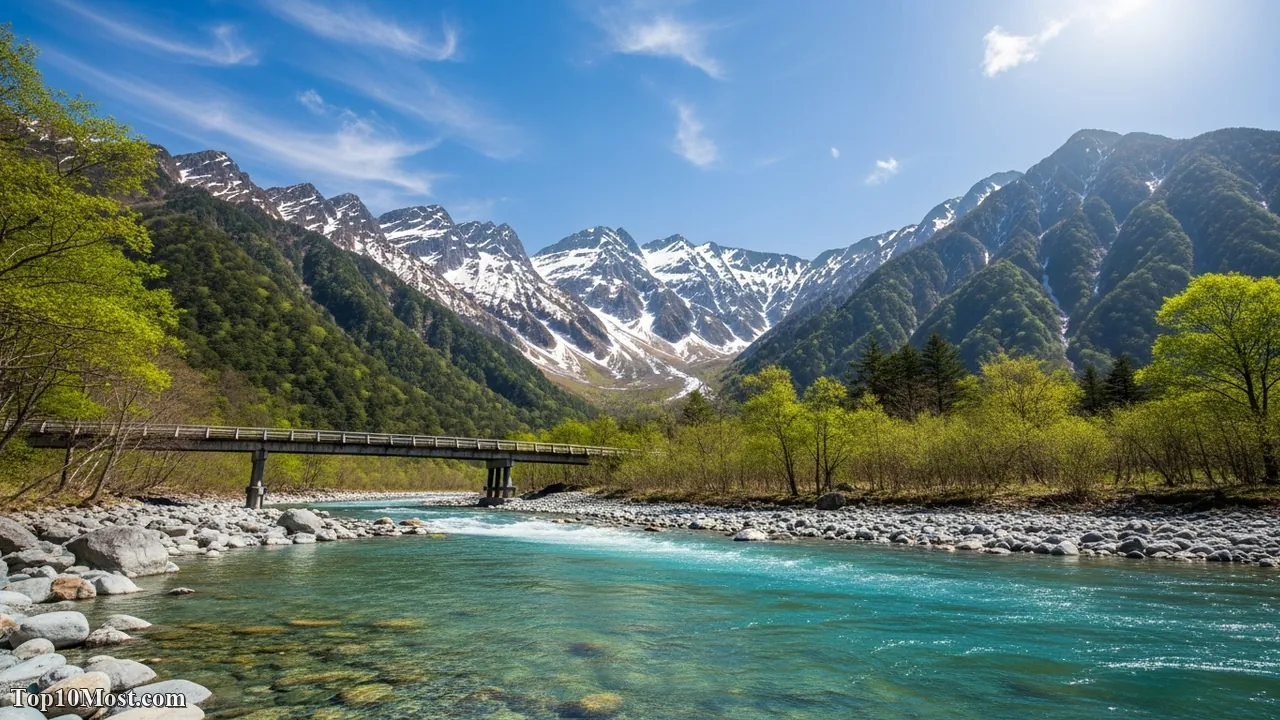
The landscape’s designation as a Special Place of Scenic Beauty underscores its importance, but its true appeal lies in its almost perfectly preserved state. The air is notably crisp and clean, and the views are dominated by the majestic, 3,000-meter peaks that frame the valley. The presence of the Kappa Bridge, named after a mythical water spirit, provides a perfect, human-scale anchor point in the vast wilderness, making the landscape both monumental and approachable. It is Japan’s most celebrated and accessible high-alpine experience.
Standing on the Kappa Bridge, looking upstream at the crystal-clear river and the imposing mountains, provides an overwhelming sense of scale and natural power. Kamikōchi is an escape to a different world, a sanctuary of clear water, pure air, and granite majesty. It is a landscape that encourages silence and introspection, reminding the visitor of the immense, untamable beauty that lies beyond Japan’s bustling cities. It truly captures the spirit of the Japanese Alps.
Key Highlights:
- A 15-kilometer-long alpine valley in the Northern Japanese Alps (Chūbu-Sangaku National Park).
- Dominated by the crystalline Azusa River and framed by the Hotaka Mountain Range.
- The iconic Kappa Bridge is a favorite landmark for photographers.
- Designated a Special Place of Scenic Beauty and Special Natural Monument.
#5. Yakushima Island (Kagoshima Prefecture)
Journeying far south to Kagoshima, we arrive at Yakushima Island, a UNESCO World Heritage Site renowned for its ancient, moss-covered cedar forests, known as yakusugi. This subtropical island is one of the wettest places on Earth, and the perpetual moisture has created a landscape of ethereal, fairy-tale beauty, famously inspiring the setting for Studio Ghibli’s film, Princess Mononoke. The primary draw is the forest itself, a dense, mystical realm where 1,000-year-old cedars, like the immense Jōmon Sugi, command reverence.
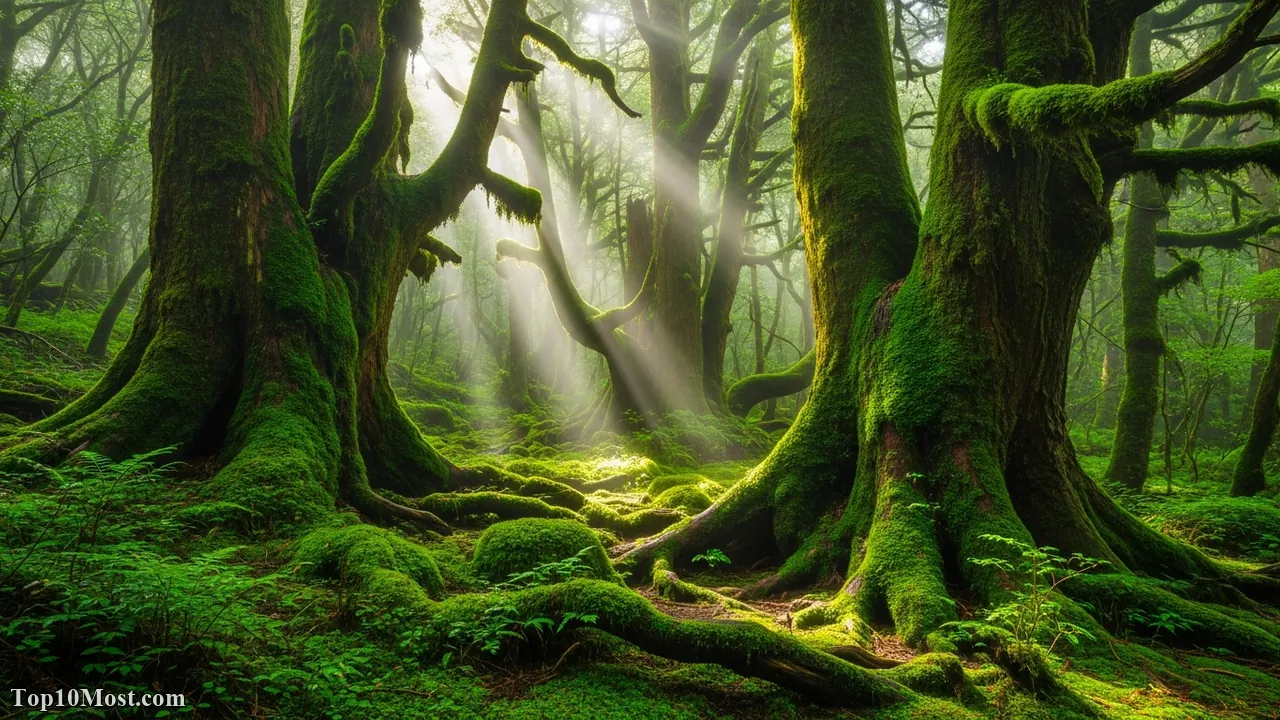
Yakushima’s ranking is a tribute to its ecological significance and its profound sense of age. The forest is a living museum of botany, containing some of the oldest living trees on the planet. Its ancient, misty, and rugged terrain is unlike anything else in Japan, offering a unique blend of tropical coastal features and high-altitude mountain ecology. This is a rare, truly untouched primeval landscape, designated a World Heritage Site specifically for its unique biodiversity and undisturbed natural character.
Walking through the Shiratani Unsui Gorge, with the air thick with mist and the ground soft with moss, is a deeply spiritual experience. The sense of time stretches out, measured not in years, but in millennia, by the giant cedars whose gnarled, massive forms feel like sentinels of history. Yakushima is more than scenic; it is a primal journey back to a wild, mythical Japan that still exists, proving that the most powerful landscapes are often the ones that have been allowed to simply grow.
Key Highlights:
- UNESCO World Heritage Site since 1993, recognized for its unique biodiversity.
- Home to the ancient yakusugi cedar trees, some over 1,000 years old (e.g., Jōmon Sugi).
- The moss-covered, misty forests inspired the Studio Ghibli film Princess Mononoke.
- One of the wettest places on Earth, creating a deep, subtropical forest environment.
#4. Shiretoko Peninsula (Hokkaido Prefecture)
The Shiretoko Peninsula, located on the remote northeastern tip of Hokkaido, represents Japan’s wildest, most unforgiving, and most pristine natural beauty. Known as the “End of the Earth” in the indigenous Ainu language, it is a land of sheer cliffs, active volcanoes, sub-arctic forests, and dramatic coastal landscapes. This World Heritage Site is famous for its wildlife, including brown bears, Steller’s sea eagles, and, in winter, the dramatic sight of drift ice (Ryūhyō) completely covering the Sea of Okhotsk, transforming the coastline into a stunning white wilderness.
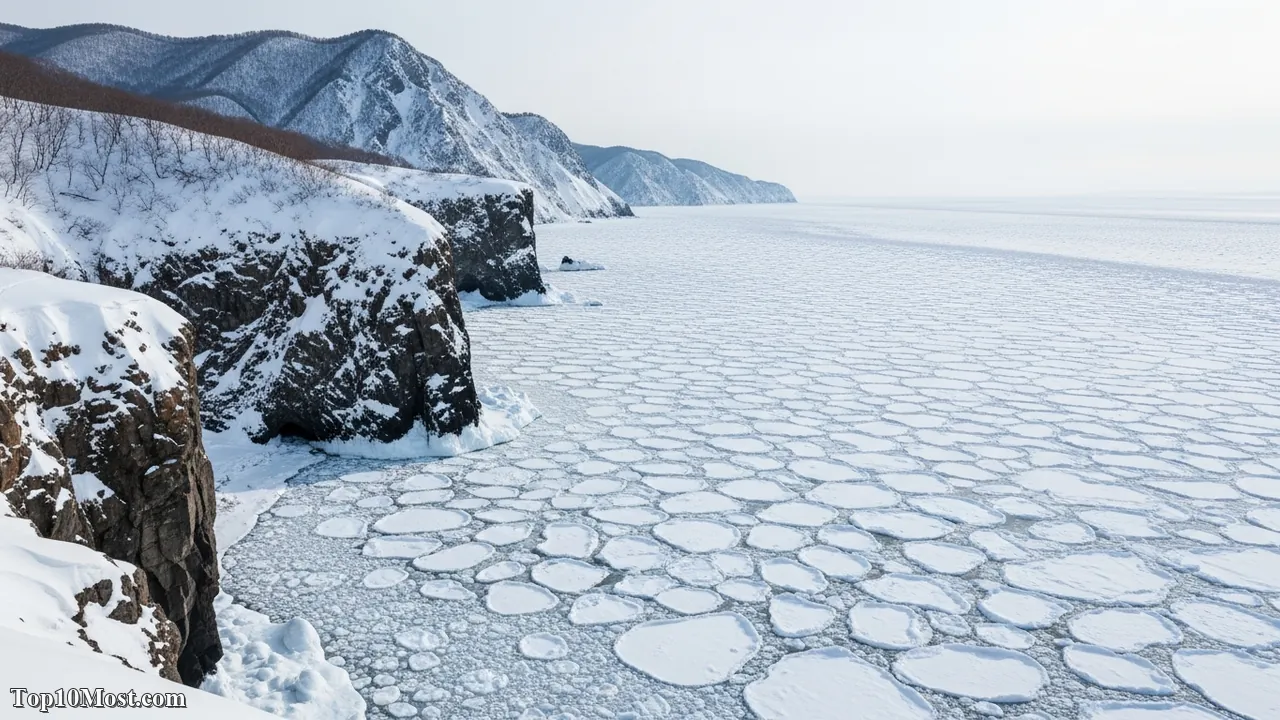
The peninsula holds this high rank precisely because of its rugged, relatively untouched state. Its ecosystem is a rare example of a marine and terrestrial environment interacting perfectly, a key reason for its UNESCO designation. Unlike the other scenic spots, access here is limited; much of the peninsula can only be explored by boat or on multi-day hiking expeditions. This intentional lack of development ensures that the landscape remains a powerful, unmediated experience of nature’s raw power and immense bio-diversity, making it a true natural treasure.
Cruising along the coastline and seeing a brown bear fishing on the shore or witnessing the vast, shimmering expanse of the drift ice imparts a feeling of being on the true frontier of Japan. Shiretoko offers a stark, cold beauty that is a world away from the cherry blossoms of Honshu. It speaks to a tougher, more resilient side of the Japanese spirit, proving that the nation’s most precious landscapes are those where the wild heart of nature still beats the loudest.
Key Highlights:
- UNESCO World Heritage Site recognized for its unique marine and terrestrial ecosystem.
- Known as the “End of the Earth” (Ainu language), it is a remote, untouched wilderness.
- Famous for abundant wildlife, including brown bears and Steller’s sea eagles.
- In winter, the coast is dramatically covered by seasonal drift ice (Ryūhyō).
#3. Matsushima Bay (Miyagi Prefecture)
Entering the top three is Matsushima Bay, which joins Miyajima and Amanohashidate as one of Japan’s ancient “Three Most Scenic Views.” This gorgeous natural harbor near Sendai in Miyagi Prefecture is dotted with over 260 tiny, pine-clad islets. These islands, often partially submerged and crowned with gnarled pines, create a constantly changing, painterly composition as the tide ebbs and flows and the light shifts. The bay is celebrated not for a single peak or feature, but for the collective, harmonious beauty of its entire assembly.
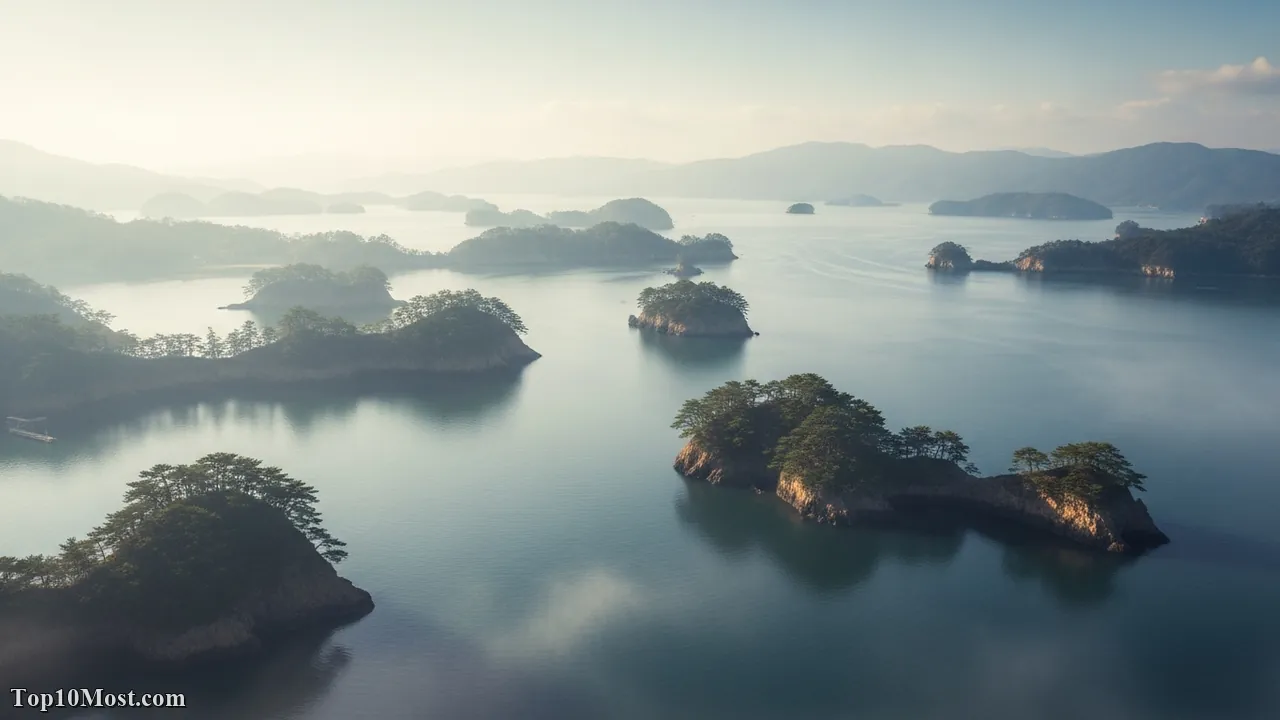
The consensus for its perennial high ranking is rooted in its classical, enduring, and subtle beauty. This is a landscape that has been immortalized by poets like Matsuo Bashō, who famously could not find the words to describe its perfection. Its charm lies in the small scale of the islands and the elegant simplicity of the scene—a multitude of tiny, isolated worlds floating in the water. It represents the ultimate expression of the Japanese aesthetic that finds beauty in multitude and grace in miniature, an unparalleled example of a tranquil coastal panorama.
Viewing Matsushima at dawn or sunset is a profound experience, watching the shadows lengthen and the islands take on silhouettes against the sky. There is a deep, quiet comfort in this scene; it is a landscape of peace, a visual balm that has soothed and inspired for over a thousand years. Matsushima Bay is a living, breathing work of art, a perfect piece of nature’s poetry that deserves its place among the greatest sights in the world.
Key Highlights:
- One of the officially recognized “Three Most Scenic Views of Japan” (Nihon Sankei).
- The bay contains over 260 pine-clad islets, creating a unique collective panorama.
- Immortalized in classic Japanese literature and poetry for its subtle, tranquil beauty.
- Located near Sendai in Miyagi Prefecture and best viewed by sightseeing cruise.
#2. Itsukushima (Miyajima) (Hiroshima Prefecture)
The sacred island of Itsukushima, commonly known as Miyajima, is arguably the most recognizable coastal landscape in Japan, owing its fame to the iconic “floating” torii gate of the Itsukushima Shrine. When the tide is high, the massive, vermillion gate appears to hover miraculously above the water, creating a powerful optical illusion that marries spiritual architecture with natural geography. The rest of the island, with its resident wild deer, lush forest, and the peak of Mount Misen, completes an overwhelming composition of cultural and natural significance.
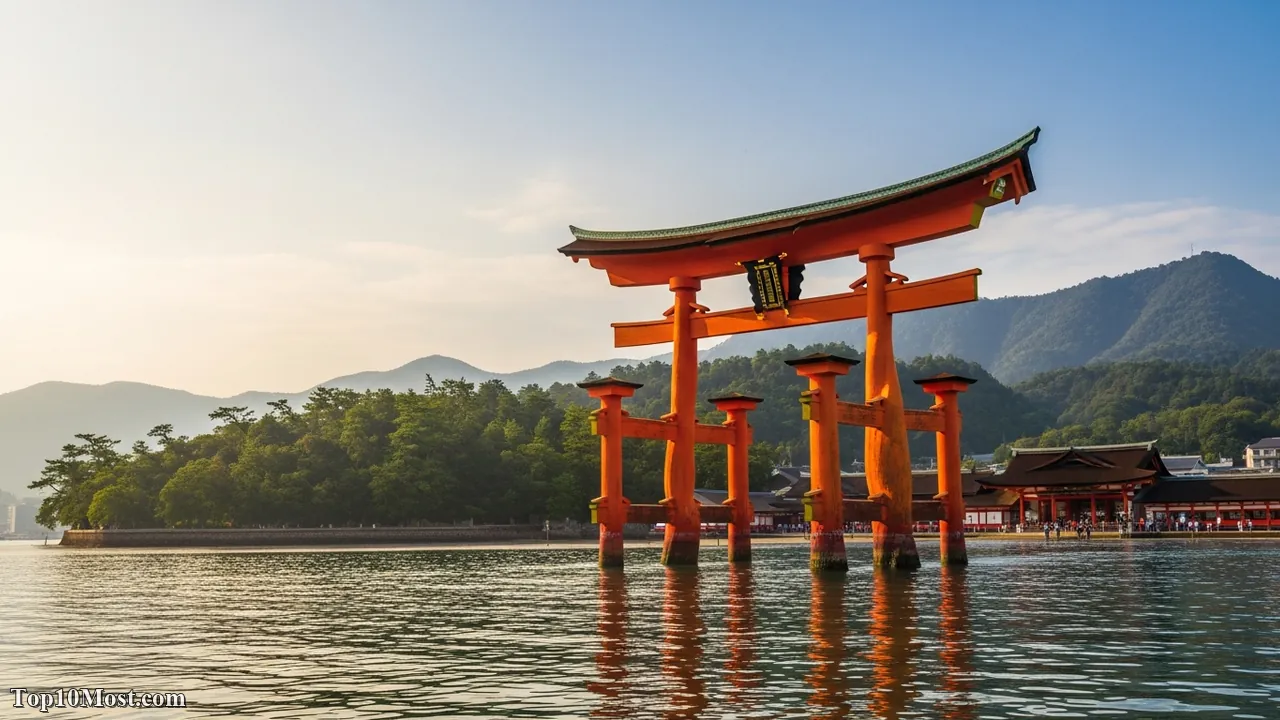
Its stellar ranking is a recognition of its perfect synthesis of human artistry and natural grandeur. The shrine and its torii gate were purposefully constructed over the water so as not to defile the island itself, which has been considered a sacred Shinto object since ancient times. This careful, spiritual relationship with the environment creates a scene of almost perfect harmony. It is a UNESCO World Heritage Site and one of the “Three Most Scenic Views,” embodying the very idea of a holy landscape where humanity’s devotion is expressed through delicate interaction with nature.
Miyajima is a place that stirs the soul. The moment the floating gate comes into view, whether under the blue sky or against a sunset, is a breathtaking one. It makes you feel the presence of the spiritual world interacting with the physical, a deep current that runs through the heart of Japanese culture. This landscape is a masterpiece of design, a scene that has been admired, revered, and protected, standing as an enduring symbol of Japan’s beauty and faith.
Key Highlights:
- The location of the iconic “floating” torii gate of Itsukushima Shrine.
- One of the “Three Most Scenic Views” and a UNESCO World Heritage Site.
- The island itself is considered sacred and is home to Mount Misen.
- The ultimate synthesis of spiritual architecture and natural coastal beauty.
#1. Mount Fuji (Fujisan) (Shizuoka & Yamanashi Prefectures)
Taking the uncontested top spot is Mount Fuji, or Fujisan, Japan’s highest peak at 3,776 meters (12,389 ft) and its most enduring natural symbol. An active stratovolcano with an almost impossibly perfect conical shape, it transcends being just a mountain; it is a cultural icon, a source of spiritual reverence, and a perennial muse for art, most famously in Hokusai’s woodblock prints. Visible from Tokyo on clear days, its snow-capped, solitary majesty dominates the landscape, commanding immediate and powerful respect from all who see it.
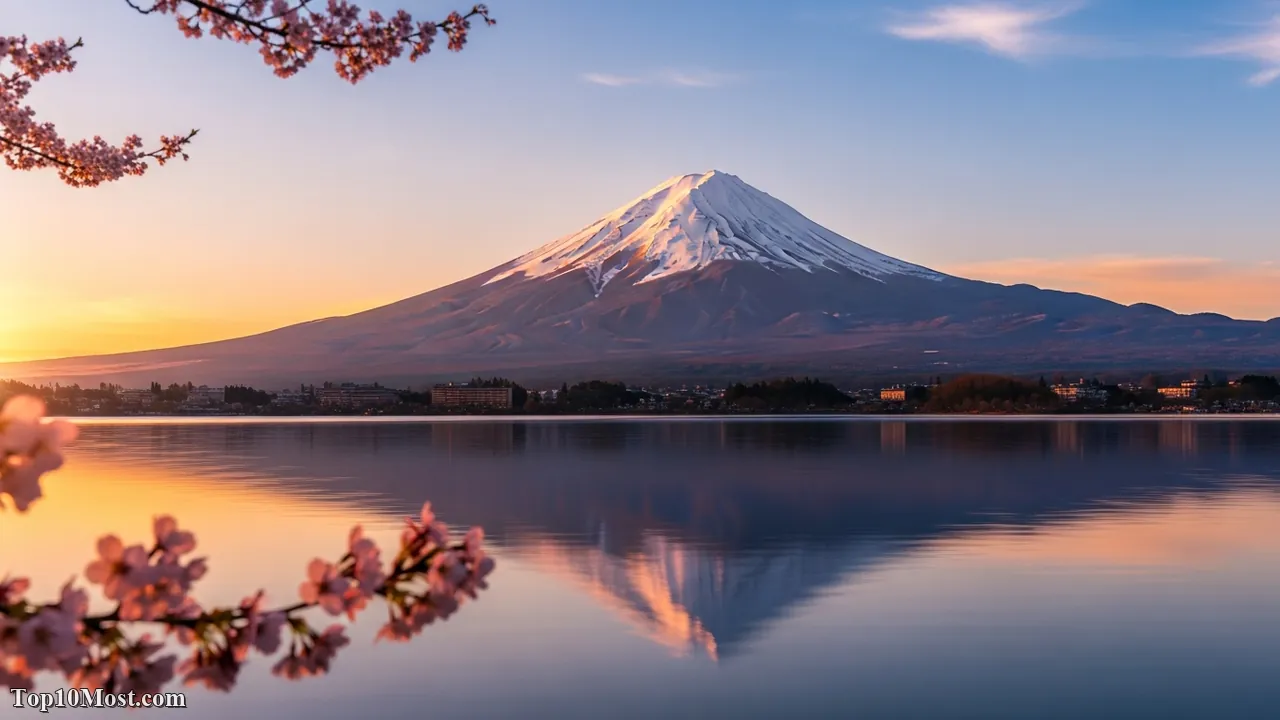
Mount Fuji’s number one status is unshakeable because of its profound national identity and visual perfection. Its symmetrical form is the result of powerful, explosive geological forces, yet it appears serene and unchanging, representing a flawless fusion of power and grace. Its designation as a UNESCO World Heritage Site is specifically a “Cultural Site,” recognizing the centuries of art, poetry, and pilgrimage it has inspired. The surrounding Fuji Five Lakes area offers numerous, stunning vantage points—such as the classic view from Lake Kawaguchiko—that frame its perfection in seasonal beauty, confirming its role as the ultimate expression of the Japanese landscape.
There is an almost mystical power to seeing Fuji. It is a moment of immediate recognition and quiet awe, making you feel the sheer scale of the planet’s forces and the timelessness of the land. Whether you are climbing its slopes or simply gazing upon its snow-dusted peak from a distance, Fuji connects you to the deep, historical heart of Japan. It is not just the most scenic landscape; it is the natural soul of the nation, a flawless monument to the aesthetic concept of eternal, perfect beauty.
Key Highlights:
- Japan’s highest and most sacred mountain at 3,776 meters.
- Iconic, near-perfect symmetrical conical shape, known globally.
- A UNESCO World Heritage Site recognized for its cultural and spiritual significance.
- Featured as the perennial muse in centuries of Japanese art and literature.
Conclusion
The scenic landscapes of Japan are more than just pretty places; they are cultural touchstones that embody the nation’s profound respect for the natural world. From the volcanic majesty of Mount Fuji to the ancient, mossy silence of Yakushima and the elegant chaos of the islets in Matsushima Bay, each entry on this Top 10 Most list tells a story of geological power, spiritual reverence, and artistic inspiration. The Japanese concept of shizen—finding beauty in what is spontaneous and natural—is visible in every gorge, forest, and coastline. We hope this analytical guide inspires you to seek out these powerful, unmediated connections with the land.